Dearly Departed visual identity with gold illustrated wreath on dark blue background.
  • Home
  • /

  • Dearly Departed: death in life

Dearly Departed: death in life

About the exhibition

Death is a universal experience. It will come to us all. Yet the way we confront, discuss, experience and ultimately reckon with death, and the realities of dying, varies enormously. Culturally diverse traditions and practices around death offer unique insights into how communities around the world honor and mourn their loved ones, shaping vastly different experiences and understandings of life’s final chapter.

Throughout the 20th century, death became a quiet taboo; something rarely spoken of, despite touching every life. Positioned at the powerful intersection of history, art and emotion, Dearly Departed encourages audiences to reflect on what it means to live well, die well and honour those who came before us. It reframes death not as an ending, but as a profound and enduring part of Queensland’s living story.

Innovative, accessible, and deeply human, Dearly Departed: death in life invites visitors into a bold exploration of mortality across Queensland’s past, present and future. Through rich historical insight, evocative artistic interpretation and interactive design, the exhibition sparks meaningful conversation about life, death and the memories that connect us all.

The exhibition examines the social, cultural, spiritual, historical and political forces that have shaped Queenslanders’ experiences and attitudes toward death and dying – then and now.

Join us as we rediscover how confronting death helps us better understand life itself.

Free exhibition
14 March – 23 August 2026 

slq Gallery, level 2

Plan your visit

Articles

Photo of ruined cell block on St Helena Island with view of Brisbane in the distance
The Islands: Moreton Bay’s places of detention and separation
The islands of Moreton Bay played a significant role in the development of the Queensland colony. Read about the harsh history of detention, separation and incarceration that shaped the early colonial history of these beautiful islands.
Read more
The tragic death and funeral of Dr Arthur Vincent Meehan
On 1 December 1955, Brisbane was rocked by one of its most violent and public murders. An angry and disgruntled former patient shot and killed two doctors and seriously injured a third in their chambers on Wickham Terrace. He also detonated a number of pipe bombs, injuring a member of the public, before turning his gun on himself.The perpetrator, Karl Kast, had injured his back at work in North Queensland and received two weeks compensation. However claims for further compensation were not supported by medical professionals including Dr Meehan. The process eventually led to a deterioration in Kast’s mental state and on the morning of 1 December he set out with the intention of seeking revenge on four doctors who he believed had ignored his claim. A letter sent by Kast to the police that day outlined his plan.Two of the doctors on that list were Dr Arthur Vincent Meehan and Dr Andrew Russell Murray. Both were killed. Dr Meehan was a highly respected orthopaedic surgeon. Born in Sydney, he moved permanently to Brisbane after serving in the Australian Army Medical Corps in World War One. In Brisbane he had significant associations with Brisbane Children’s Hospital, Brisbane General Hospital and the Mater Misercordiae and became widely regarded as the most prominent orthopaedic surgeon in Queensland.Dr Meehan’s funeral took place on 8 December, a week after the shooting. More than 2000 people turned out to pay their respects. The packed service took place at St Agatha’s Church in Clayfield. More than 200 doctors were present, many from interstate, alongside politicians, church leaders and many ex-patients. He was buried at Nudgee cemetery.The State Library of Queensland has recently digitised footage of the funeral which respectfully documents this somber occasion. Likely to have been filmed by Harry Poulsen, the short film contains footage filmed outside St Agatha’s as well as footage from Nudgee cemetery. The silent, colour footage gives a good impression of the magnitude of the occasion.The following images are stills from 29984/2 Arthur Vincent Meehan funeral motion picture, 1956. The footage is part of the Mater Health Services Motion Pictures 1948-1980 collection held by SLQ.The film can be viewed in full via our One Search catalogue.R. Hillier - Librarian, State Library of Queensland
Read more
several figures dressed in protective clothing
Black Death in Queensland
Did you know?Outbreaks of bubonic plague, spread by rats and introduced by ships from overseas, were common in Queensland at the turn of the century. Maryborough Outbreak (Primary Pneumonic Plague), MayJune 1905. John Oxley Library, State Library of Queensland. Neg 53460The first known case of plague in Australia was reported in Sydney in January 1900. The first case in Queensland occurred in Rockhampton in April 1900 and not long after cases arose in Townsville and Brisbane.The first victim in Brisbane was a carter named James Drevesen, who worked at the wharves and lived in Woolloongabba. He was admitted to the hastily built Colmslie Plague Hospital. The Drevesen's house (pictured) was cleansed and fumigated, bed linen and curtains burned, and an iron stockade was erected around the property and two neighbouring houses. Timber residences in Hawthorne Street, Woolloongabba, Brisbane, Queensland, where the first case of Bubonic Plague occured in Brisbane. The house on the left of the photograph was occupied by James Drevesen, the first patient. Drevesen was a van driver employed to remove goods from the wharves where dead and plague-infected rats were found. John Oxley Library, State Library of Queensland. Neg 47425 Quarantine barricade around houses in Hawthorne Street, Woolloongabba, Brisbane, Queensland, 1900. John Oxley Library, State Library of Queensland. Neg 47426During the 1900 epidemic there were 136 identified cases of plague infection in Queensland. Fifty-seven of these cases perished. The majority of the 136 cases were male, with 114 males compared to 22 females. Brisbane registered the most cases with 56 infections and 25 deaths, followed by Townsville with 37 cases and 9 deaths, Rockhampton with 36 cases and 21 deaths, Cairns with 5 cases and 2 deaths, and Charters Towers and Ipswich both with 1 case but no fatalities.For the next nine years epidemics occurred each year and were confined to ports. The only inland centre which had the plague was Ipswich. Measures taken to combat the disease included the surveillance of vessels arriving in the state, the destruction of rats, the establishment of isolation hospitals and special provisions for the disposal of the dead. Plague victims who succumbed to the disease were wrapped in sheets soaked in carbolic acid and their coffins were slaked with lime. Destroyed rats during the bubonic plague in Brisbane, Queensland, 1900-1902. John Oxley Library, State Library of Queensland. Neg 108588After 1909 there were twelve plague-free years. This led to a slackening in the regulations and a man died of plague suddenly in Brisbane in 1921. This outbreak caused sixty-three deaths. The last case of plague was reported in Queensland in 1922. Nurses tending to isolated plague cases, Maryborough, 1905. John Oxley Library, State Library of Queensland. Neg 168821Sources about the plague in Queensland include: Patrick, Ross, A history of health & medicine in Queensland 1824-1960, St Lucia: University of Queensland Press, 1987 (available online through Text Queensland) Ham, B. Burnett, Report on plague in Queensland 1900-1907, Brisbane: Government Printer, 1907 (available online through Internet Archive) Thearle, M. John, Plague revisited: the black death: an account of plague in Australia, 1900-1923, Sydney: Royal Australian College of Physicians, 1994 (available to view onsite at State Library of Queensland)Annual Reports of the Department of Health were published in the Queensland Parliamentary Papers which are available on microfilm (level 3 of the library)
Read more
Drawing showing convict settlement at Moreton Bay with a list of Commandants from 1824 to 1842, a complete list of all the convicts serving time at the Moreton Bay settlement in 1828 and an image of Captain Patrick Logan.
Early records of births and deaths at Moreton Bay
The Moreton Bay settlement was established in September 1824 as an open, escape-proof gaol, in trying semi-tropical conditions, for secondary offenders, largely of British origins.
Read more
Becoming death literate: grief, death, and end-of-life care in Queensland
Deathfest - Metro Arts foyer. Image courtesy of Metro Arts. Photographer Dave D’arcyLate last year, Brisbane’s Metro Arts held its inaugural Deathfest – a weekend-long cultural event to explore and challenge our understanding of death, dying, and bereavement.As part of this, the State Library of Queensland’s Creative-in-Residence Matt Finch hosted a panel discussion with Fiona Hawthorne, general manager at the children’s hospice Hummingbird House; Ian Mellor, who manages medical bequests for Queensland University of Technology; and Dr Sarah Winch, healthcare ethicist at the University of Queensland and author of Best Death Possible: A guide to dying in Australia.The panel discussed the concept of “death literacy”. You can hear a recording of this frank discussion about what it means to understand, prepare for, and come to terms with death and dying.https://www.youtube.com/watch?v=YWfYJvmxC18
Read more
Registry of births, deaths and marriages
A recent visit to the Queensland Registry of Births, Deaths and Marriages at 110 George St, Brisbane provided a fascinating insight into how records of life events in our state have been gathered, preserved and are being made increasingly accessible. The procedures of the past have evolved to allow records to be digitised, made more widely available and to cater for the information needs of the government and public. Today, these records are available more easily and inexpensively and provide more information than ever before. Registry records of marriages from 1923Touring the registry with a number of people from organisations that provide services to people researching family history (including State Library of Queensland, Queensland State Archives and the Genealogical Society of Queensland) gave me a greater understanding of the role of the registry and the potential uses of their information for family historians. The registry works with these various organisations to understand how their records are used, enabling them to improve their services.We were lucky enough to see the traditional skills of the bookbinder in the building’s basement, who binds and repairs material, the modern equipment used to transport the records for digitisation, and the impressive storage facilities. Yet it was seeing some of the actual records held at the registry that made the greatest impression, and gave me a greater appreciation of the value of the information stored there – for statistical, historical and personal reasons. Traditional tools and skills are still used in binding the volumes of documents Trolleys used for transporting volumes for digitisationWhen a birth, death or marriage is registered in Queensland, an original certificate (referred to as the source document) is created, along with a registry document. The source document and one registry document are transferred to the registry in Brisbane, where they are bound into large volumes, by district and date, and stored. By the end of this year, a massive ongoing digitisation project will see 11 million of these records digitised – a very impressive feat when you see the physical size, volume and weight of the bound volumes. Some of the volumes weigh up to 16 kg each. Storage of volumes at the Registry of Births, Deaths and Marriages, Brisbane A volume of marriage certificates from 1907The family history research page of the registry’s website contains freely searchable indexes for births from 1829-1915, deaths from 1829-1985 and marriages from 1829-1940. An historical image of a source document can be purchased and downloaded instantly for $20, or a certificate supplied for $28. While the index is freely searchable, the information provided on source documents is invaluable to family historians, providing information on up to three generations as well as extra information, such as handwritten notes and signatures, not available on the transcribed indexes. Transcribed information also allows room for human interpretation or error, so viewing the source document is the best way to see the original entry, including handwriting and any other material or notations. Some historical documents include codes (such as “1922” for World War 1 deaths) and may be the only place where a person’s ethnicity is noted. Death certificate and register records from 1918Historically, the registry’s primary task was to maintain records of births, deaths and marriages in the state for statistical purposes and for government and infrastructure planning. While the legislative requirements to record such life events remain the registry’s principle obligation, increasing public interest in discovering these historical treasures continues to shape the organisation’s processes and service provision.
Read more

Digital stories

John Mye, son of George and Jennifer Mye and uncle of Daisy Mye.
Mye family tombstone opening
A moving look at tradition, community, and remembrance.
Watch digital story
Phyllis Ebbage
The patient from Peel
A quiet but powerful story about illness, care, and life at the fringes of Queensland’s early hospitals.
Watch digital story
Desmond Crump, Indigenous Languages Coordinator
Indigenous servicemen of the First World War
Honouring the lives and legacies of Aboriginal and Torres Strait Islander soldiers through family memory and community storytelling.
Watch digital story

More to explore

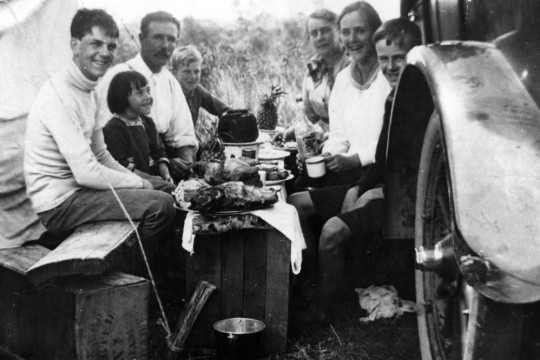
Family group of two adults and 5 children eating lunch beside a truck, 1918
Family history research guides
Learn about family history resources to help you discover your ancestors.
Explore guides
Cover of the Police Gazette Queensland 1879-1880
Police Gazette Inquests 1875-1885
Inquests conducted by the coroner to gather information about the cause and circumstances of a death.
View the dataset
Pink feathers on a dark background
Dangerous Women
The Dangerous Women podcast tells the story of five women who have challenged the status quo.
Listen to the podcast