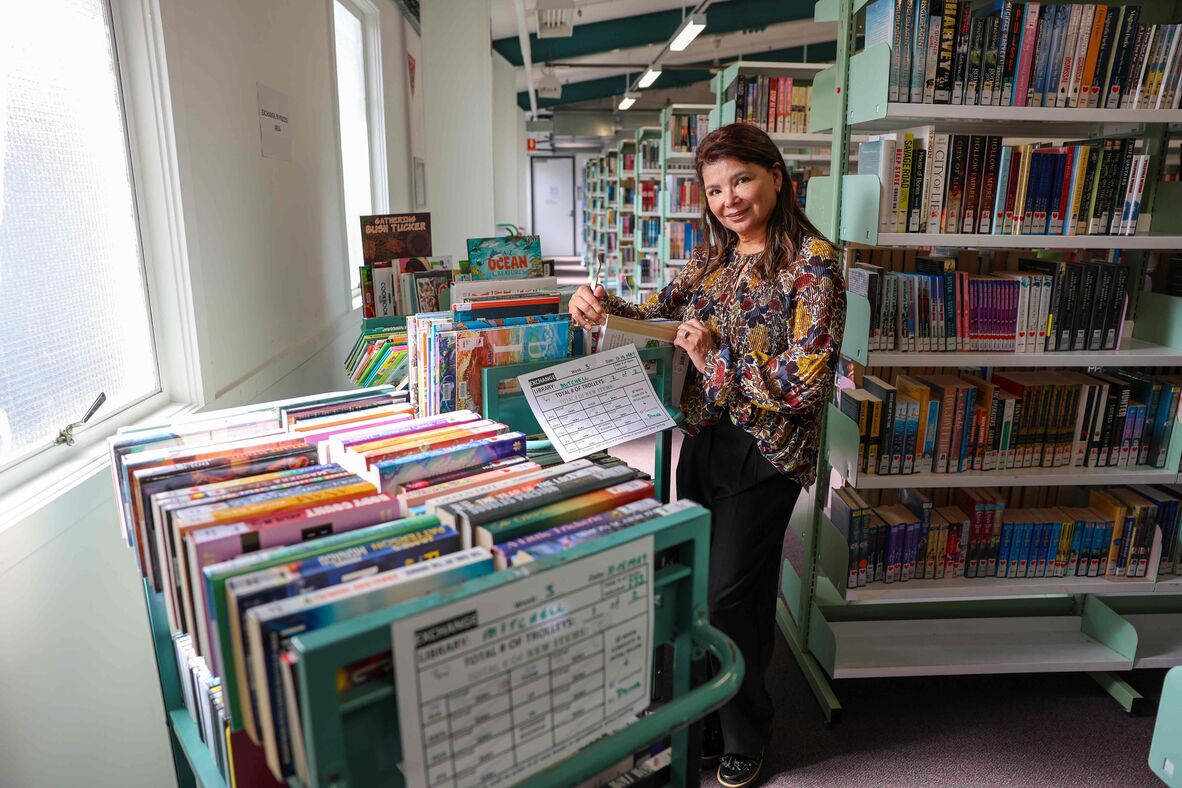
Gaby Asenjo (Team Leader, Public Library Collections) with exchanges being prepared for Mitchell Library. Photos State Library of Queensland.
From a warehouse in suburban Brisbane, State Library staff keep tens of thousands of books moving around Queensland and into the hands of readers.
Behind the odyssey of a library book is a huge logistical effort backed by many more behind the scenes, giving Queenslanders equitable access to stories and information.
The numbers are epic.
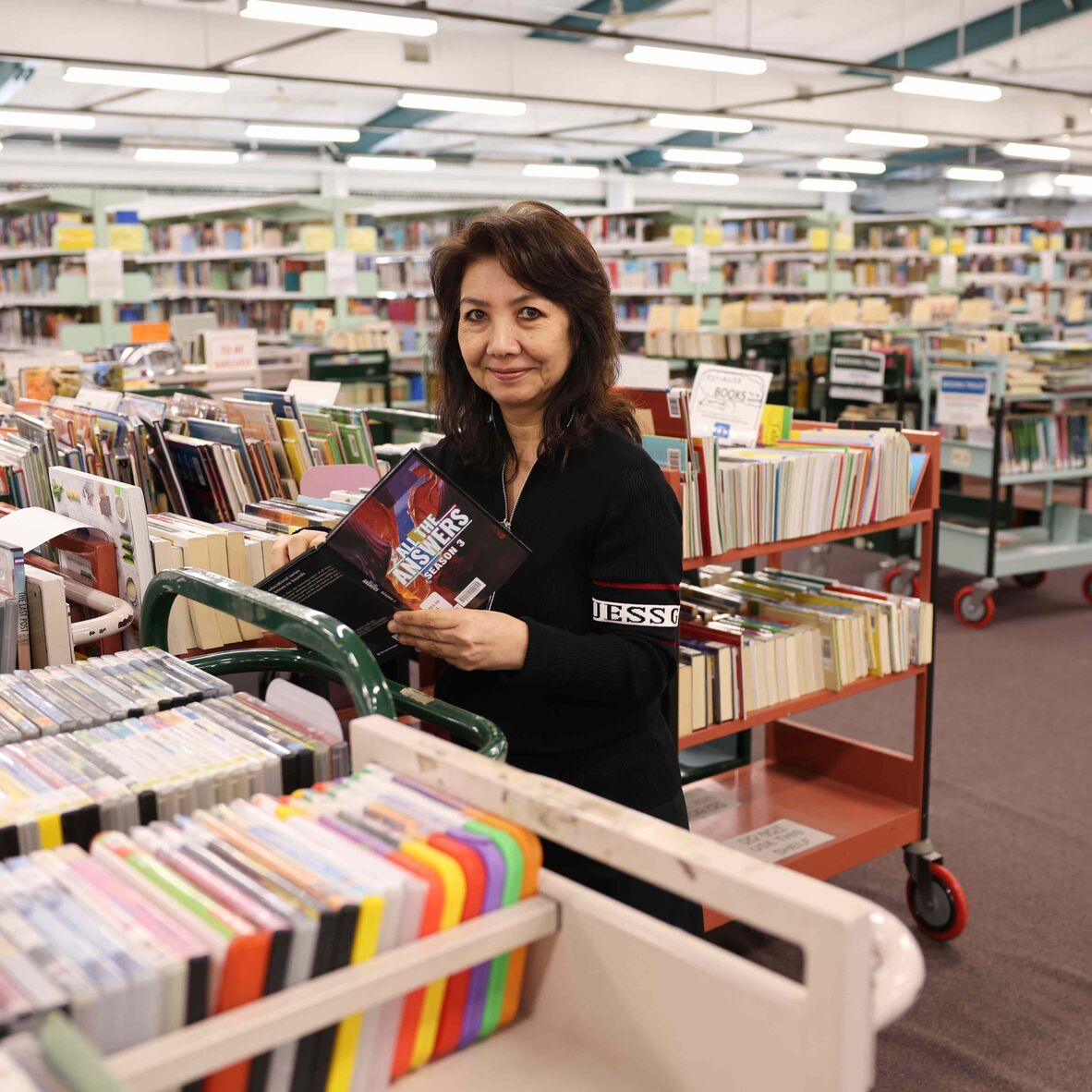
Mara Torre checks DVDs that have come back to Cannon Hill from public libraries.
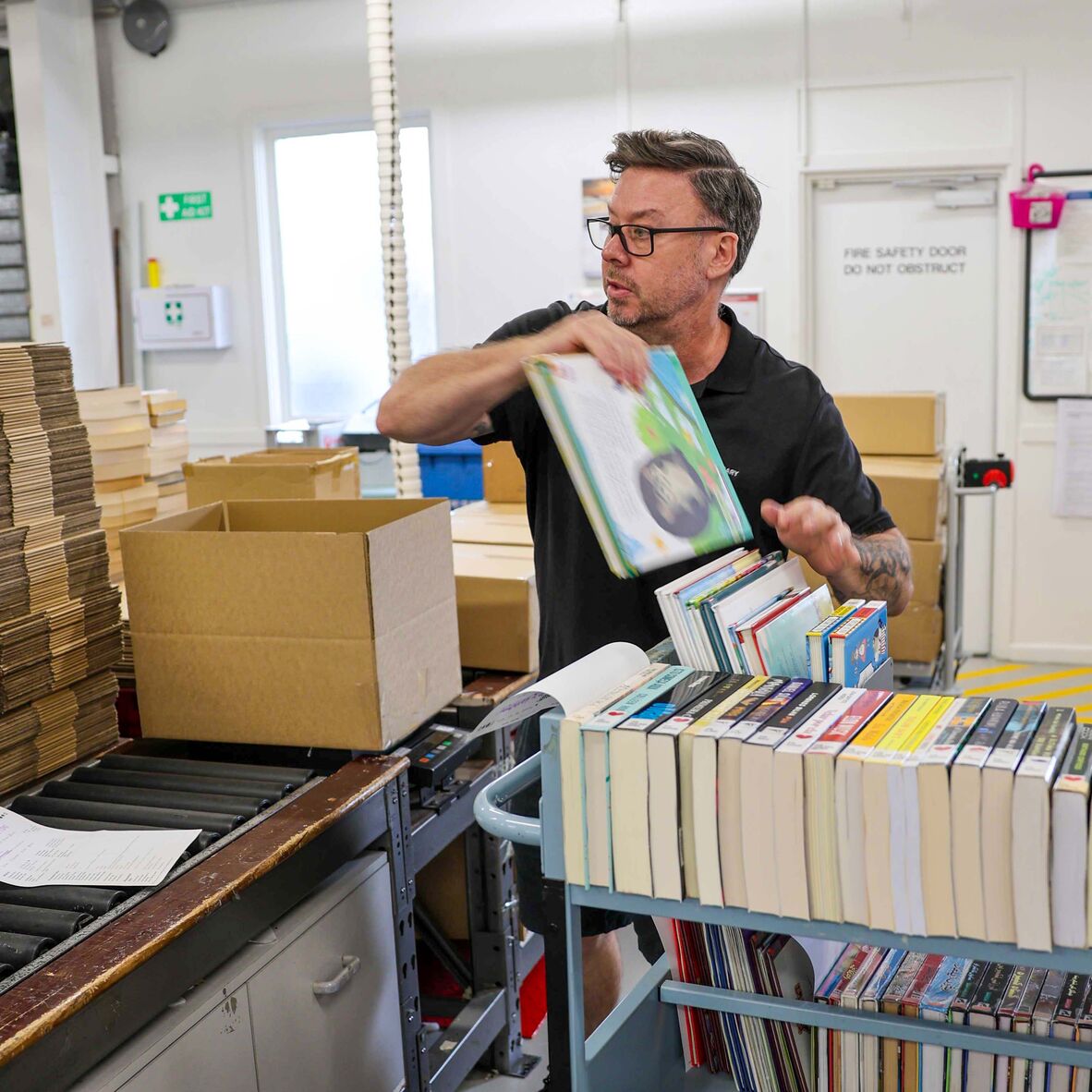
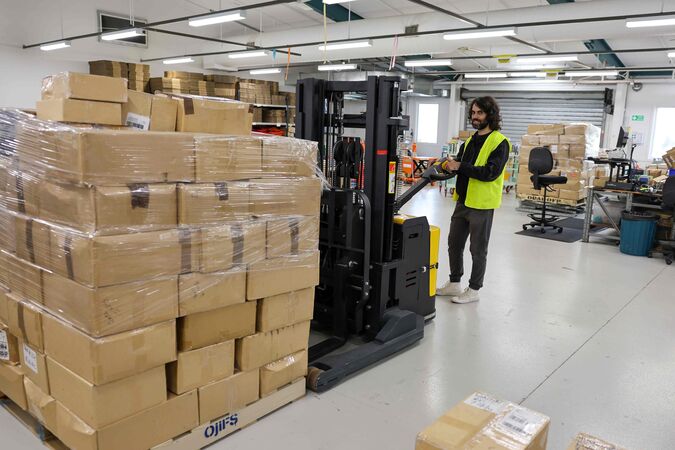
Cameron Gell packs books for dispatch to rural and remote Queensland libraries.
415,000 physical items
The physical public library collection for Queensland contains approximately 415,000 items, about one-third of which are housed at State Library’s Cannon Hill facility at any one time.
A book borrowed in Charleville might land on library shelves in Burketown, Yarrabah, Muttaburra, Inglewood, Quilpie or beyond in the months ahead.
Across the 2025–26 financial year, almost 120,000 physical items were delivered to Queensland libraries and IKCs.
6 tonnes of stories on the move each month
The dispatch dock at Cannon Hill essentially acts as its own post office. During a typical month, the nerve centre of Queensland’s Public Library Collections dispatches over 3 tonnes of freight. That’s approximately 10,000 items arriving in libraries each month.
A similar amount comes back in – new titles from suppliers and items returning from libraries.
Staff processed about 36.5 tonnes of inbound freight and 40.8 tonnes of outbound freight through Australia Post in 2025–26.
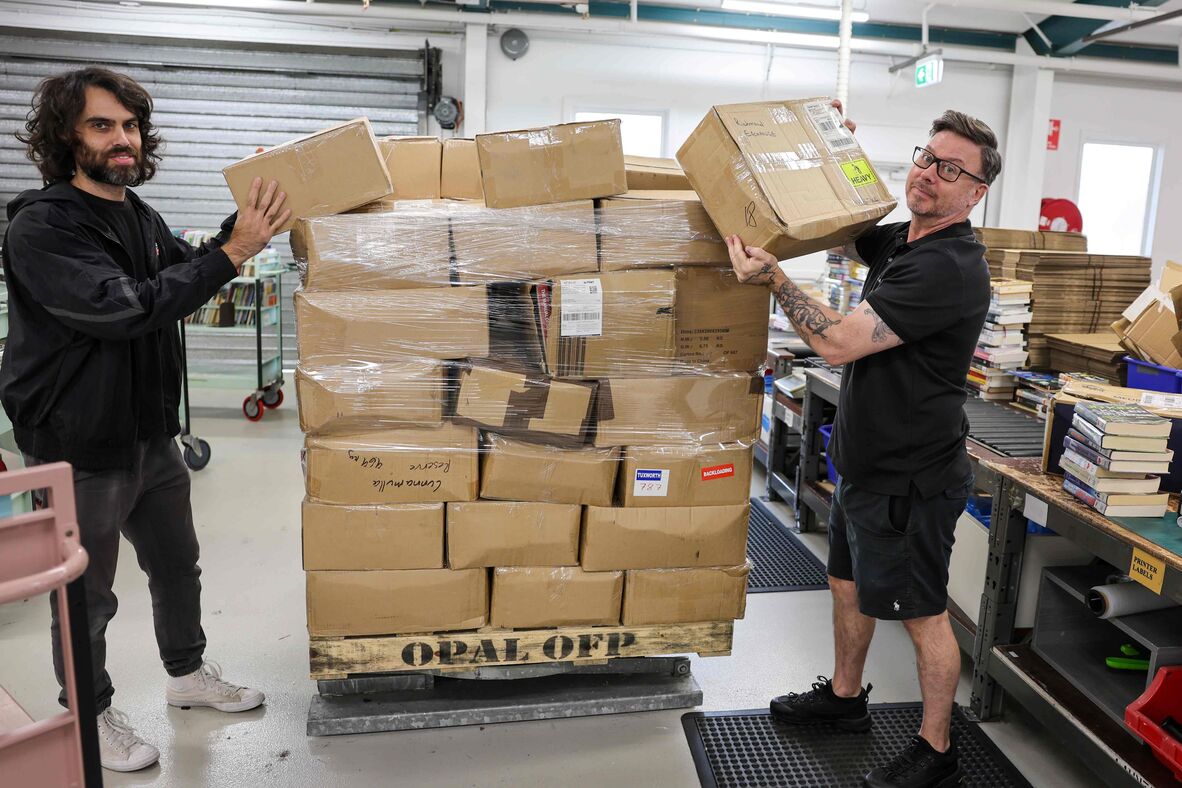
Vraj Simpson and Cameron Gell unload collection material that arrived back at Cannon Hill from the Blackall-Tambo region.
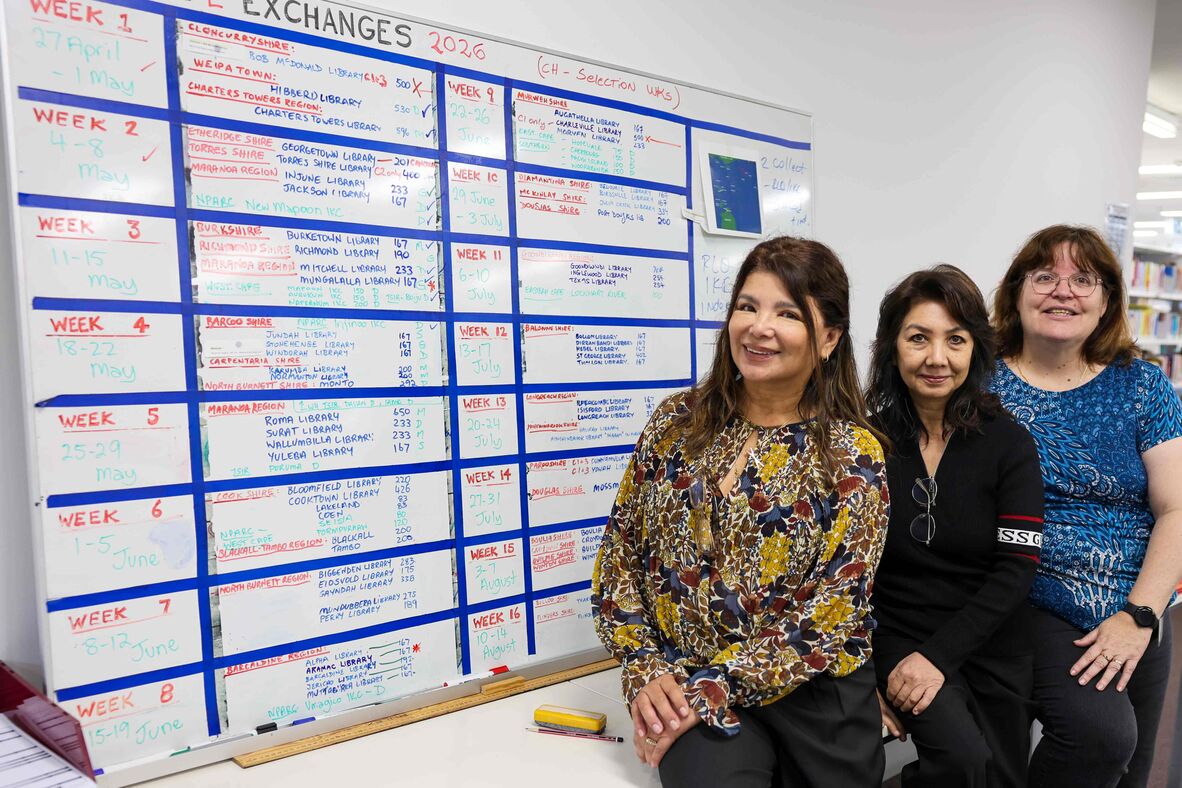
Gaby Asenjo, Mara Torre and Donna Longland with the exchange schedule for RLQ branches and IKCs.
Travelling more than 2,600 kilometres
Queensland library collections travel as far as Australia’s most northerly inhabited island, Boigu Island, just 6 kilometres from the Papua New Guinea mainland. The Torres Strait Islands are home to 10 of the 29 Indigenous Knowledge Centres (IKCs) – library and information services operated by Aboriginal and Torres Strait Island councils in some of the state’s most remote communities.
Collection items bound for the Torres Strait typically arrive in Cairns by road from Brisbane, then travel by ship to Thursday Island (Waiben) and/or Horn Island (Ngurapai) for distribution to the outer islands via barge.
The collections’ journey from Brisbane to the western Cape York towns of Weipa, Napranum and Mapoon can be even longer in the wet season, when freight goes by sea from Cairns around the tip of the peninsula. Deliveries to western Cape York are planned around the dry season, when the roads are open. For Aurukun, that's a road journey of approximately 2,500 km from the collections hub.
325+ libraries
Delivering library services and keeping collections fresh, contemporary and relevant to their communities’ needs is a partnership between local government and State Library.
Together, we help ensure all Queenslanders have equitable access to information through physical collections and eresources that connect communities to storytelling, knowledge and opportunity.
Around half of the Public Library Collection is held in Rural Libraries Queensland (RLQ) branches, located in council areas with less than 15,000 people. This helps prioritise the needs of libraries in the state’s least-populated areas.
Collections in RLQ branches and IKCs are refreshed up to 3 times a year on a rotating schedule.
Larger council areas such as Cairns and Rockhampton have what are known as Independent Libraries with locally owned collections. They can also draw on the statewide collection for bulk loans and ad hoc requests.
950 square metres of shelves
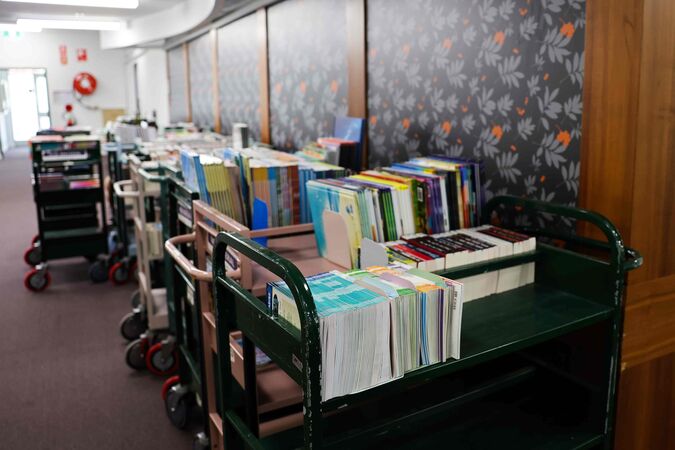
On a typical day at Cannon Hill, Public Libraries Collection staff will search the stacks for about 150 resources that library users statewide have reserved. Here’s a snapshot of the reserves ready to be sent to readers in Charleville, Charters Towers, Gayndah, Halifax, Monto, Mossman and Winton one day in May:
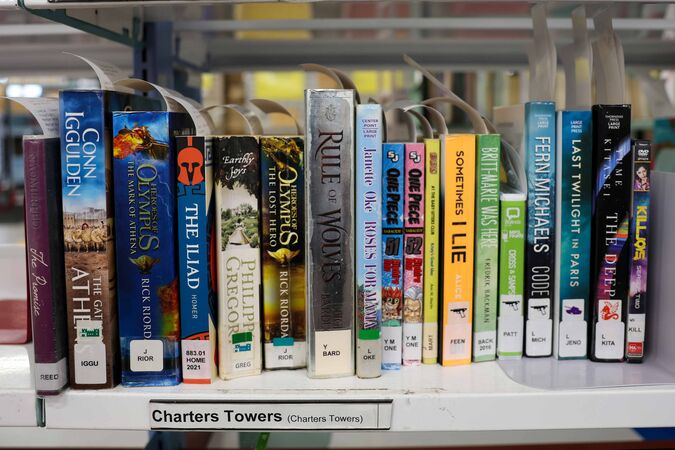
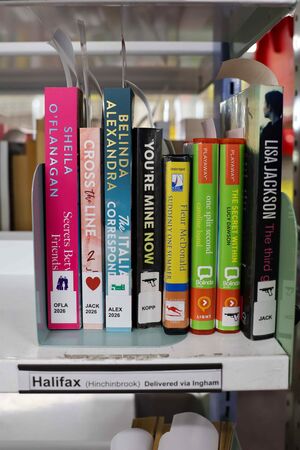
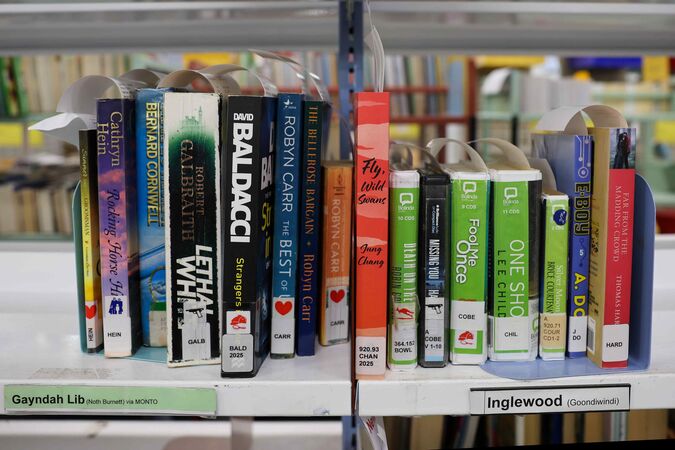
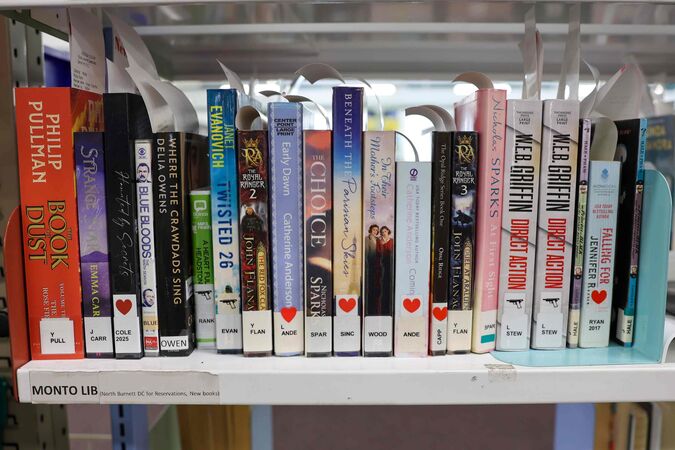
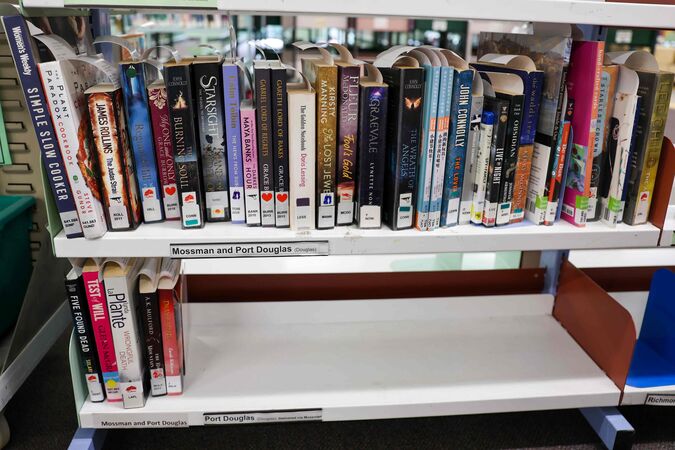
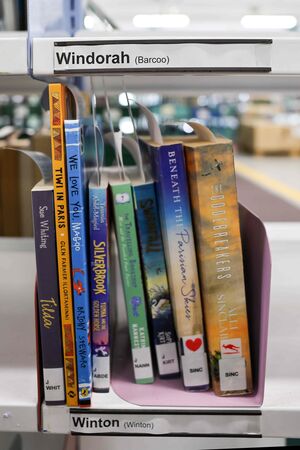
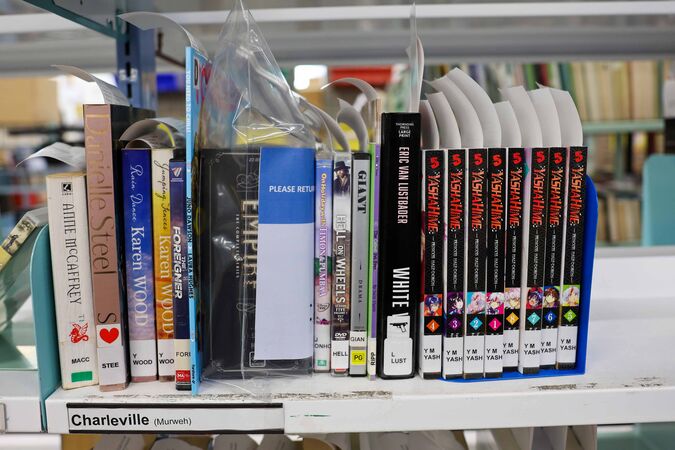
SWIPE TO VIEW PHOTOS
CHARLEVILLE
Books in 60 languages
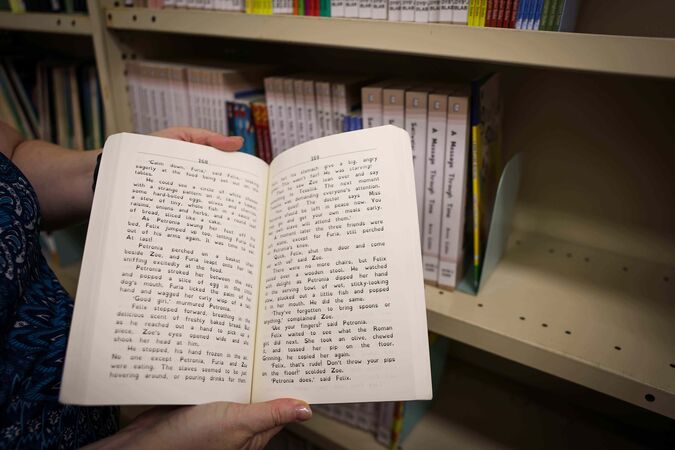
Library users all over the state can request books and DVDs in languages other than English. There are also parallel texts, which present two or more languages side by side.
With more than 79,000 items in languages other than English across different formats and genres, this valuable collection helps families in Queensland's diverse communities maintain connections with their languages and cultural heritage.
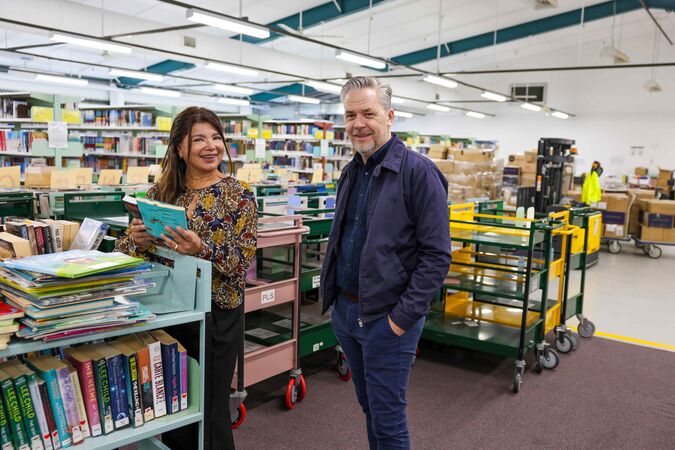
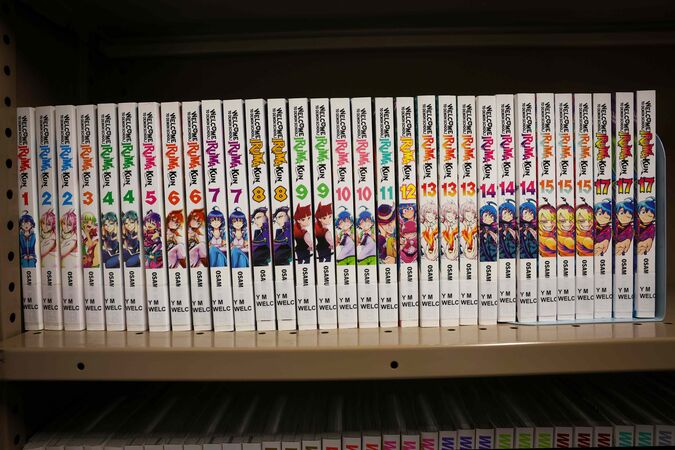
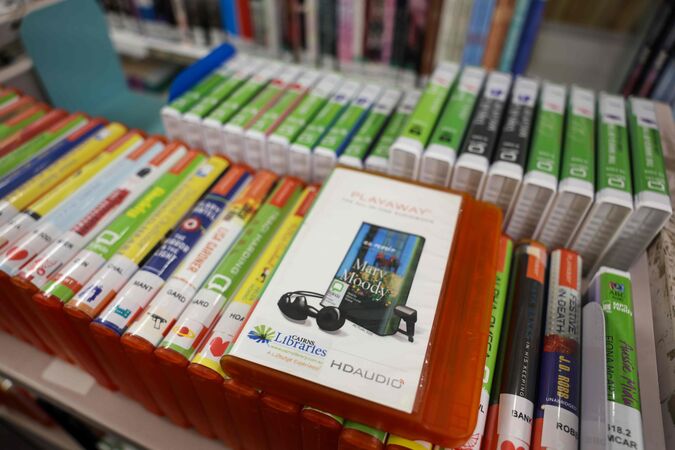
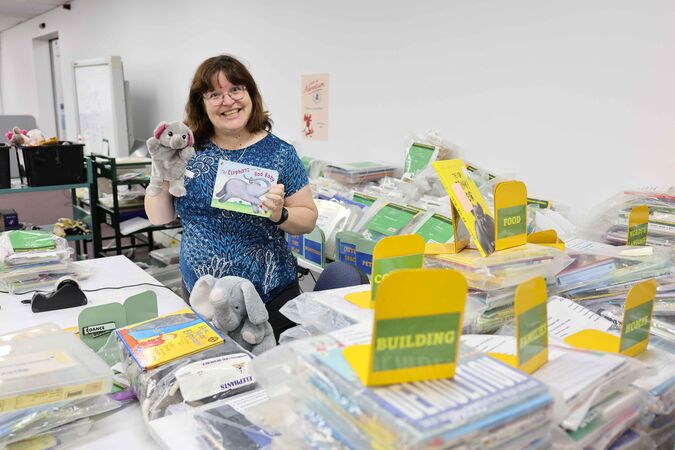
The statewide collection also has manga, dyslexic-friendly books, book club sets, book and TV series sets, DVDs, and themed storytelling kits containing books, puppets, toys and games that engage children with language and literacy. There are also Playaways, preloaded MP3 audiobook devices that are popular in areas with limited internet connectivity.
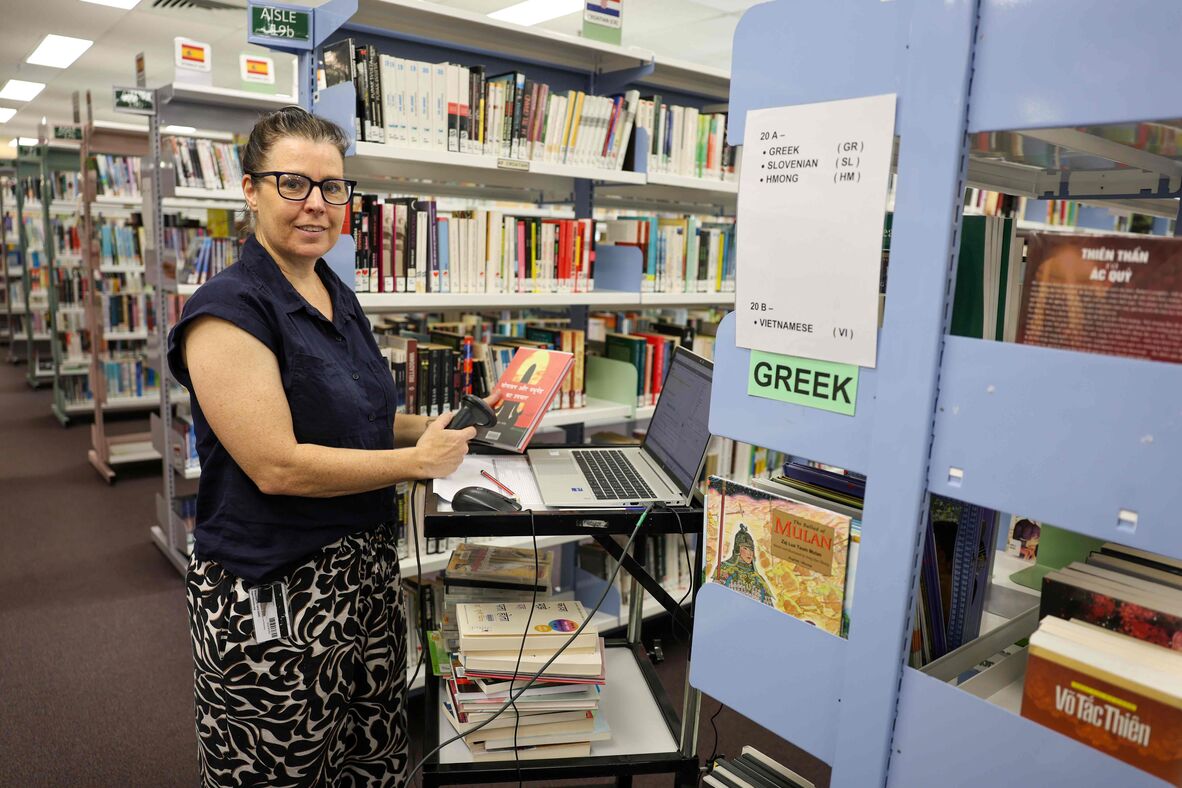
Melissa Sheehy from Logan Library makes an in-person trip to select books in languages other than English for loan to the library from the statewide public libraries collection at Cannon Hill.
Most-borrowed
From blockbuster thrillers to graphic novels and beloved Australian picture books, these were the titles Queensland readers borrowed most from rural libraries and Indigenous Knowledge Centres (IKCs) in physical form during 2025–26.
Adult non-fiction |
| 1. The Let Them Theory by Mel Robbins |
| 2. Fearless by Jelena Dokic |
| 3. Always Home, Always Homesick by Hannah Kent |
| 4. Stone Age Stockmen by Robert A Fyfe |
| 5. No Time for Makeup by Dr Elizabeth Green and Easy Dinner Queen by Steph de Sousa |
Adult fiction |
| 1. In Too Deep by Lee Child |
| 2. Hidden Nature by Nora Roberts |
| 3. Nightshade by Michael Connelly |
| 4. 2 Sisters Murder Investigations by James Patterson and Candice Fox |
| 5. The Imperfect Murder by James Patterson |
Junior fiction |
| 1. Wings of Fire: The Dragonet Prophecy (graphic novel) by Tui T Sutherland |
| 2. Wings of Fire: The Hidden Kingdom (graphic novel) by Tui T Sutherland |
| 3. Wings of Fire: The Dark Secret (graphic novel) by Tui T Sutherland |
| 4. Wings of Fire: The Brightest Night (graphic novel) by Tui T Sutherland |
| 5. Dog Man (graphic novel) by Dav Pilkey and Little Ash: Friendship fix-it! by Ash Barty and Jasmin McGaughey |
Picture books |
| 1. The Truck Cat by Deborah Frenkel |
| 2. Once, I Munched a Mango by Samantha Wheeler |
| 3. Bowerbird Blues by Aura Parker |
| 4. Luna Roo the Kangaroo Baller by Adam Jackson and Adrian Lloyd |
| 5. Koalas like to ... by Shae Millward |
SWIPE TO VIEW PHOTOS
Donna Longland checks and sorts storytelling kits at State Library's Cannon Hill facility.
Libraries help build connected, informed and resilient communities. The 2026 Library and Information Week theme, Truth Be Told, shines a light on our role in providing trusted information, media literacy and helping people navigate a complex information landscape.
No matter where you live in Queensland, your library membership unlocks a range of digital resources. Explore the eresources you can access as a public library or IKC member.
Visit your local library and discover a world of stories, learning, and connection. See your local council’s website for information on how to join, opening hours and First 5 Forever session times.
Comments
Your email address will not be published.
We welcome relevant, respectful comments.