Messages from the Dead – Seance in Brisbane, 1888
By Myles Sinnamon, Queensland Memory | 10 September 2013
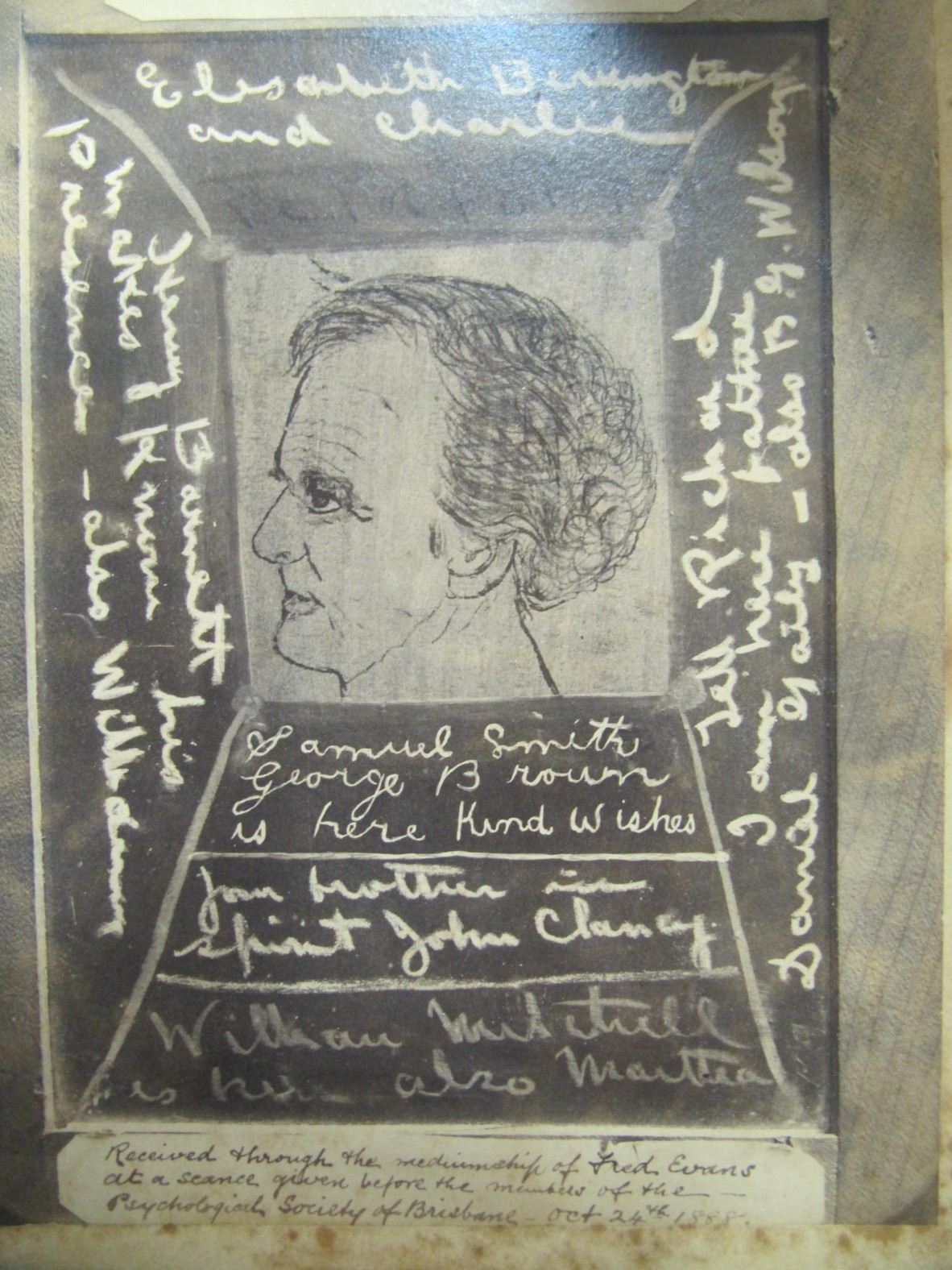
Photograph of spirit slate-writing which occurred during a séance in Brisbane on 24 October 1888. 2932 Mary Watkin Thurlby Collection, John Oxley Library, State Library of Queensland.
Do you believe in the paranormal? Buried within the collections of the State Library of Queensland are two original photographs taken during a seance held in Brisbane on 24 October 1888.
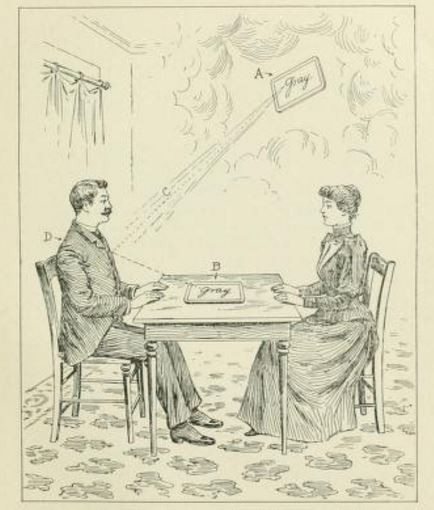
The photographs are an excellent example of independent slate-writing, where (purportedly) spirits of the dead communicate with the living by writing messages on a slate in the presence of a medium.
The old photographs are mounted on cardboard and have a handwritten caption at the bottom which reads: 'Received through the mediumship of Fred Evans at a seance given before the members of the Psychological Society of Brisbane – Oct 24th 1888.'
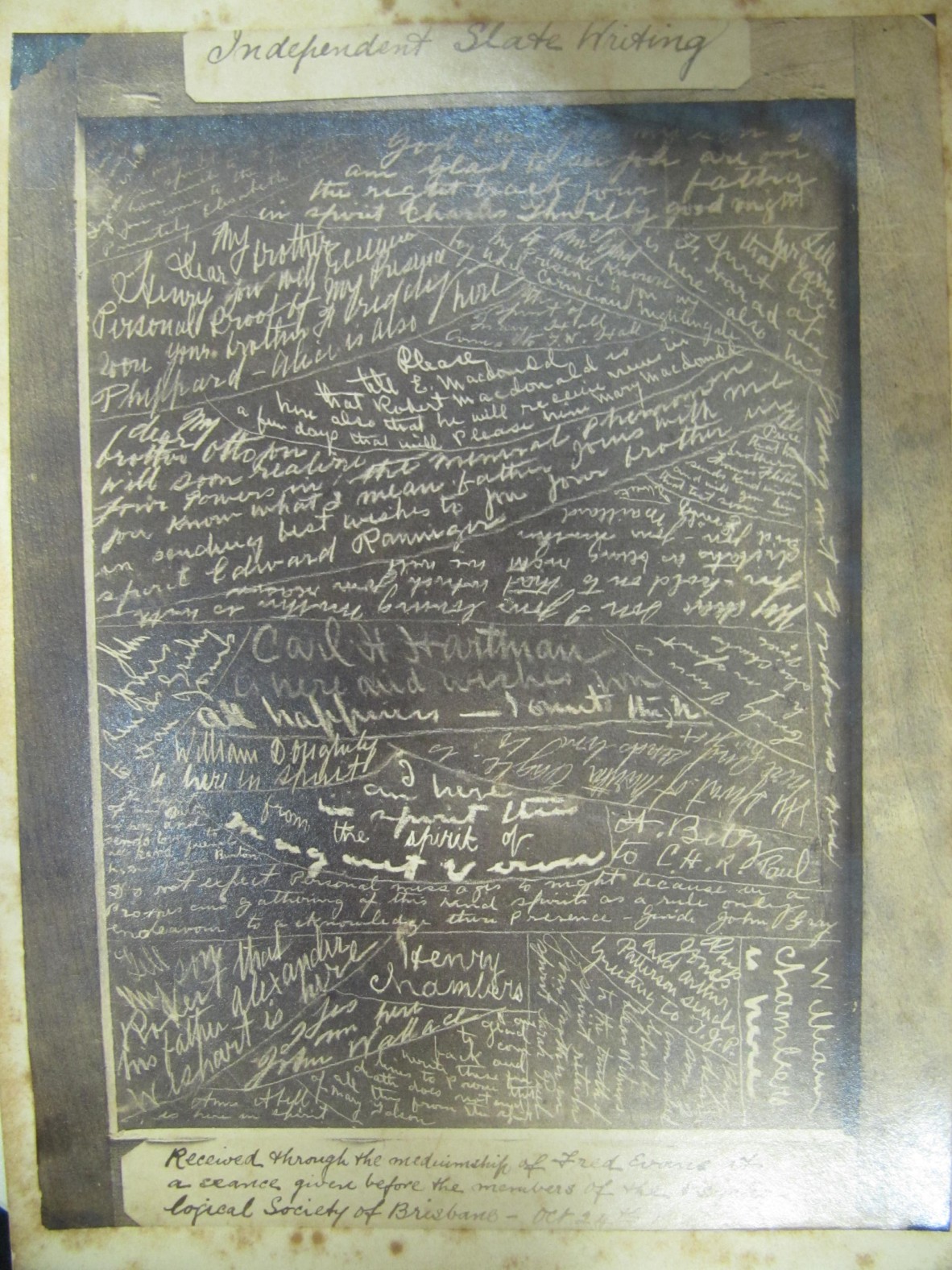
Photograph of spirit slate-writing which occurred during a séance in Brisbane on 24 October 1888. 2932 Mary Watkin Thurlby Collection, John Oxley Library, State Library of Queensland.
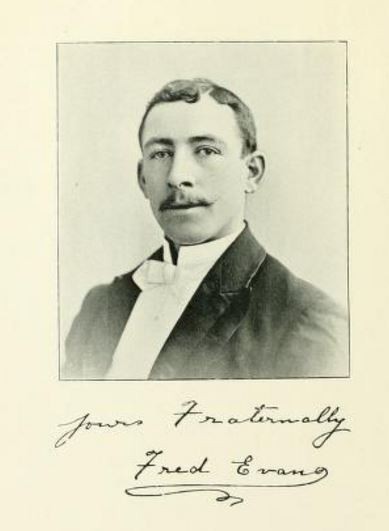
Fred P Evans was an English-born 'psychographic' medium from San Francisco whose specialty was the production of written messages on sealed, blank slates. The messages were purportedly written by spirits communicating from the afterlife, through a personal 'psychographic guide' called John Gray.
According to a book on Evans by American journalist James J. Owen, the popular psychic received many letters from 'investigators of psychic truth' across the world urging him to visit, but none contained 'any inducement for him of a financial nature'.
Not so the Psychological Society of Brisbane, who offered to pay for travel, expenses and 'other favourable inducements' for Evans and his wife to sail Down Under 'free ... from the anxiety of pecuniary matters in a strange country'.
This special meeting of the Psychological Society of Brisbane and the origins of the slates (pictured) can be authenticated by an article published in the Brisbane Courier newspaper. The article states that a meeting of the members of the Psychological Society occurred on 24 October 1888 in the Courier Hall 'for the purpose of holding a slate-writing séance with Fred Evans'.
Evans arrived in Brisbane in September 1888 and spent an entire day offering his services to representatives of the local press from a small flat on Warry Street, Fortitude Valley described by one journalist as 'one of those detestable, hot, ugly, unventilated 18 shillings-a-week abominations.'
A reporter from the Queensland Figaro had a private seance with Fred Evans at his Warry Street address. In his article published on 6 October 1888, he left readers with no illusions about his purpose: 'I went with hostile intent ... to prove him a fraud, and to expose any trickery or humbug.'
The medium’s claims were indeed tested thoroughly by several journalists, whose published reports were thick with scepticism (and in many cases, openly mocking), causing Evans to write an open letter in response the next day, addressing the reports that, he said, 'teemed with inaccuracies.'
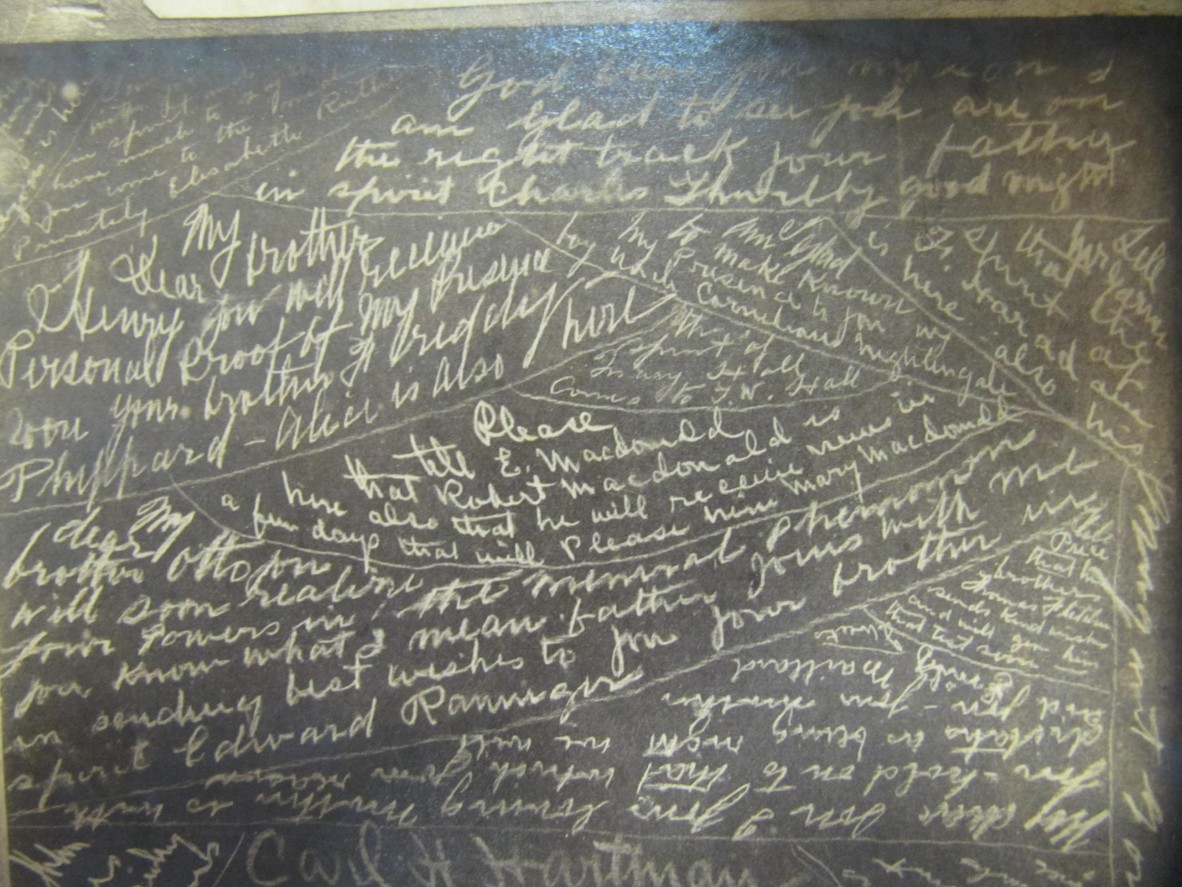
Photograph of spirit slate-writing which occurred during a séance in Brisbane on 24 October 1888. 2932 Mary Watkin Thurlby Collection, John Oxley Library, State Library of Queensland.
Despite the negative newspaper coverage, on Thursday 25 October 1888, about 40 members of the Brisbane Psychological Society packed into the Courier Hall on Queen Street for a special slate-writing seance.
Two pairs of slates were rubbed clean by Evans and then sealed together in pairs once pieces of chalk had been dropped inside. Two society members held one slate each while the rest joined hands. According to Evans, 'a strong power was at once manifested' and some members 'twisted in their seats ... by the power of a galvanic battery.'
After 15 minutes, the seals on the slates were then broken, revealing the two images held in State Library collections: one with 30 closely written messages totalling around 450 words, the other 6 messages written around a drawn portrait of poet and spiritualist John Pierpont.
Interestingly, eyewitness accounts reveal much of the writing appeared in different colours, which unfortunately we cannot see in the black and white photographs.
The society members were reportedly 'highly satisfied with the results' of the seance, with every name attached to the slates’ messages “recognised by some individual present”.
Only 4 days later, Evans reportedly suffered a painful accident after falling from a horse at Enoggera. As a result, he was unable to perform any more seances and left for Melbourne and Sydney in January 1889.
Only weeks after his departure, the Brisbane Telegraph published a series of exposés on Evans and his psychic techniques. The newspaper claimed Evans used duplicate or trick slates with pre-written messages, added to surreptitiously once he had found out the names of the “spirits” from his audience, through means of misdirection.
Evans returned to Brisbane in August 1889 to perform a final public seance at Centennial Hall in Adelaide Street. A reported crowd of over 100 people witnessed writing appear on 8 slates that had previously been dunked in water.
Before he departed Australia in September, Evans thanked his supporters, adding that there had been 'much to contend with' during his stay, including a 'trying' climate, a majority of unbelievers, and his unfortunate accident.
As for Evans’ bona fides, Owen’s book claims Evans performed a final private test before members of the Brisbane Psychological Society, all of whom – including Mr PR Gordon, Government Inspector of Sheep – agreed the medium’s skills were genuine.
Fred P Evans' slate-writing photographs are on display as part of State Library's free exhibition Dearly Departed: death in life.
Resources:
Margaret Watkin Thurlby collection
Psychography; marvelous manifestations of psychic power given through the mediumship of Fred P. Evans, known as the "independent slate-writer." by James J. Owen, 1893 - Internet Archive
Myles Sinnamon - Project Coordinator, State Library of Queensland
Comments
Your email address will not be published.
We welcome relevant, respectful comments.