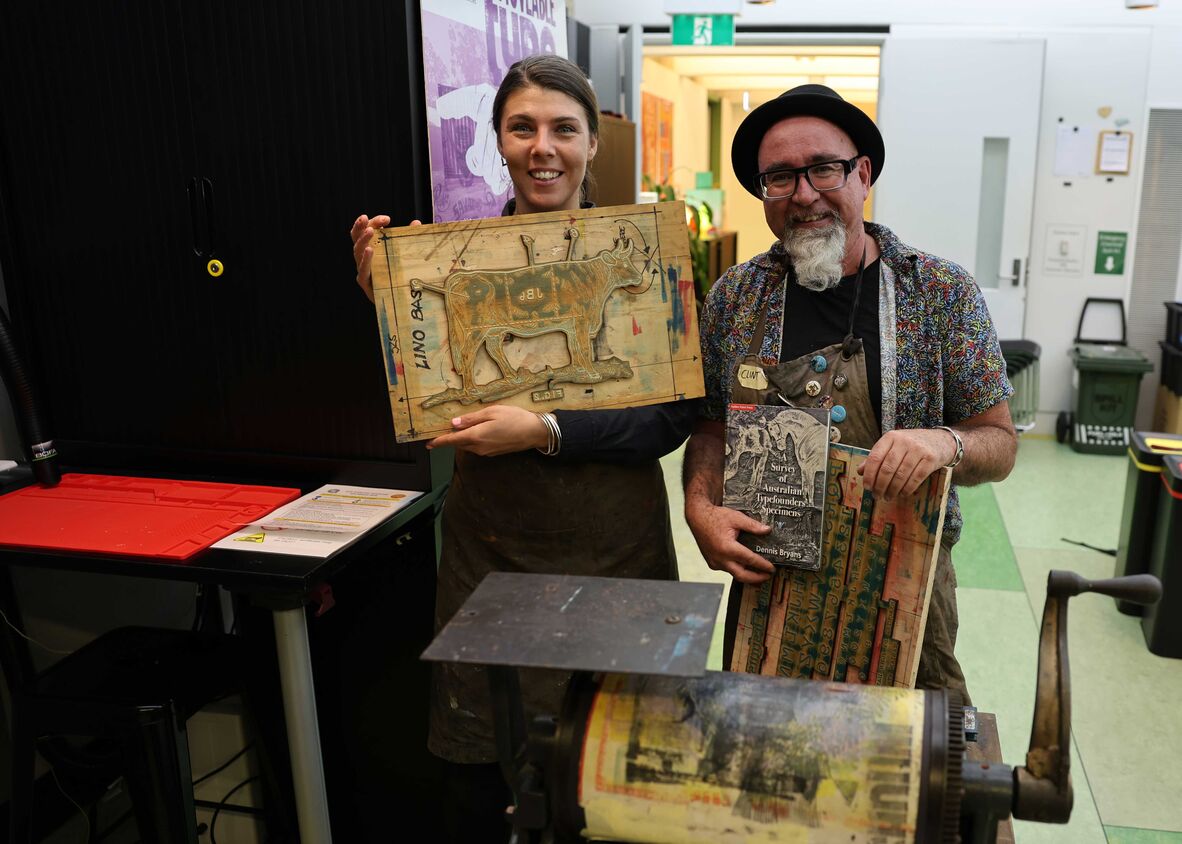
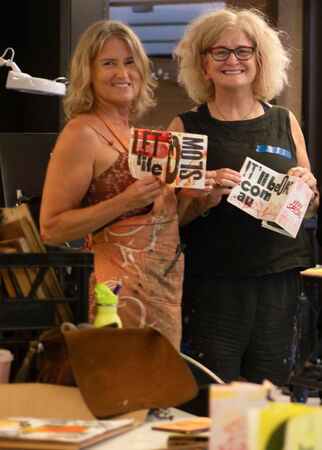
Dzintra Menesis and Clint Harvey with the laser-engraved woodblock created from a Brands Act of 1872 illustration.
Made from memory is a series exploring how Queensland creatives use State Library collections to inspire their practice.
Letterpress printmakers Clint Harvey and Dzintra Menesis move from analogue to digital and back again with a creative process steeped in history.
Drawing on rare books and documents from State Library of Queensland’s collection, they use digital design and fabrication techniques to create woodblocks for posters printed on authentic 19th century presses.
‘Increasingly, the State Library collection has become a starting point for our projects rather than something we consult after we've already had an idea,’ says Clint, founder and director of Brisbane-based Moveable Type Studio.
The design team travels throughout Queensland and New South Wales with a print studio housed in a mobile 40-foot shipping container. Their workshops and demonstrations take hands-on letterpress printing to communities that would otherwise have little access.
Along the way, they champion the art and history of a process that has largely disappeared from the commercial printing world.
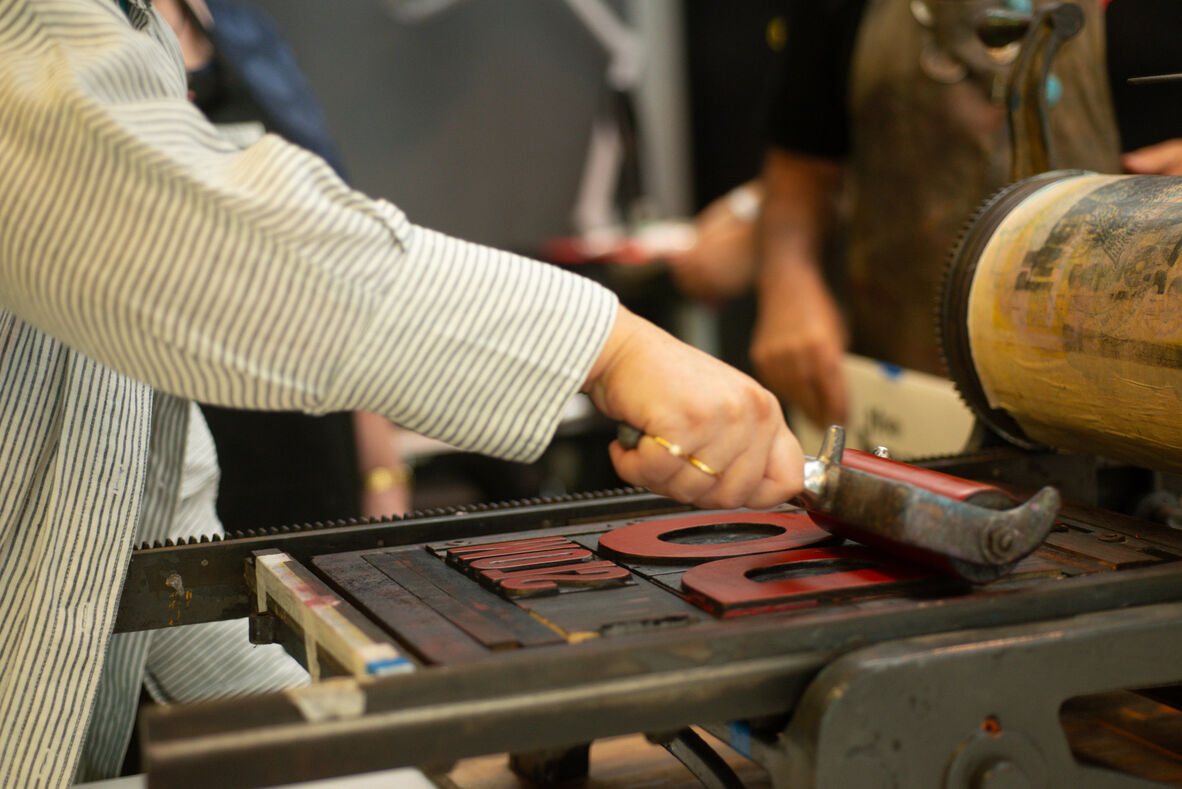
Inking the press at a Moveable Type artists book workshop at State Library, 2026. Photo by Dzintra Menesis.
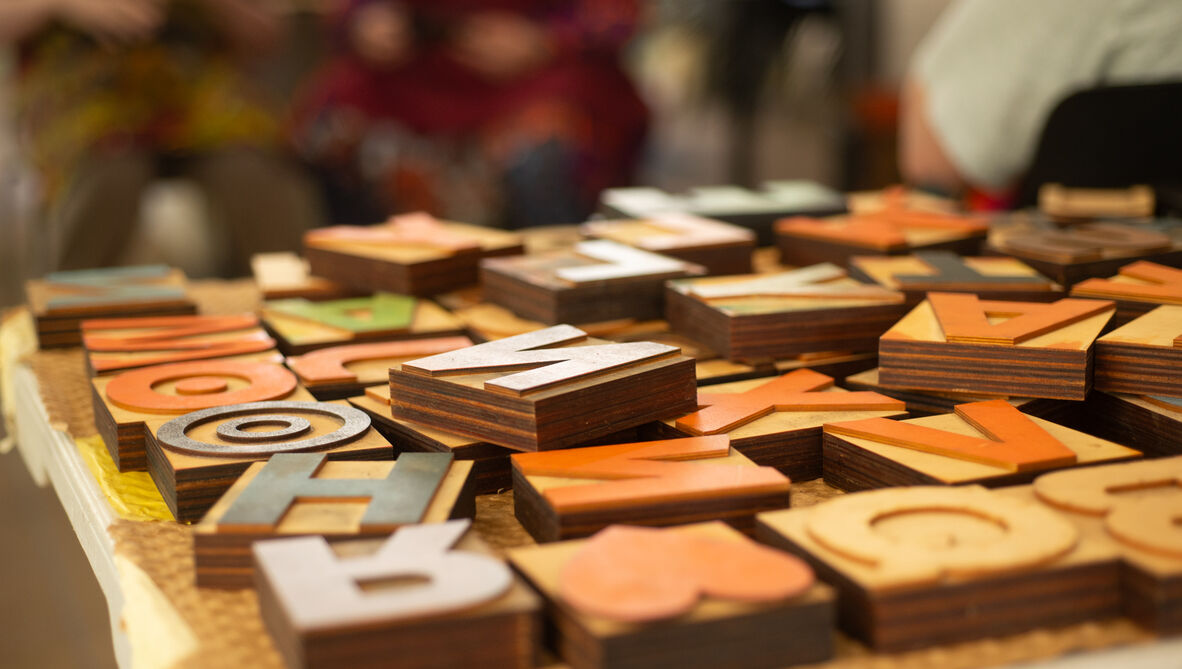
Laser-cut woodtype blocks created by Moveable Type. Photo by Dzintra Menesis.
What is letterpress?
‘Letterpress is relief printing,’ Clint says. ‘Raised letters and images are inked and pressed into paper, leaving a crisp impression you can see and feel.
‘Letterpress carried the printed word from the 1450s for centuries, until phototypesetting and computers took over. Traditional letterpress uses wood and lead type set by hand. Contemporary letterpress also uses photopolymer plates made from digital files.’
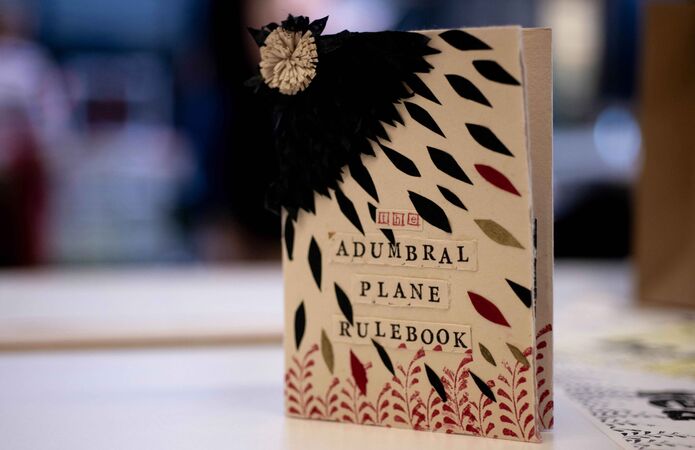
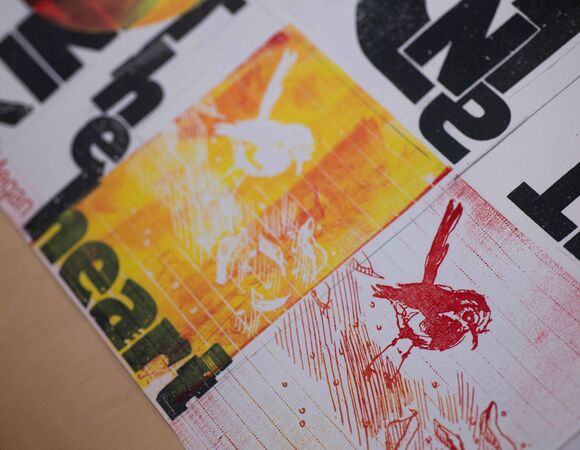
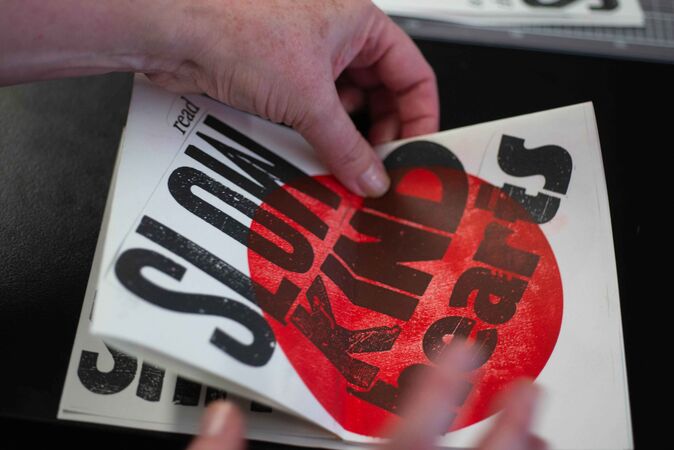
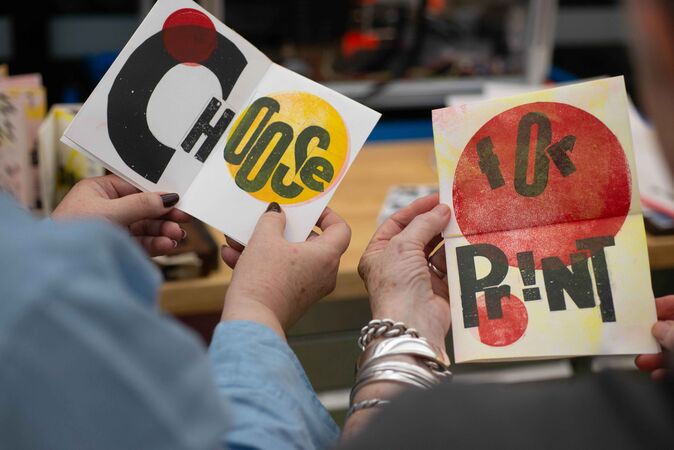
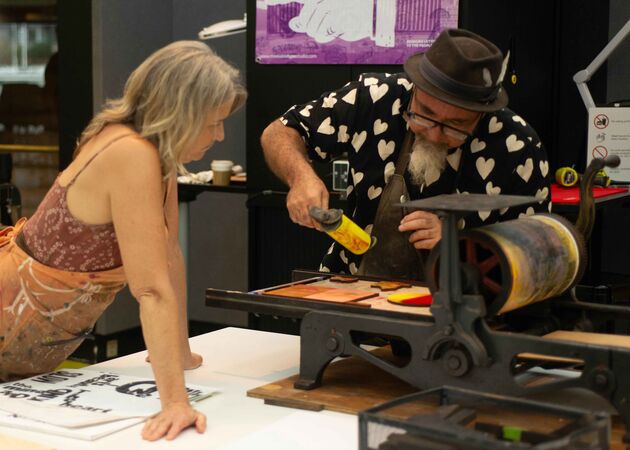
Clint inks a press at a Moveable Type artists book workshop at State Library, 2026. Photo by Dzintra Menesis.
Historical collections as inspiration
Clint and Dzintra led a Create Your Own Artist Book Workshop series at State Library’s make and design hub, The Edge, in early 2026. ‘The artist book workshops were exciting because they let us bring together technologies separated by hundreds of years,’ Clint says.
‘Participants handled wood type, mixed ink, composed type and physically experienced what pressure, ink and paper do on a traditional letterpress. They then moved to The Edge's digital fabrication facilities and used laser engraving to produce contemporary relief printing plates.
‘State Library’s collections became the bridge between those two worlds.
‘We introduced participants to the catalogue, One Search, and the library's digitised collections, particularly historical material from The Queenslander. Images were taken out of their digital context, prepared for laser engraving and transformed into physical relief printing blocks.
‘Participants then put those blocks on a press alongside traditional type and printed from them.
Everyone produced their own small-edition artist book or zine. They weren't simply learning how an old printing process worked – they were using it as a contemporary creative language.
‘The workshops sold out, which was encouraging, but for us the real success was seeing people discover that these technologies don't need to compete. A laser cutter and a centuries-old printing press can sit comfortably in the same creative process.’
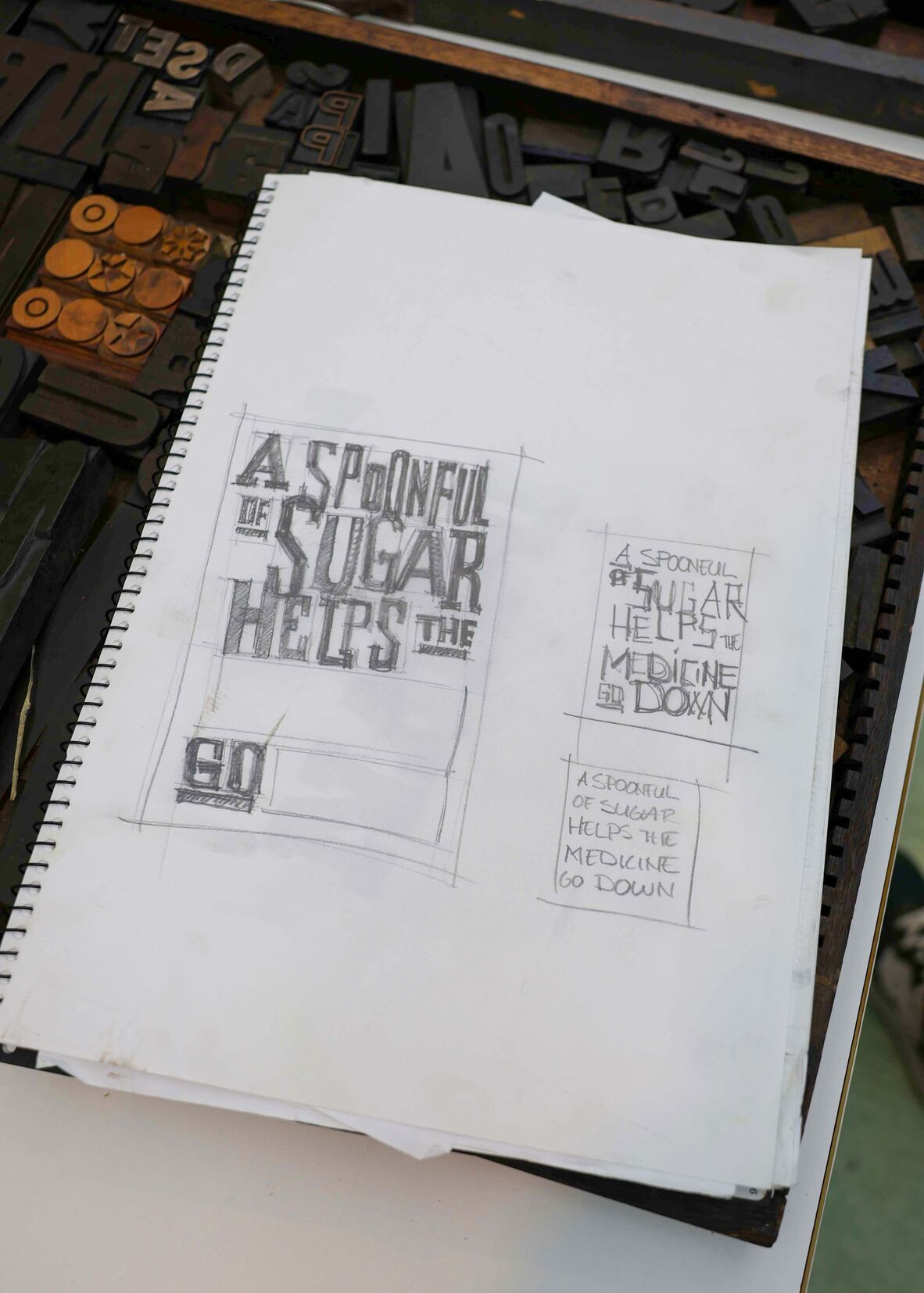
A concept sketch for Moveable Type's Mary Poppins Festival poster.
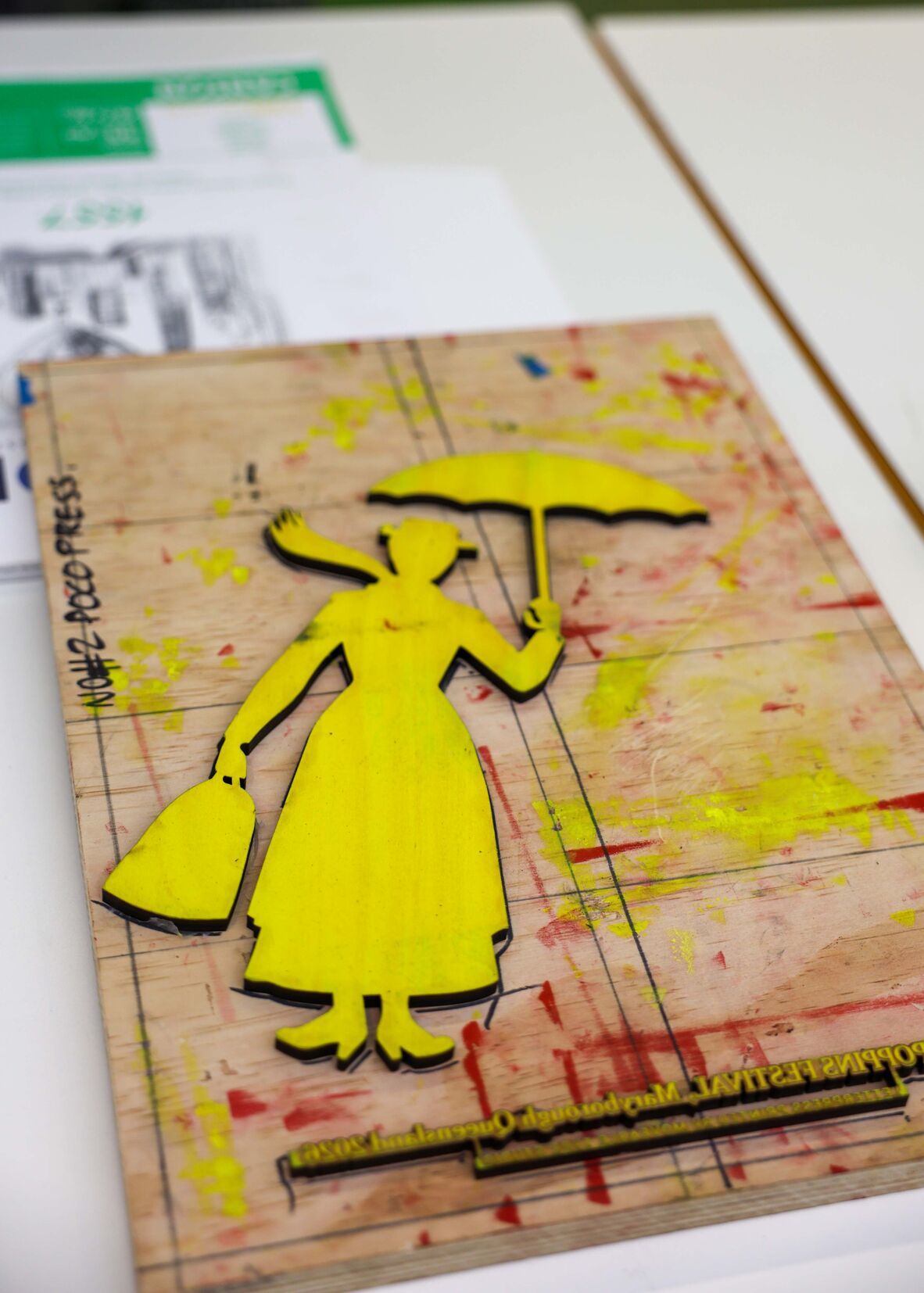
A laser-engraved Mary Poppins silhouette created from State Library collections.
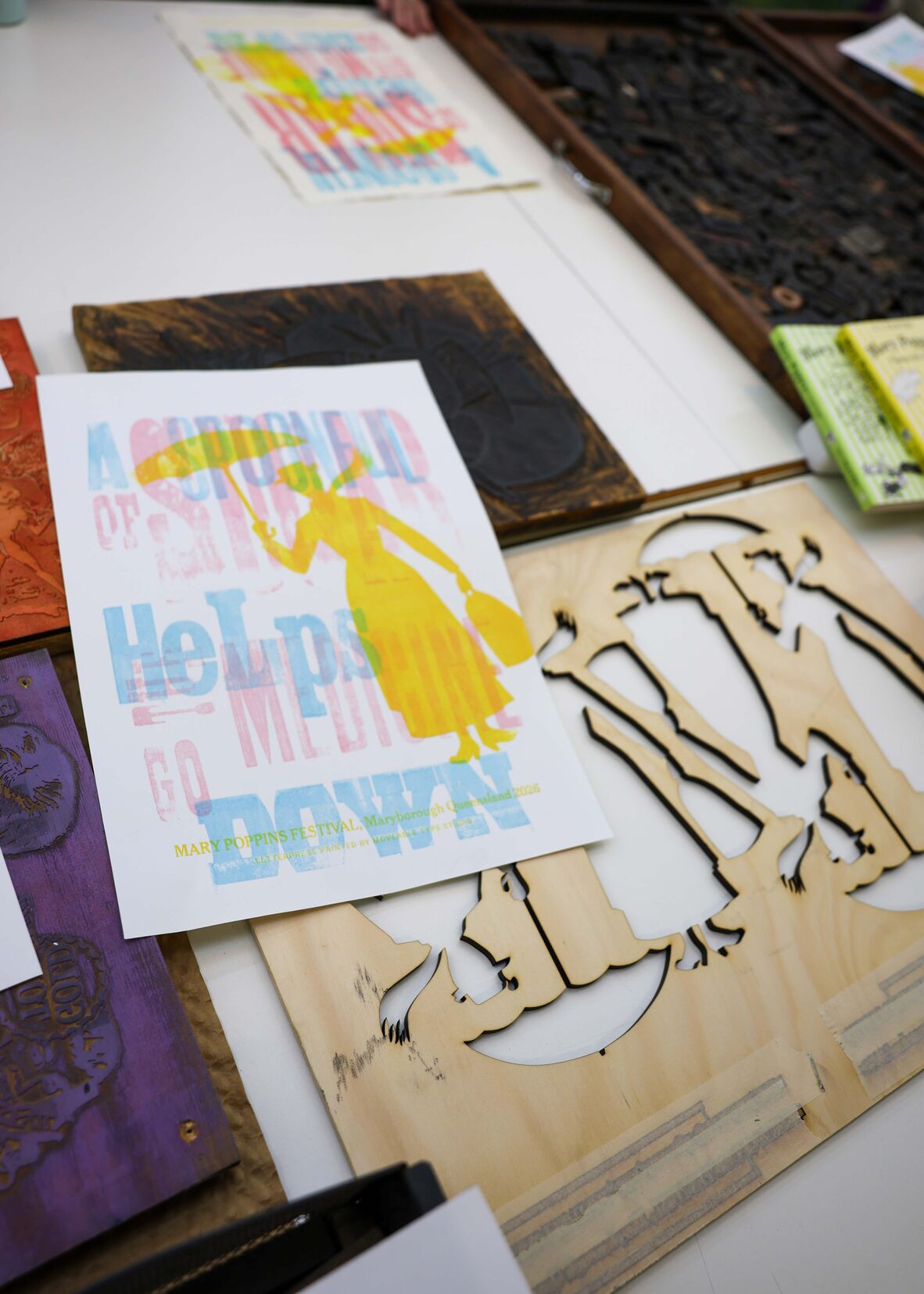
The poster used visual language from the rare Mary Poppins books in State Library's collections.
A spoonful of sugar
For a public activation at the 2026 Mary Poppins Festival in Maryborough, Clint and Dzintra designed and printed a poster that drew on visual language from State Library’s collection of rare Mary Poppins books.
‘Rather than simply making something that visually referenced Mary Poppins, we began with historical material and stories held within the collection and thought about how those collection items might be translated into something people could print and take away,’ Dzintra says.
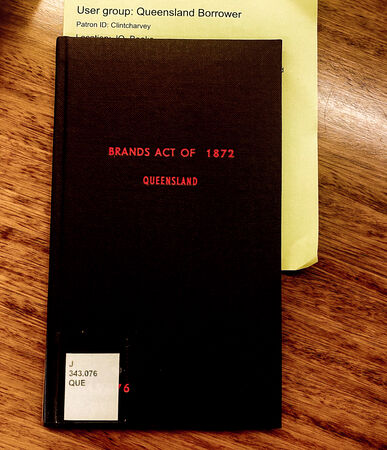
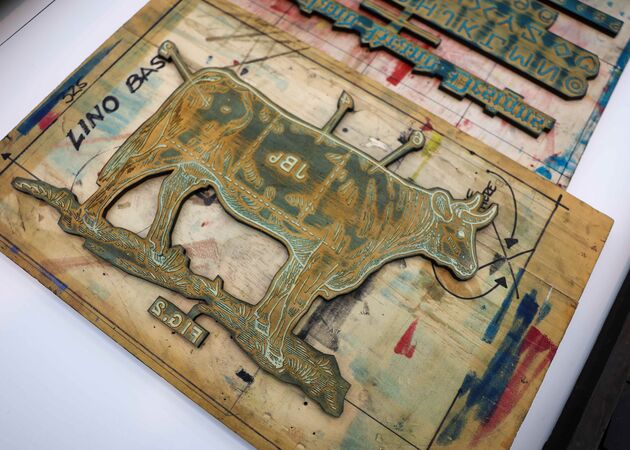
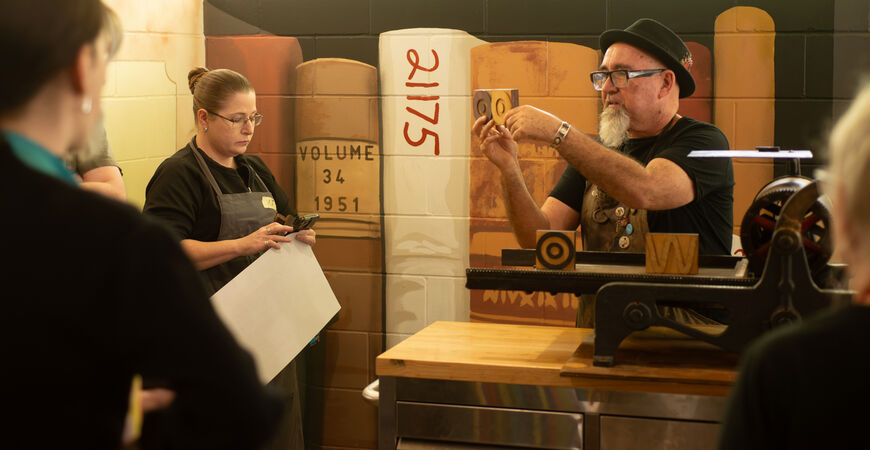
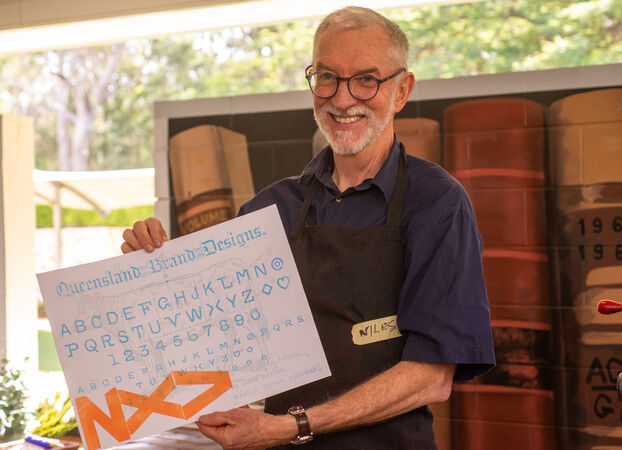
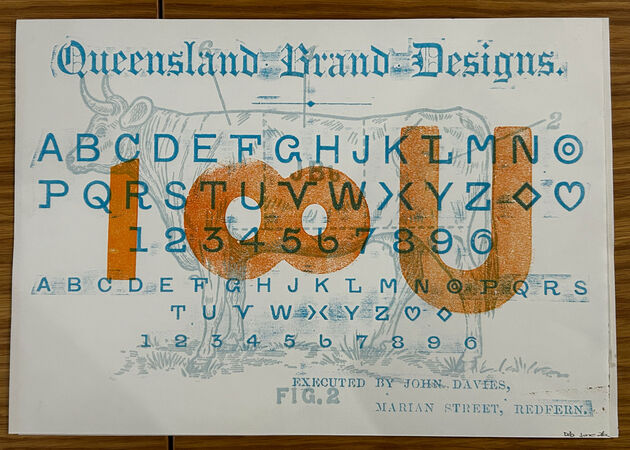
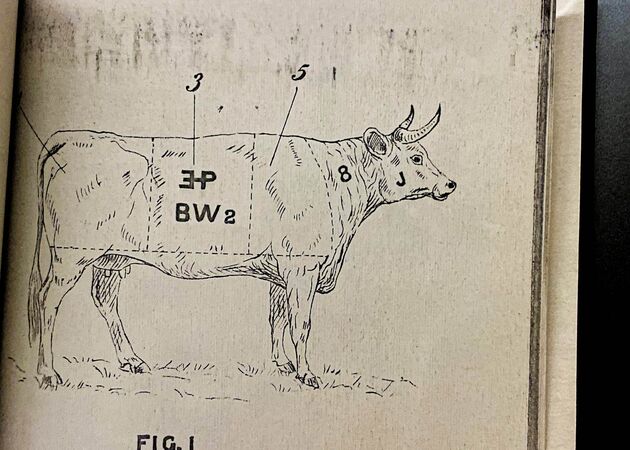
Image of illustration from the Brands Act of 1872 Queensland, John Oxley Library, State Library of Queensland. Photo by Dzintra Menesis.
From branding irons to letterpress
Another archival creative project was based on the typography of the blacksmith-forged branding irons used to mark livestock. Working alongside Dr Melissa Silk, Clint and Dzintra researched Queensland Brand Designs, the unique typographic system developed to show livestock ownership and deter cattle duffing in colonial Australia.
Presenting their findings at the 2024 Association Typographique Internationale (ATypI) conference in Brisbane, they also collaborated with international typeface designer Troy Leinster to reinterpret the 1800s typeface and present a workshop using wooden letterforms fabricated at State Library.
The project led to a Queensland State Archives residency where workshop participants viewed government brand registers and discovered family connections to historic brands. This workshop also drew inspiration from State Library’s collections: a drawing in The Brands Act of 1872.
‘One wonderful historical illustration showed a beast marked with the positions where brands could be applied,’ Dzintra says. ‘We digitised that image then took it into The Edge and laser-engraved it as a relief printing plate.’
Participants printed the illustration on a historical press, then overprinted it with reconstructed Queensland Brand Design letterforms fabricated at The Edge and their own 3-piece brand.
‘That process is really representative of how we're working now: collection, research, digitisation, fabrication, letterpress, public participation,’ Clint says.
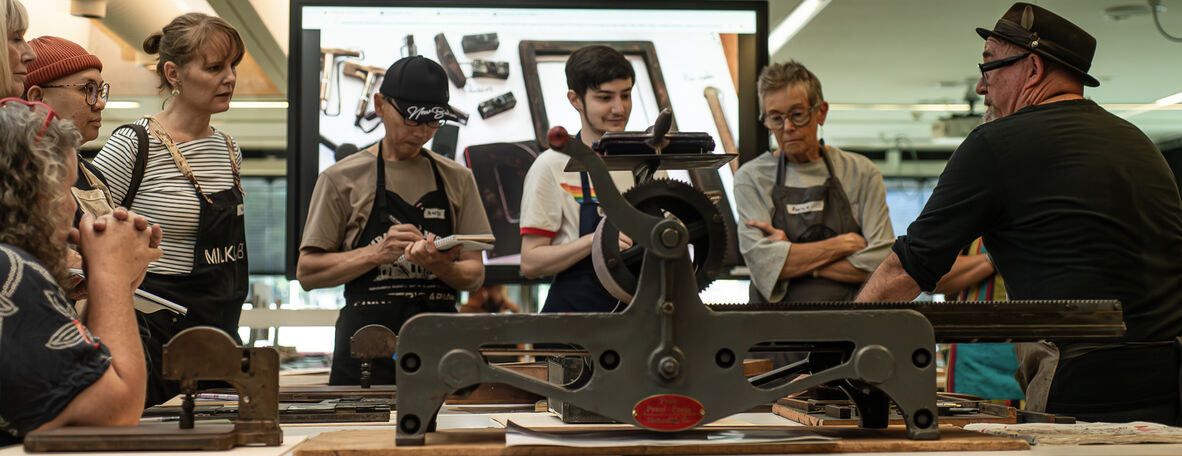
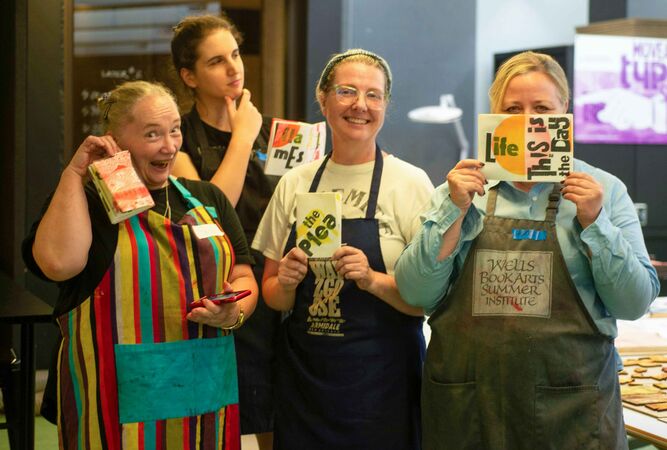
Moveable Type artists book workshop at State Library, 2026. Photo by Dzintra Menesis.
Ink in their veins
As 2025 Research Scholars with Sydney’s Powerhouse Museum, Clint and Dzintra explored the legacy of Frederick Thomas Wimble (1846–1936). Wimble produced what is recognised as the first commercially manufactured printing ink in Australia. F.T Wimble & Co. supplied inks, type, presses, machinery and equipment to printers across Australia and New Zealand for more than a century.
A 1930s Wimble ink recipe book in the Powerhouse collection caught the eye of the modern-day printmakers. ‘It opened up questions about what inks were made from, where those materials came from and how Wimble adapted inherited European knowledge to Australian conditions,’ Clint says.
‘Could we understand those historical recipes and then use them as a starting point for making contemporary printing inks using pigments and materials available in Australia today?
‘What happens when we don't just preserve historical knowledge but put it back to work?’
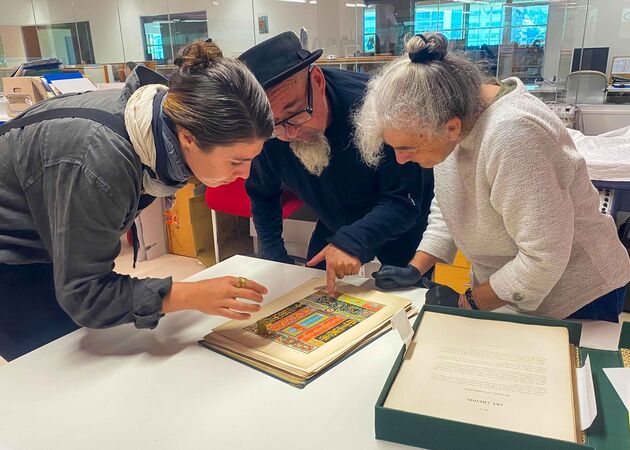
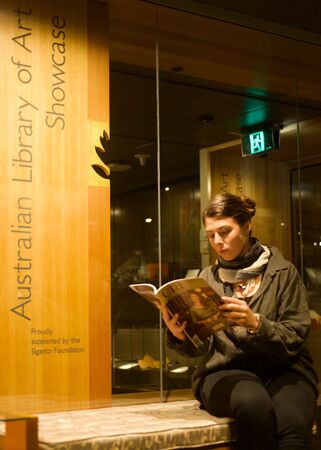
Graphic designer, printmaker and researcher Dzintra Menesis at the Australian Library of Art Showcase at State Library of Queensland. Photo by Clint Harvey.
All Things Bright and Beautiful
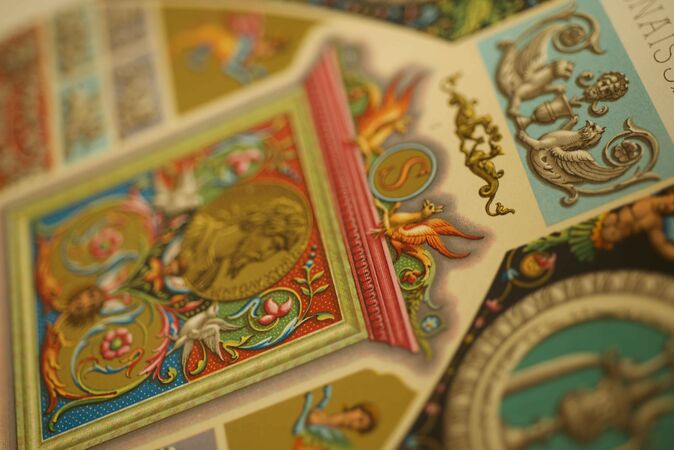
After a year immersed in the Powerhouse archives researching Wimble’s inks and Australia’s printing history, Clint and Dzintra unexpectedly encountered a thread of the story much closer to home. Walking into State Library of Queensland, they discovered All Things Bright and Beautiful, a 2026 Australian Library of Art Showcase exploring the history and material culture of ink.
It added another layer to their research, introducing collection material and stories that extended what they had been uncovering at the Powerhouse Museum.
‘It was a wonderful reminder that archives rarely exist in isolation. When collections held by different institutions begin to speak to one another, they can build a richer and more connected body of contemporary knowledge,’ Dzintra says.
‘One collection sends us looking into another, and quite often something we discover in an archive eventually ends up covered in ink and going through a printing press.’
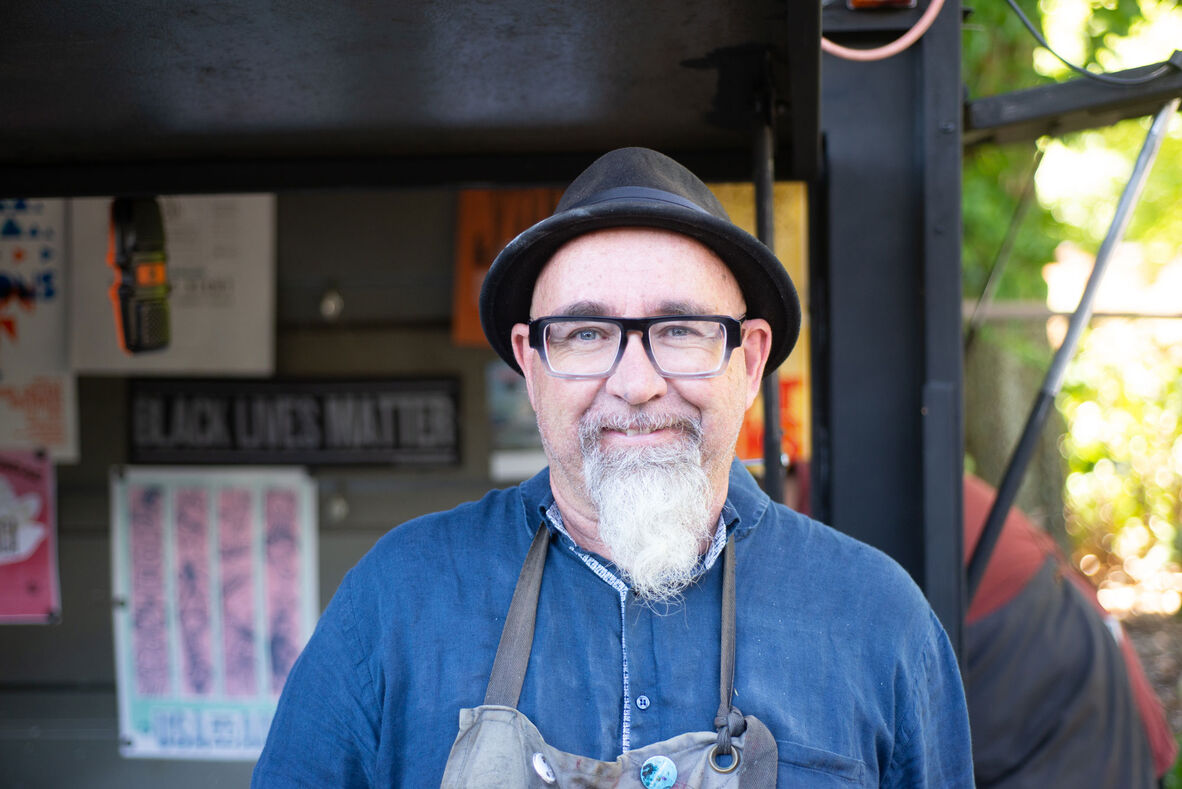
Clint Harvey, founder and director of Moveable Type Studio, on tour in Toowoomba. Photo by Dzintra Menesis.
A trade with rich history
Clint joined the graphic arts trade in Brisbane in the 1980s, in its final years before desktop publishing, and became an avid collector of woodtype, lead type, printing presses and linotype machines. ‘Every town had its newspaper, and every newspaper had its printers,’ Clint says of the lead type era.
He learned much of his letterpress craft from Bob Read, a pressman with more than 70 years in the trade. Clint has spent years recording the stories of the printers and compositors who built the industry, including Keith Williams, one of Brisbane's last linotype operators.
In a digital age, Clint says, the analogue craft of letterpress brings the fundamentals of good typographic design to the fore: ‘For designers trained on screens, letterpress makes letter space, word space and pressure physical again. That understanding carries straight back into digital work.’
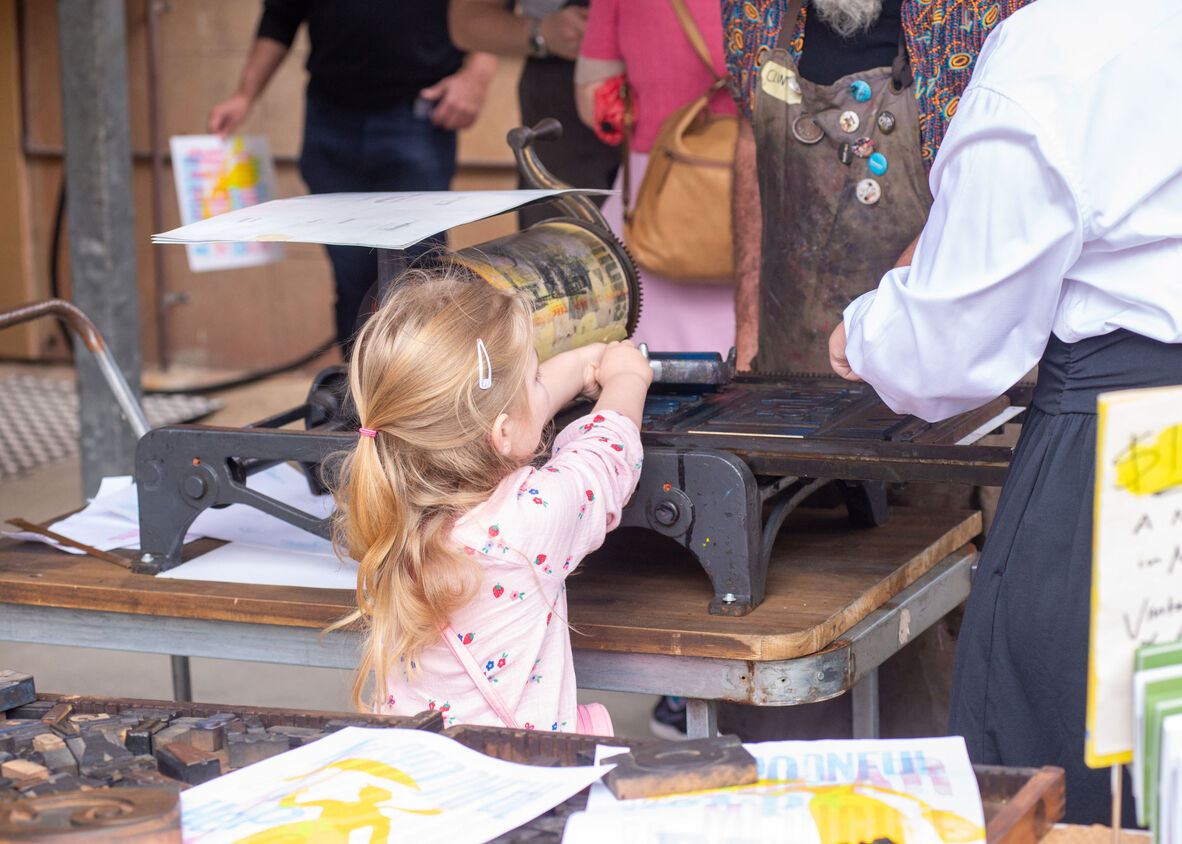
Moveable Type Studio's Mary Poppins Festival activation, September 2026. Photo by Dzintra Menesis.
No stopping these presses
Moveable Type Studio takes historical presses and type into regional towns, festivals and libraries so people can set type by hand and pull their own prints.
Their 2025 Flying Arts-funded tour took the studio to Mackay, Rockhampton and Toowoomba, pausing for a 6-week Regional Arts Development Fund-supported residency at the Queensland Museum Rail Workshops in Ipswich. Drawing on the museum's railway tickets and union posters, the team ran public workshops and a schools program. They collaborated with Waanyi artist Gordon Hookey, whose hand-drawn letterforms became custom type for a First Nations storytelling workshop. They worked with local schools and the IPSARI Arts Collective to create a giant relief block that was pressed onto fabric using a road roller.
The studio has been awarded funding through Arts Queensland to support a 2027 regional tour through Maryborough, Gympie, Mackay, Townsville and Cairns, working with galleries, cultural organisations, artists and communities along the way.
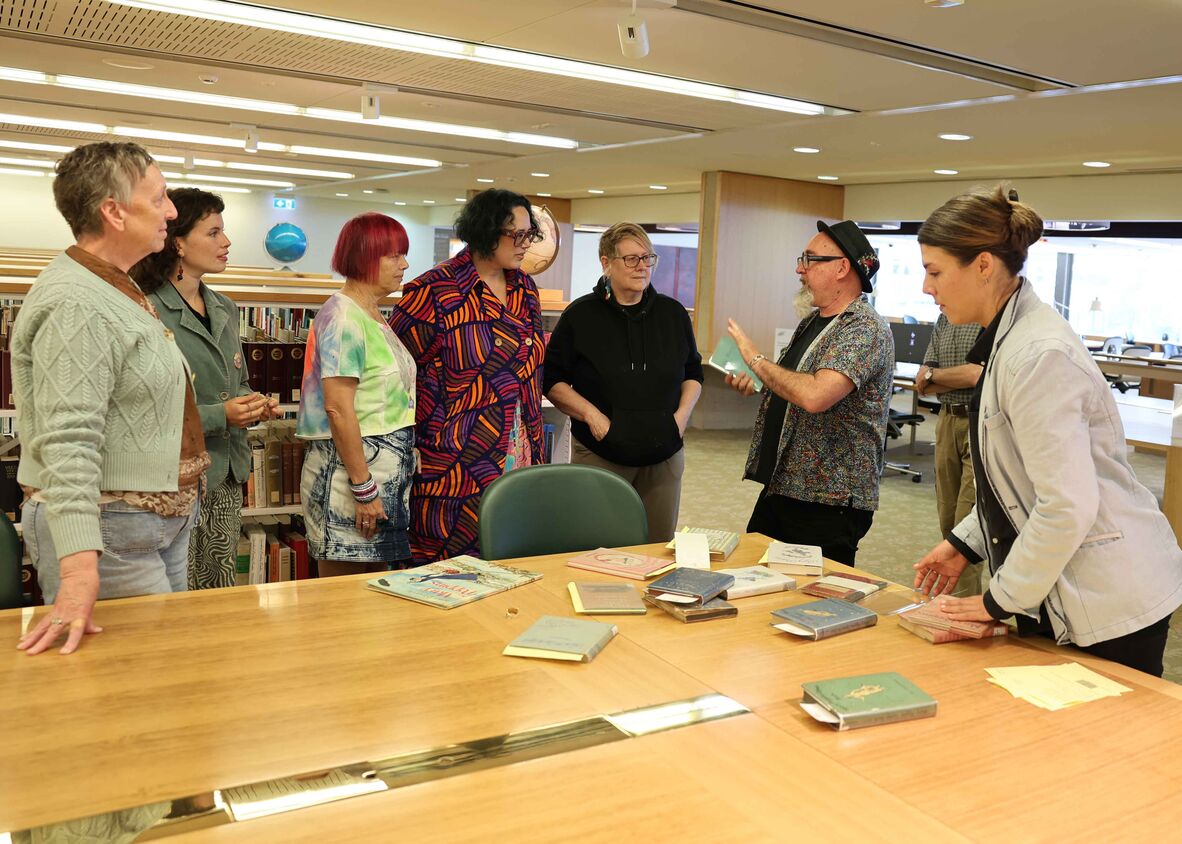
Workshop participants look at Mary Poppins books in the John Oxley Library Reading Room on level 4 of State Library of Queensland.
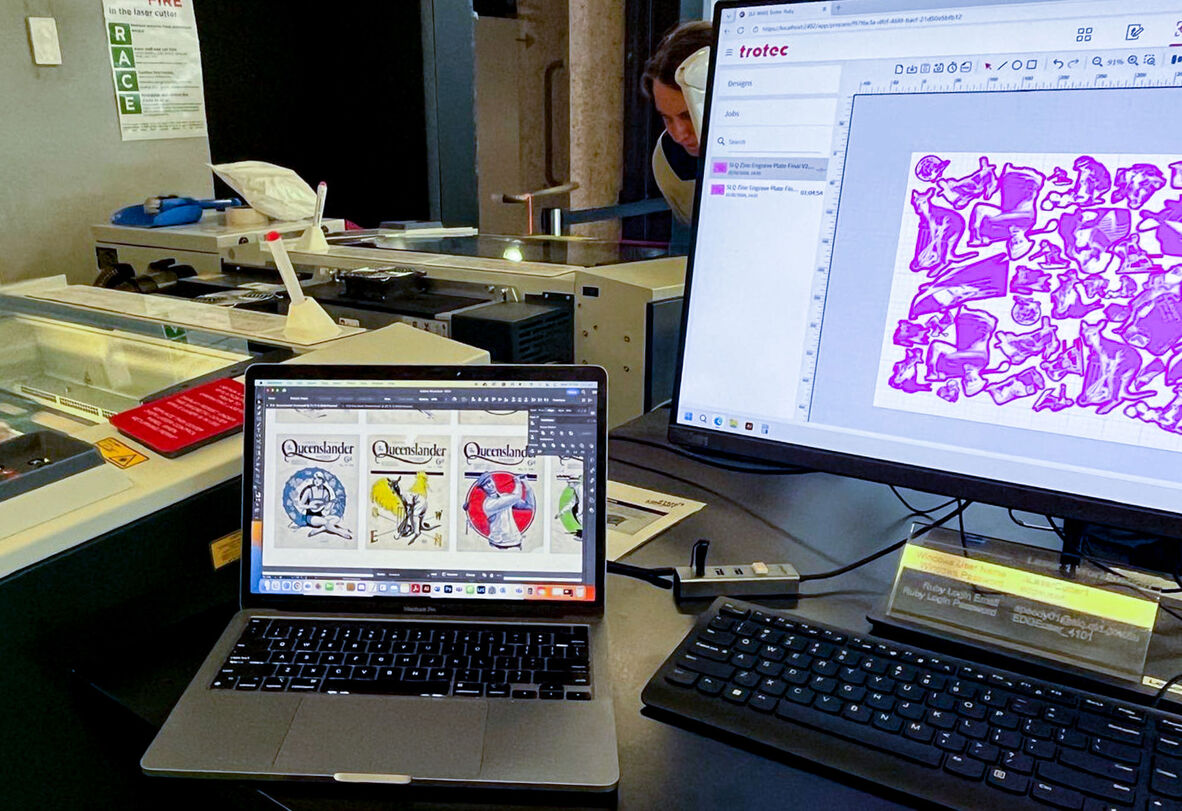
Using covers from The Queenslander to create laser-cut elements for Moveable Type Studio workshops at State Library.
Access as a creative catalyst
Beyond the words and images, State Library’s collection reveals a multitude of hidden stories to Clint and Dzintra as researchers, designers and letterpress printers.
‘One of the most inspiring things is simply access,’ Dzintra says.
‘We live in a period where an extraordinary amount of cultural material has been digitised and made searchable. You can be sitting in a studio in Brisbane or regional Queensland late at night, follow a thread through the catalogue and suddenly find a photograph, advertisement, newspaper illustration, type specimen or document that completely changes the direction of a project.’
‘There is still something very different about encountering the physical object in the John Oxley Library Reading Room. Looking at the scale of a book, the texture of a piece of paper, the impression left by type, the colour of an ink or the marks made by the person who originally used something can tell you things a screen simply can’t.
‘For printers, this is the thrill: holding the evidence of how something was made. What excites us is being able to move backwards and forwards between those two forms of access.’
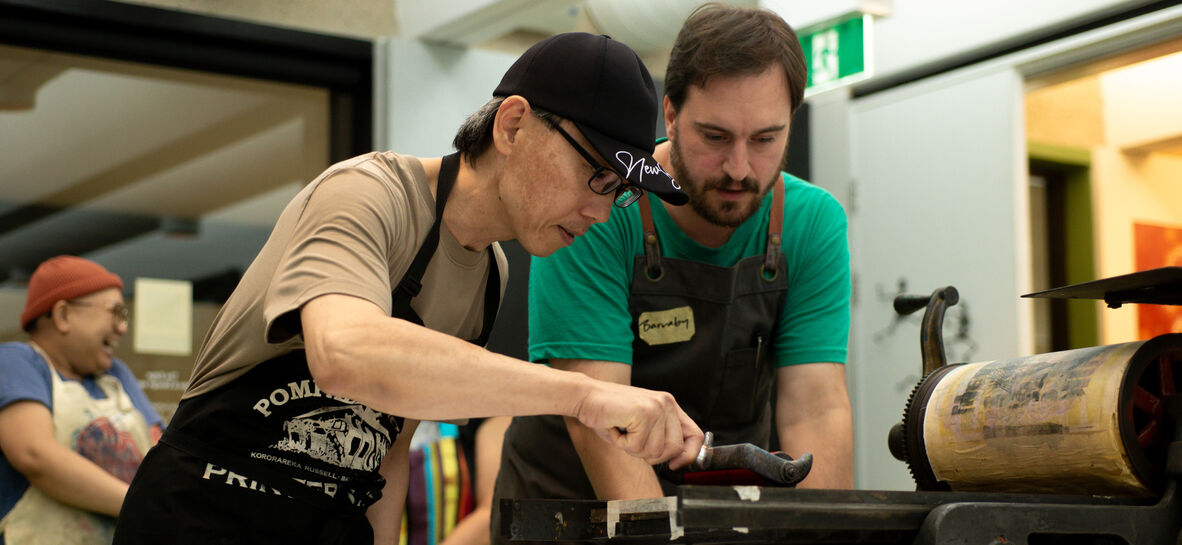
Moveable Type artists book workshop at State Library, 2026. Photo by Dzintra Menesis.
‘For us, that's when a collection comes alive'
Clint says as makers, their instinct is often to ask: ‘What can we do with this?’
‘An engraving from The Queenslander can be scanned and laser-engraved into a relief printing block that workshop participants ink up and print by hand. The brand designs registered under Queensland's 1872 Brands Act can be turned into type, so a contemporary audience can set those symbols and print them themselves.
‘For us, that's when a collection comes alive. The original object remains protected and preserved, but the knowledge contained within it starts circulating again. Someone handles it, interprets it, prints it, talks about it and perhaps takes a small piece of that story home.
‘That's probably what we love most about working with collections. They're not endpoints. They're beginnings.’
Catch up on the first instalment in our Made from Memory series: How Corley Explorer inspires artist Phoebe Paradise
Comments
Your email address will not be published.
We welcome relevant, respectful comments.