
- Home
- Aboriginal and Torres Strait Islander languages
/
Aboriginal and Torres Strait Islander languages
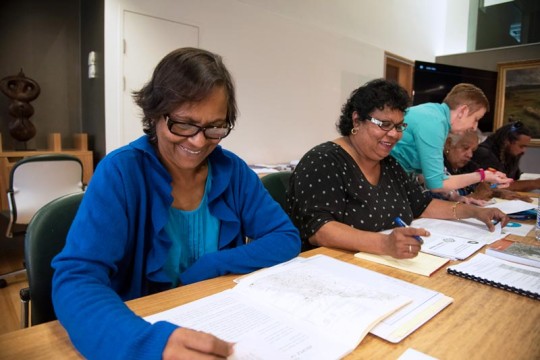
Did you know there are more than 150 Aboriginal and Torres Strait Islander language groups in Queensland? State Library of Queensland works with communities to support the preservation, revitalisation, and continuation of our traditional languages, including languages that are living and those that are sleeping.
We acknowledge language heritage and knowledge always remain with the Traditional Owners, Elders, language custodians and other community members of each language group and Country. We recognise that Aboriginal and Torres Strait Islander languages are intrinsically connected to and inseparable from Country, culture and community.
First Languages Map of Queensland
Explore Aboriginal and Torres Strait Islander languages across Queensland.
Programs and resources


Funding acknowledgment: State Library of Queensland's Indigenous Language Project is supported by funding from the Indigenous Languages and Arts Program (ILA) from the Australian Government's Department of Infrastructure, Transport, Regional Development and Communication: Ministry for the Arts.