Memorable people and places, chance moments, and inspiring works of art find their way into the words writers produce. Authors of all stages can pinpoint things that have altered the course of their creative lives. They can often say, ‘That was where it changed for me.’
In this series, we invite authors across Australia to reflect on 3 turning points that have shaped them, offering us glimpses into how each writer was made.
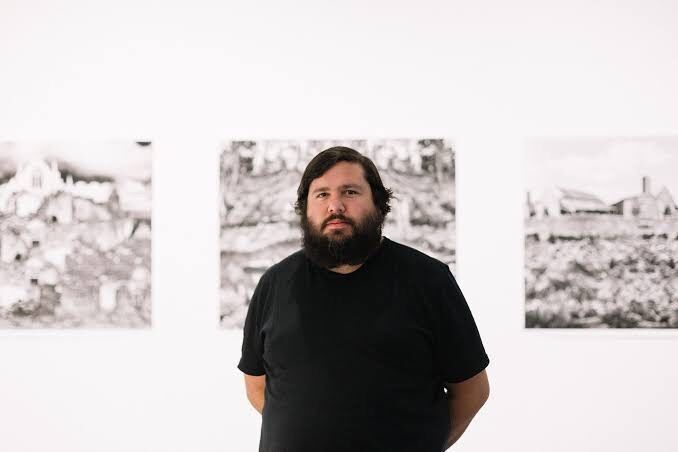
Today we welcome Dominic Guerrera, a multi-disciplinary artist of Ngarrindjeri, Kaurna and Italian heritage. His debut poetry manuscript called "Native Rage" won the prestigious David Unaipon Award for an Emerging Aboriginal and/or Torres Strait Islander Writer at the 2024 Queensland Literary Awards. Excitingly, it will be published early next year! Below, Dominic speaks candidly about 3 things that changed him as a writer.
Dominic's debut collection of poetry, "Native Rage", will be published in 2027 by University of Queensland Press.
A piece of art
By the time the album MTV Unplugged No. 2.0 was announced, Lauryn Hill was already part of the architecture of my youth. While The Miseducation of Lauryn Hill had moved through my early teenage years like a form of scripture, it was MTV Unplugged that felt like my baptism into writing.
Lauryn’s writing has an instructional force. She was neither commanding nor demanding, but rather a storyteller of truth. I was in my final year of high school when Unplugged was released, a formative year indeed, but also one where I was ready for the rawness that only adulthood could deliver.
Lauryn often strums on a guitar, instructing her band to roll through her pacing, her voice rough. Sometimes she pauses to remember lyrics. Plenty of critics found this rawness "unfinished”, the songs too fragmented, suggesting she was an artist in crisis, unable to match the polished genius of The Miseducation of Lauryn Hill. While Lauryn herself confesses some of the songs are unfinished or works in progress, this is not the point of the session. It’s Lauryn stripping away the machine of commercialism, the demands of record labels and the pressure of media. Here she is, Lauryn Hill, the artist-in-progress, no longer tied to your machine of productivity.
To me, as a young person beginning to understand my own relationship to words, this album felt like permission to go beyond the norm, especially if the norm is polished or chasing a style or benchmark. I felt exposed to a truth I had not been afforded before this. Maybe it was luck, finding a piece of art that hit at the right time. It felt so spiritual, beyond the flesh, something higher.
As a young person beginning to understand my own relationship to words, I gained an eternal permission. ‘Mystery of Inequity’ was the first song to reach me, as she steadily walks us through the corrupt world of courts and judicial systems. This song opened my eyes and ears to the fact that writing did not have to obscure truth to be poetic. Lauryn’s frank and confrontational style was liberating for me as a writer, as I witnessed her genius. Name it, call it for the bullshit it is, and refuse to be chained to politeness. We have greater work to do than being commodified.
Don’t bite your lips. Move them so the truth can be spoken.
Lauryn showed me that I could be political without abandoning the spiritual – and that imperfection often carries the truth more than perfection. At that age, I had no idea I would become a poet or even be published, but I knew that the lessons learned from Ms Hill would carry forward in my life.
Don’t hide the truth or yourself.
"Lauryn showed me I could be political without abandoning the spiritual – and that imperfection often carries the truth more than perfection."
A person
A recent trip to Auckland also coincided with the New Zealand Bear Festival (now, if you are unaware of queer bear culture, I suggest you do some PC internet searching, as the word limit for this article isn’t long enough for me to educate you on it). While attending the Mr NZ Bear competition, I had planned to meet up with a man, a handsome local bear. My expectations were low because we hadn’t spoken much on the app, but damn, his eyes were so cute.
I arrived way too early to an empty bar and, with no one to hang out with, I stood alone, sipping a Diet Coke. Within minutes I was trying to shake off an awkward man who had bailed me up against the mirrored wall. Then I received a text. Mr Handsome Local Bear had arrived, summoning me. Shit! Why did everything become so heightened, so self-critical?
Despite the anxiety, I walked through the crowd until I was able to forge a gap big enough to find Mr Handsome Local Bear standing at the bar, his thick hands wrapped around a glass and a smile aimed at me. (Given this piece will be posted on a public library page, it’s best I keep some details to myself, but I can safely say it was 2 days of instant connection and trust I had never experienced before.) I didn’t feel the need to hide my bank card or passport when he slept over. Two days felt like 3 months in each other's arms, or even 3 months in Rome. I had to return home and felt sick and sad with longing for him, a real Robert Jordan and Maria moment from For Whom the Bell Tolls. But after several months of communicating, reality kicked in and it was time that I retired from the fantasy of it all.
I wanted to write about Mr Handsome Local Bear because he inspired something I never thought I would write: a heartbreak poem inspired by country music lyrics. He inspired a shift in my writing style, one where I could be more introspective and vulnerable with my words, where it was okay to be personal. So thank you Mr Handsome Local Bear for being my country-poem muse.

In 1937 Ernest Hemingway flew to Spain to cover the Spanish Civil War for the North American Newspaper Alliance and wrote the novel For Whom the Bell Tolls. The protagonist Robert and his young lover Maria (referenced by Dominic above) meet for a short time but their romance cannot last.
An Event
I had never been invited to a writers’ festival. Before 2019 Adelaide Writers’ Week, I’d been in the audience only, fanboying over the poets and writers I had adored that year.
But in Writers’ Week 2021, I was invited as a writer, thanks to Jessica Alice, the former director of Writers SA, who had curated the line-up for a local poetry reading. Jess always generously supported me and my work. I was grateful and excited for the 7 minutes I had.
I knew I had to bring my best work. I wanted to impress the crowd, to flex my words and of course provoke some sort of response. I had decided to read my two hard-hitting poems "Unwelcome to Country" and "The Reconciliation Clap Along", 2 poems that challenge white Australia to confront its colonial violence and impacts on us Aboriginal people.
What was great and unexpected was that on a nearby stage was former prime minister Malcolm Turnbull, whose talk had ended shortly before I stepped onto the stage. Perfect timing for his devoted fans to leave his event, wander through the festival grounds, and stumble upon our little poetry reading. Many of them had arrived shortly before I hit the stage. They found their place among the crowd and settled in for what turned out to be an onslaught of anti-colonial poetry.
Before I started my second poem, several were already on their feet. I watched them slither out of the poetry reading, retreating among the coffee station and book tent, anywhere to escape my words. The snowflakes had melted away and we continued on with our readings, filling the space with unapologetic poetry that remained unwavering and unflinching.

"Unwelcome to Country", one of the readings Dominic performed at Adelaide Writers' Week, won the Oodgeroo Noonuccal Indigenous Poetry Prize in 2021.
Dominic Guerrera is a Ngarrindjeri, Kaurna and Italian person who resides on Kaurna Yarta. Dominic is a poet, artist and curator. His first collection of poetry, "Native Rage", will be released early 2027 through University of Queensland Press. Dominic was the recipient of the Oodgeroo Noonuccal Indigenous Poetry Prize in 2021, and the David Unaipon Award for an Emerging Aboriginal and/or Torres Strait Islander Writer in 2024.
Comments
Your email address will not be published.
We welcome relevant, respectful comments.