Nursing in World War II: Rae Knox
By Alaine Baldwin, Engagement Officer, Anzac Square Memorial Galleries | 7 October 2026
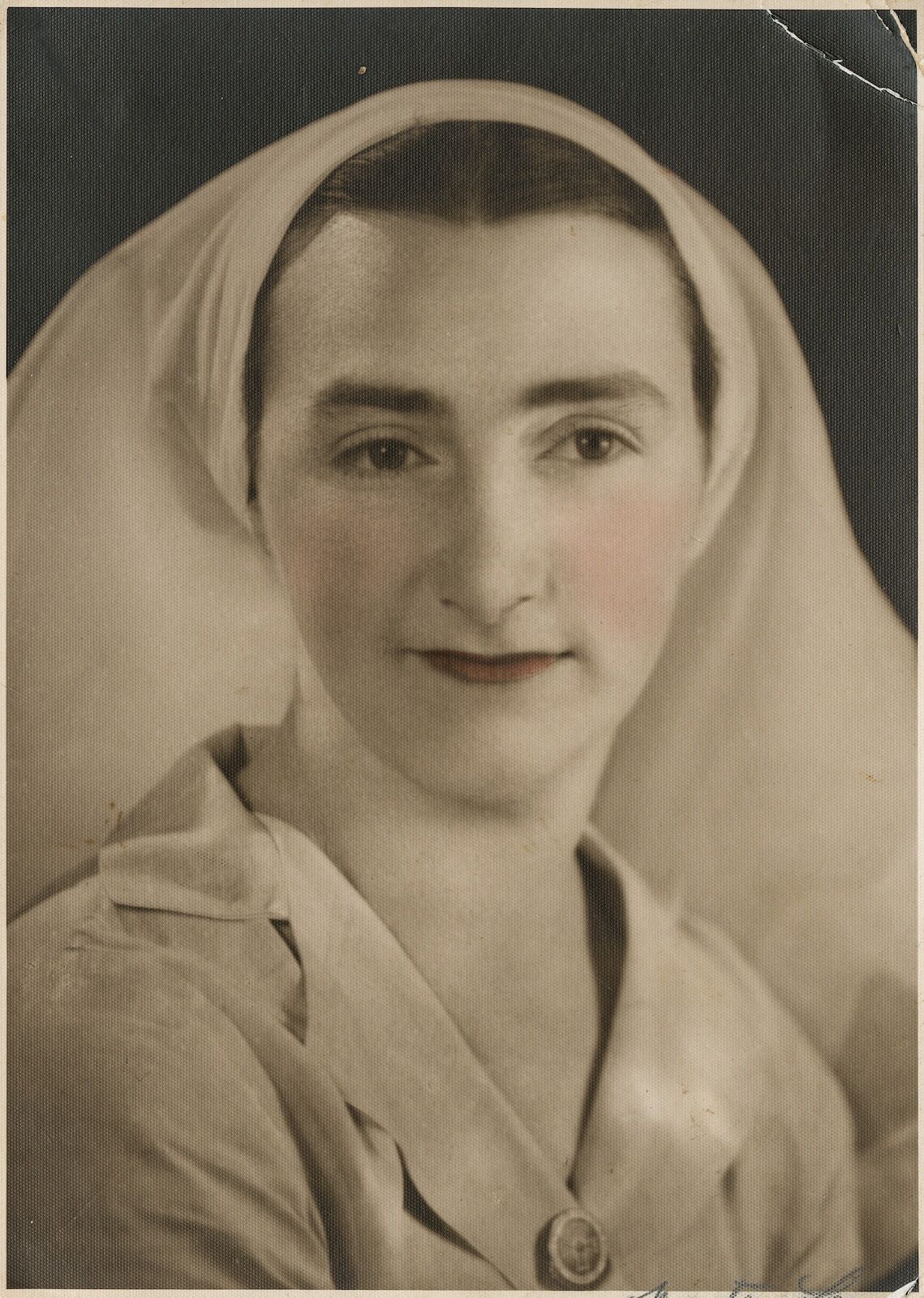
QFX55879 Rae Knox, nee Seamark, 33007, Rae Knox Collection, John Oxley Library, State Library of Queensland. Record no 99183949021202061.
Lieutenant Rae Knox (nee Seamark) served in the Australian Army Nursing Service (AANS) supporting the Australian troops for over 4 years during World War II. Rae’s parents Erskine and Marina were married in Beechworth in 1907, and her older brothers, Ralph and Leonard, were born in New South Wales. The family had moved to Queensland by the time Rae was born at Dingo Pocket, near Tully, on 20 May 1912. Her sister Elma was born in 1913, and at that time their father was listed as a dairyman in Malanda on the Atherton Tableland.
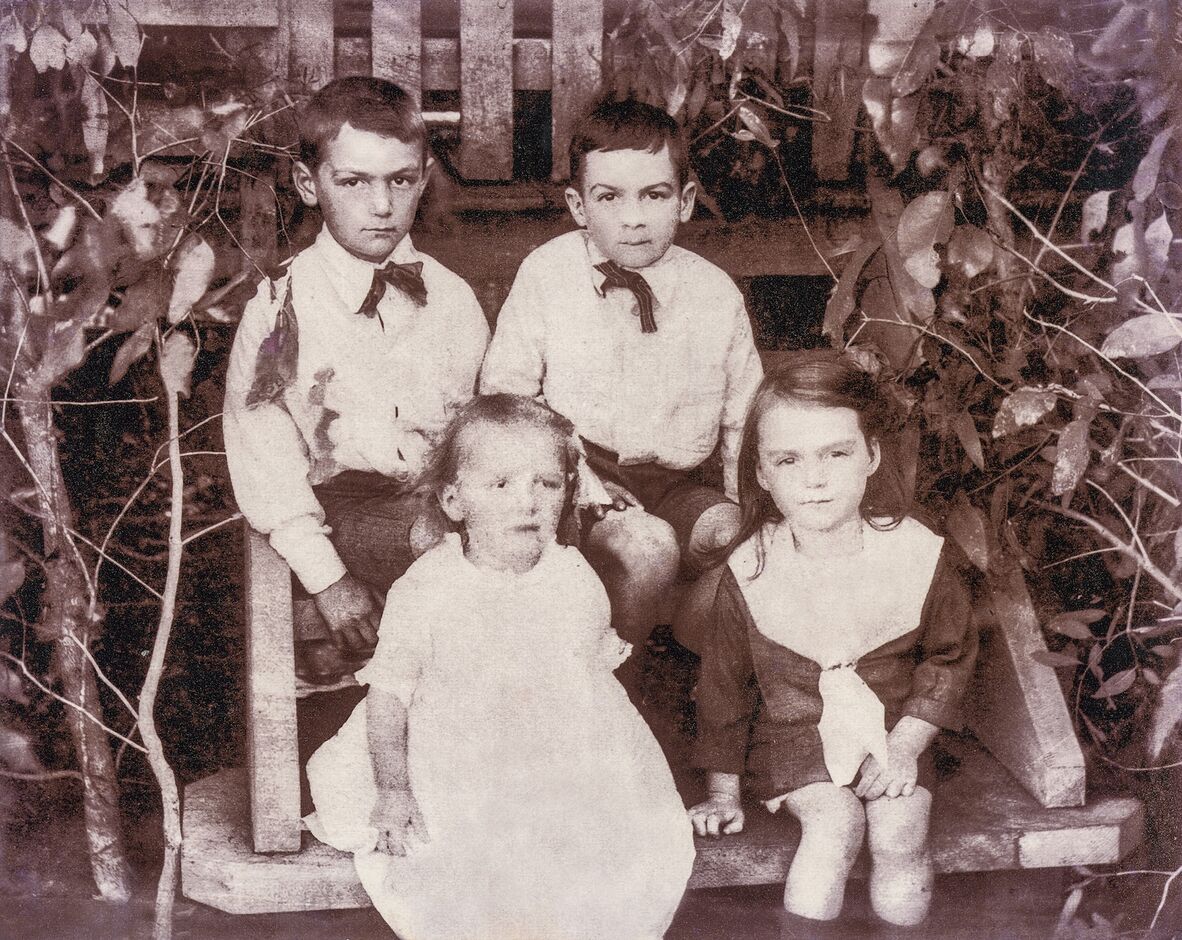
Young Rae Knox (nee Seamark) and siblings, circa 1914, 33007, Rae Knox Collection, John Oxley Library, State Library of Queensland. Image no 33007-0001-0021.
Growing up on the Atherton Tableland and attending St Mary's Anglican School in Herberton, it is not surprising Rae started her nursing training in 1930 at the Atherton Hospital. After completing her training in December 1934, she nursed in various hospitals in northern Queensland, including Herberton District Hospital and Innisfail, where she completed her midwifery training in 1936. Rae also worked at the Child and Welfare Nursing Clinic at Atherton and the Gladstone Hospital before she was called up to join the Australian Imperial Forces (AIF) in 1941, having enlisted when the war started.
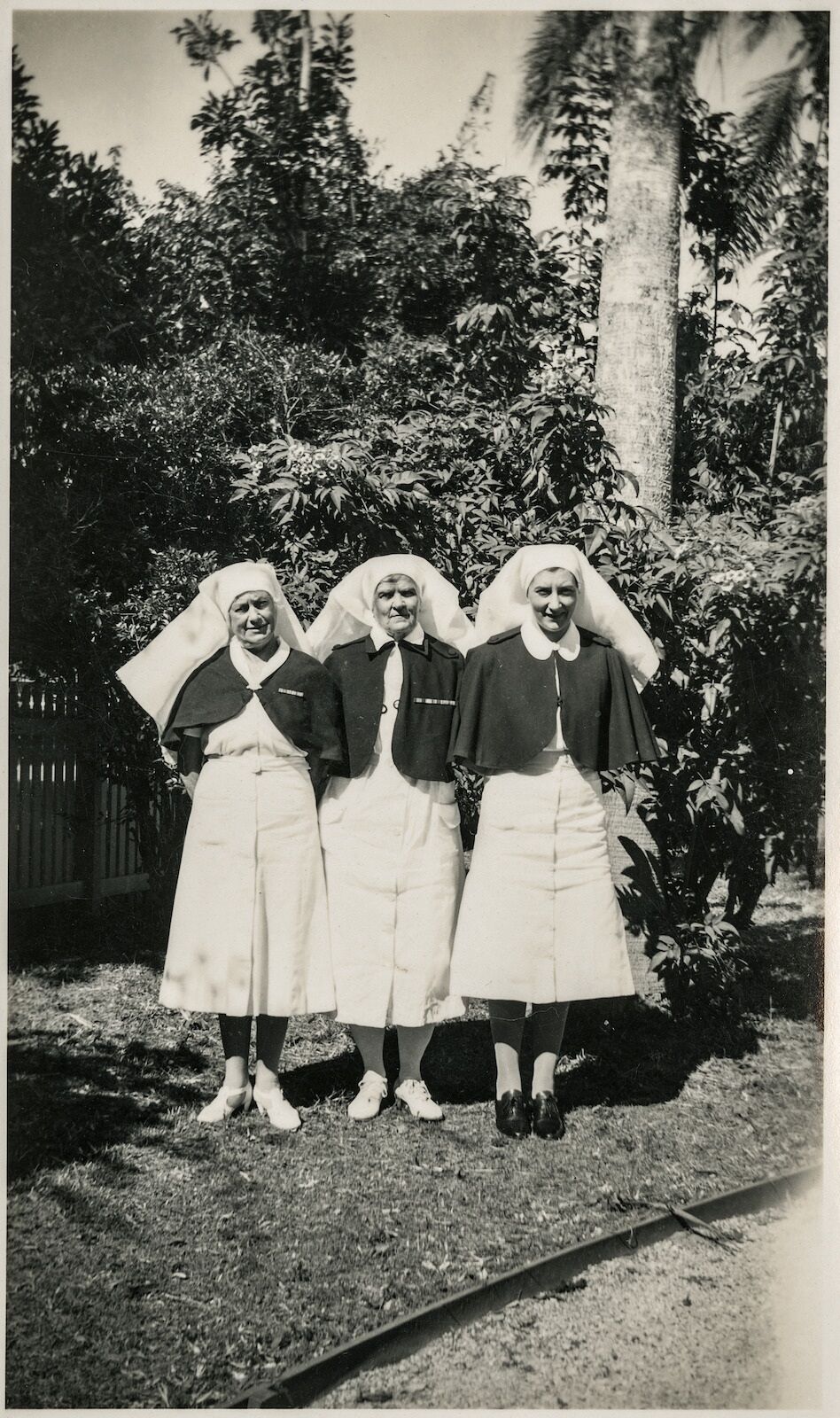
Rae Knox (Seamark) with 2 other nurses in uniform posed in a garden prior to enlistment, circa 1934-39, 33007, Rae Knox Collection, John Oxley Library, State Library of Queensland. Image no 33007-0001-0004.
Originally with the Citizen Military Forces, Rae was appointed for duty at the 112th Australian General Hospital (AGH) at Kangaroo point in September 1941, where she nursed wounded men returning from Tobruk. She was still with the 112th in March 1942 when it relocated to the new Military Hospital at Greenslopes, which had opened on 3 February 1942. Here she nursed patients with tropical diseases such as malaria, dengue fever and intestinal diseases as well as the wounded. This included the survivors from the 2/3rd Australian Hospital Ship (AHS) Centaur which was sunk off Brisbane on 14 May 1943.
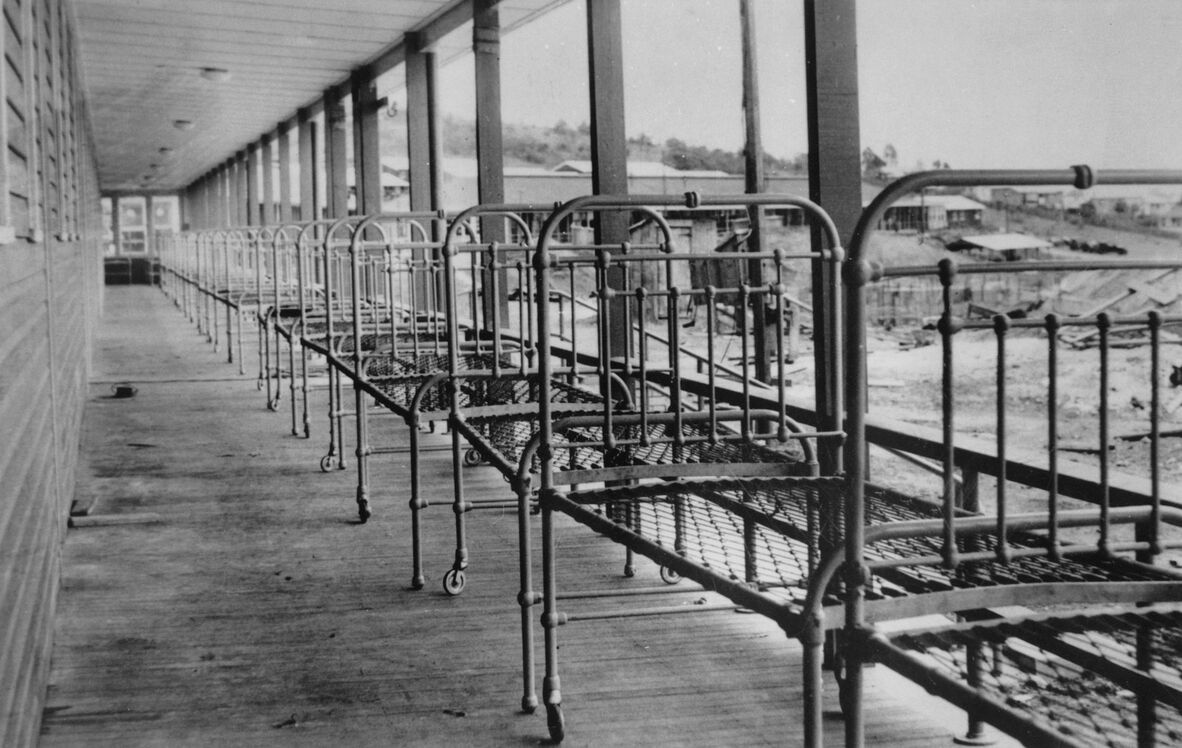
Beds on the verandah of the newly built Greenslopes Military Hospital, Brisbane 1942, John Oxley Library, State Library of Queensland. Negative no 34558.
Rae was not the only member of her family to enlist in World War II. Both her brothers and her father also served. Leonard, who was a carpenter, was the first to enlist in April 1941. He joined the 2/3rd Australian Forestry Company as an ’axeman’. After serving over in Britain from June 1941 to November 1943, he returned to Australia. His unit was sent to Lae in New Guinea in May 1944 and Leonard served there until October 1945, with a small break back in Australia from April to June 1945. Ralph joined up in January 1942 and was with the 2/7th Australian Infantry Battalion in New Guinea from February 1943 until their return to Australia in October that year. He suffered from malaria on his return and was discharged in July 1944. At the age of 64, Rae’s dad, Erskine, joined the 18th Battalion Volunteer Defence Corps based out of Innisfail and served with them from May 1942 until October 1945.
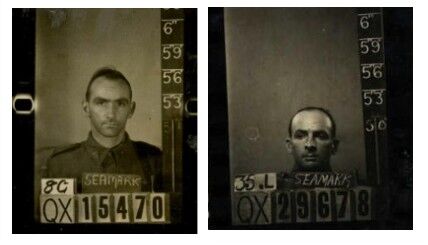
QX15470 Sapper Leonard Seamark and QX29678 Private Ralph Seamark enlistment photos, within service records, National Archives of Australia.
Keen to serve overseas, Rae transferred to the AIF in August 1943, as a Lieutenant. A memoir of her time in the AIF, held in the Australian War Memorial, gives us an insight into what her service from this time entailed. With the AIF she was allotted for duty at the 102nd Australian Casualty Clearing Station (CCS), which had been established in Cape York on Skull Creek, near Higgins Airfield, known to the Australians as Jacky Jacky. The 90-bed tent hospital was staffed by 8 nurses who dealt with casualties from Dutch New Guinea, including Merauke, and the many units stationed in the area. Rae's unit was there for 10 months from October 1943.
' At Jacky Jacky we lived in tents under blackout conditions. We nursed casualties from Dutch New Guinea. Snakes and crocodiles also added to casualties.'
On their return to Brisbane, the sisters were transferred to the 110th Australian CCS, which was back in Australia at this time but was scheduled to return overseas with the push to take back territories in the Pacific and Dutch Indonesia. At first, they lived in tents on the banks of the river at Strathpine and worked in hospitals around the area. However, they soon began training for active service and were sent to Wondecla, a major military camp on the Atherton Tableland near Herberton. The nurses spent short periods in the Rocky Creek hospitals. Once they were acclimatised and equipped, rumours of departure for overseas began. The men and nurses of the 110th Australian CCS finally departed Wondecla in April 1945 and en route the transport halted for a short time at Malanda so Rae could visit her mother who had been ill.
'At the time she glared at the uniform and muttered, 'You are not going overseas, are you?' So as not to concern her I replied, 'Only to Sydney.' Marina sighed and said, 'I'm glad.'
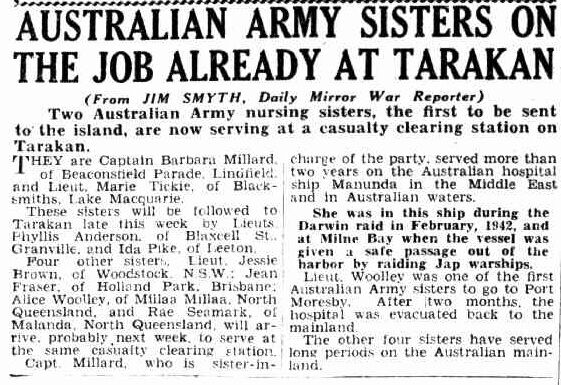
Australian Army Sisters on the Job Already at Tarakan, Friday 25 May 1945, The Daily Mirror, National Library of Australia (Trove). Page no 4.
The MS Wanganella transported the members of the 110th Australian CCS from Sydney to Morotai, in present-day Indonesia, where they arrived 18 April 1945. They staged there for 3 weeks, working with the 2/5 Australian General Hospital (AGH) before going to Tarakan. The Australian amphibious invasion of the small Japanese-held island of Tarakan, just off Borneo landed on 1 May 1945. However, the nurses of the 110th Australian CCS did not head to Tarakan until 29 May. The voyage from Morotai to Tarakan was on the AHS Manunda.
'There was no doubt that after caring for some of the survivors of the ill-fated hospital ship Centaur at the 112th AGH (Greenslopes, Brisbane), there was an atmosphere of apprehension as the hospital ship churned its way through the China Straits and onwards.'
On arrival the nurses were offloaded between lulls in the fighting and taken to the Casualty Clearing Station in the old Dutch Hospital, which had recently been abandoned by the Japanese army.
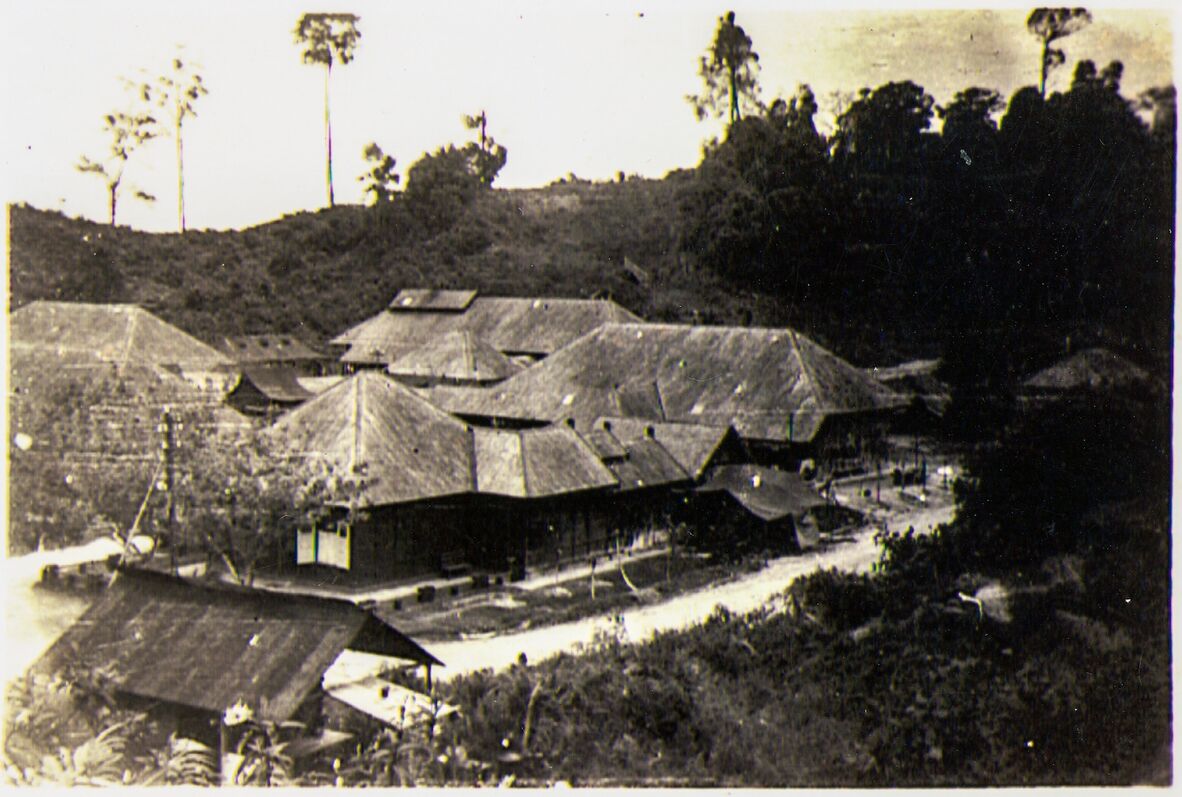
Casualty Clearing Station (CCS) Tarakan, Borneo taken from the air, circa 1945, 33007 Rae Knox Collection, John Oxley Library, State Library of Queensland. Image no 33007-0001-0016.
Sadly, there was a letter waiting for Rae at Tarakan telling her that her mother, Marina, had died on 1 May 1945. She had little time to mourn as the 8 nurses went straight to work. They were required to work in medical and surgical wards with theatre and resuscitation requiring 24-hour coverage. The hospital was a busy place as Australian casualties during the Tarakan campaign included 225 deaths, over 650 wounded and around 1400 evacuations due to illness.
'When the battles were in force and in the midst of heavy action, everyone worked wherever they were required. It was not surprising given the stench and the circumstances, that the nurses felt they would never be able to eat again.'
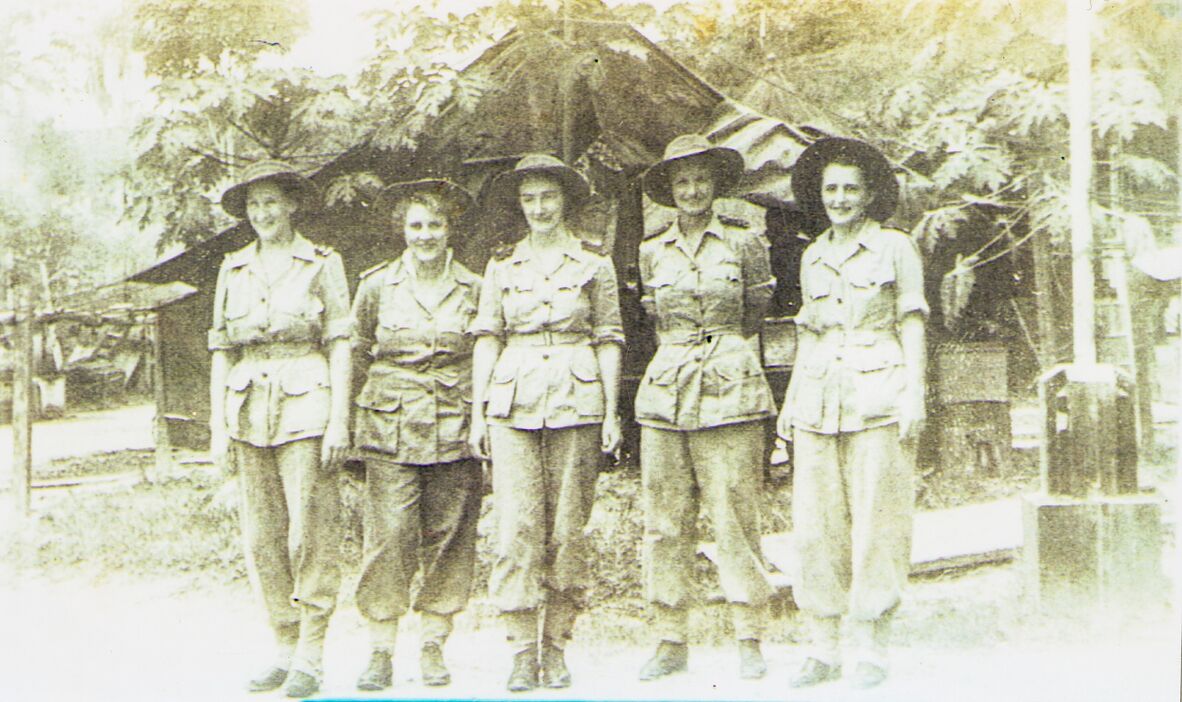
Rae Seamark (Knox) and nursing staff at the 110 Australian Casualty Clearing Station, in Tarakan, Borneo, 1945, 33007 Rae Knox Collection, John Oxley Library, State Library of Queensland. Image no 33007-0001-0022.
There was usually a lull after casualties were evacuated by hospital ship, so the nurses were able to relax and visit other messes on an evening off. On 25 August 1945 English comedienne Gracie Fields gave a concert at Tarakan as part of a morale boosting tour for allied personnel. She was billeted with the nurses and her husband Monty Banks stayed in the field officer's mess. Gracie graciously wore a corsage of orchids given to her by some soldiers during her performance. Rae recalls that Monty was not at his best when he was collected for the show, though Gracie ensured the 6,000 strong audience were unaware of this.
'To everyone's astonishment Monty was leaning over the railing clad in his underpants. It then became obvious that he was a little the worse for wear. Gracie dressed him and they both appeared on the stage but Monty was faltering so Gracie pretended that it was part of the act when she kicked him off the stage.'
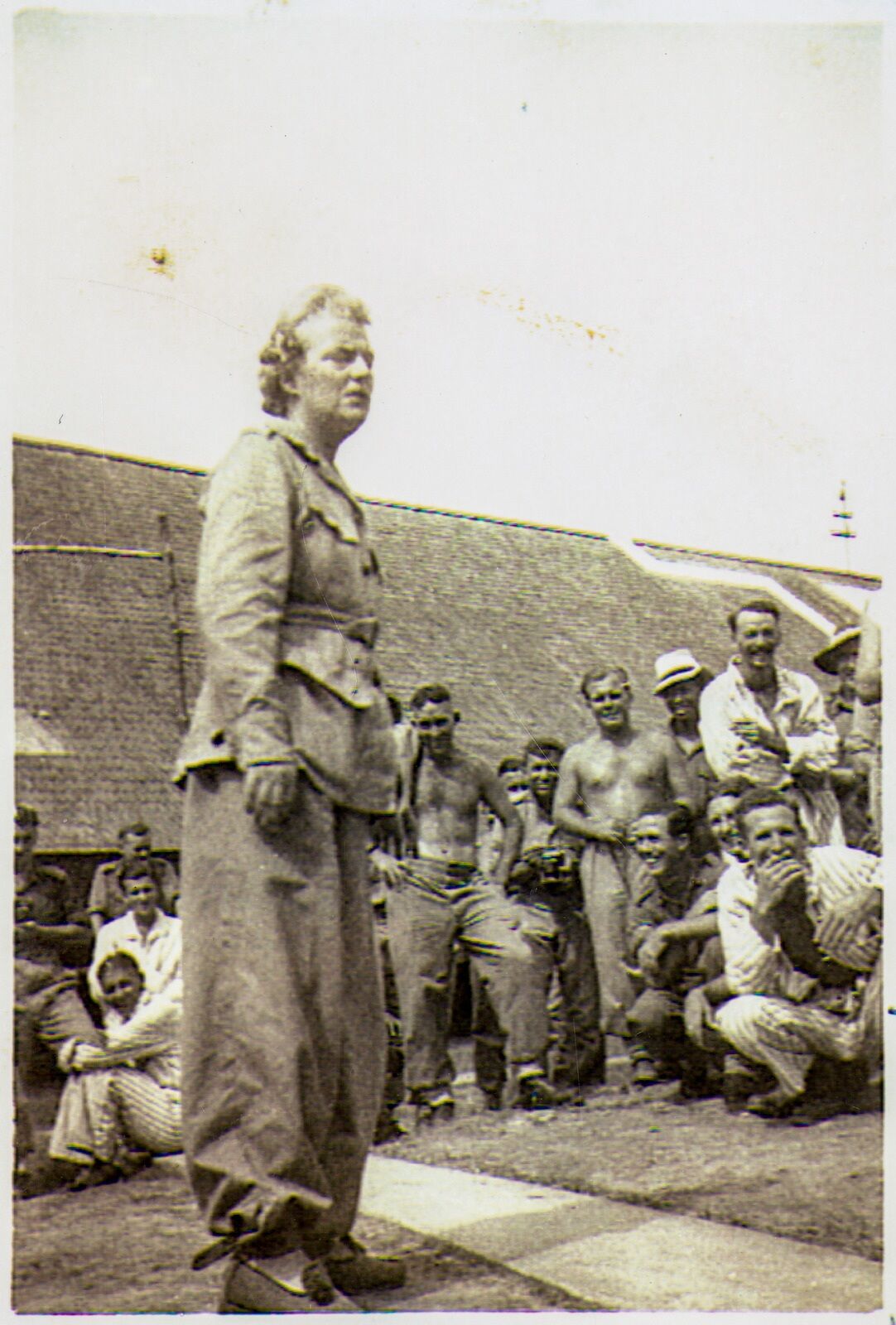
Miss Gracie Fields singing to patients, Borneo, 1945, 33007 Rae Knox Collection, John Oxley Library, State Library of Queensland. Image no 33007-0001-0015.
The hospital also treated enemy wounded and the medical personnel ensured they received the same treatment as the allied troops, even sending some to Australia in hospital ships when required. Rae didn't get to see much of the surrounding area as walks were only allowed close to the camp, and nurses had to be accompanied by a soldier carrying a hand grenade. That was until news of the dropping of the atomic bombs and the end of the war filtered through.
'All units must have commenced celebrating promptly because shouting could be heard and random sounds of gunfire which appeared to come from the direction of Air Force Headquarters. For a while it was not safe to venture outside but all fear disappeared when celebrations started at the unit.
While 2 of the nurses headed home after peace was declared the remaining 6, including Rae, stayed to care for the 'mopping up' force and to tend to prisoners of war as they were released from various camps. After five and half months at Tarakan, Rae left on 15 November 1945 and headed back to Sydney via Morotai. She was sent to the 115th Heidelberg Military Hospital in Melbourne, where she nursed returned soldiers. Her discharge from the AIF was on 26 February 1946, but she remained at the hospital until April 1945. On 19 January, a month prior to her discharge, she had married Noel Thomas Knox in Ballarat . Noel was with the Army Pay Corp in the AIF from May 1940 until October 1945, seeing service in the Middle East, New Guinea and finally as the Paymaster at the 110th Australian CCS, where presumably he and Rae met. Their daughter Jill was born in 1947, but her marriage broke down when a bout of encephalitis left Jill disabled. Rae continued to nurse supporting her daughter until retiring to Maroochydore in 1974. She remarried in 1984 and was Rae Parkinson when she died in 1999.
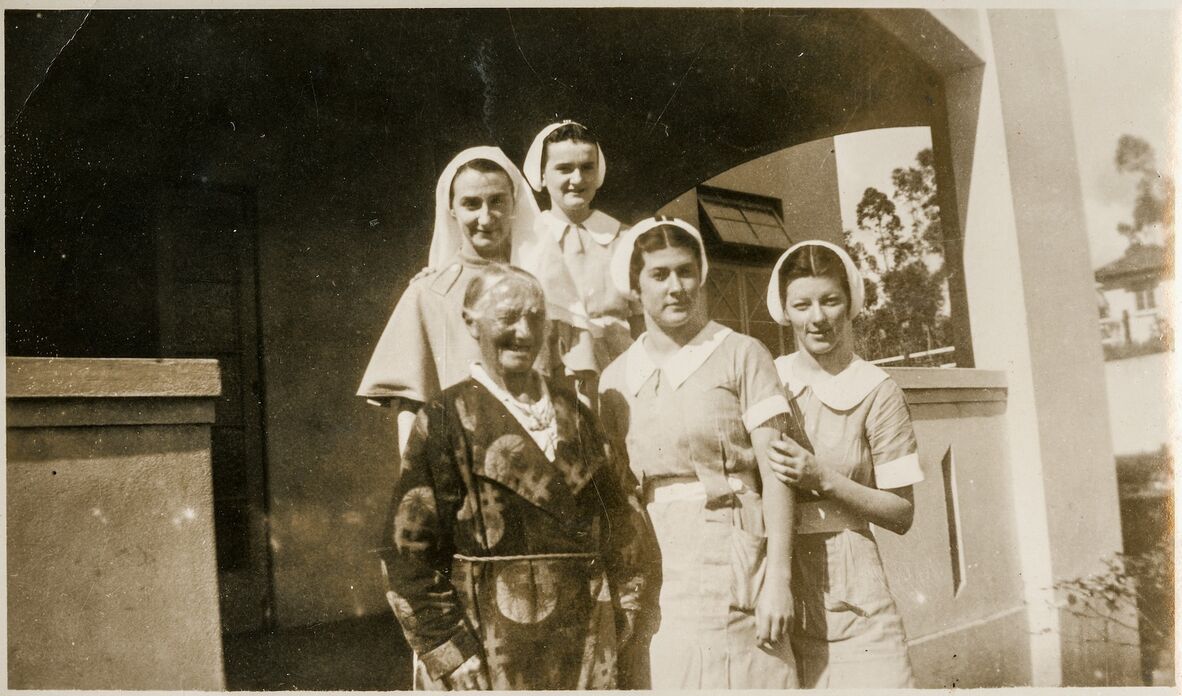
Four nurses, including Nurse Rae Knox, and a patient at Atherton Hospital where she was matron in 1954, 33007 Rae Knox Collection, John Oxley Library, State Library of Queensland. Image no 33007-0001-0024.
Despite some difficulties in her post-war life, she was always proud of her war service.
'Nursing soldiers was always rewarding. In a small way and in comparison, nurses were helping their country; always they were thinking and speaking of ways to make the men comfortable by keeping them cool in the hot climate, making tasty and nourishing drinks, serving meals with as much appeal as possible as well as dressing their wounds and supporting their morale. It was very comforting to hear about their mates and to hear news from home. There was always sadness when the Last Post could be heard in the distance.’
This Remembrance Day we remember and honour all those who have lost their lives in service as well as the men and women like Rae who have served their country in war and times of peace.
Further Reading:
- 'Jacky Jacky' and 'Tarakan' by Rae Parkinson (Lieutenant, b.1912 - d. 1999), memoir manuscript, Australian War Memorial, 2007. Accession no MSS1957.
- Rae Knox Collection by Guest Blogger: Edwina Crowther, 16 September 2021, John Oxley Library, State Library of Queensland.
- Service Records Rae Knox held in the National Archives of Australia.
- Service Records Noel Knox held in the National Archives of Australia.
- Service Records Leonard Seamark held in the National Archives of Australia.
- Service Records Ralph Seamark held in the National Archives of Australia.
- Service Records Erskine Seamark held in the National Archives of Australia.
- Higgins Airfield (Bamaga Higgins RAAF Advanced Operational Base)Red Point, Red Island or Red Island Point Airfield, Jacky Jacky Airfield, Anzac Square Memorial Galleries.
Comments
Your email address will not be published.
We welcome relevant, respectful comments.