#Madetoday Profile: 2025 in review with Open Lab regular, Tom
By Kat Johnston | 18 December 2025
Hi Tom! How has it been since we last spoke with you?
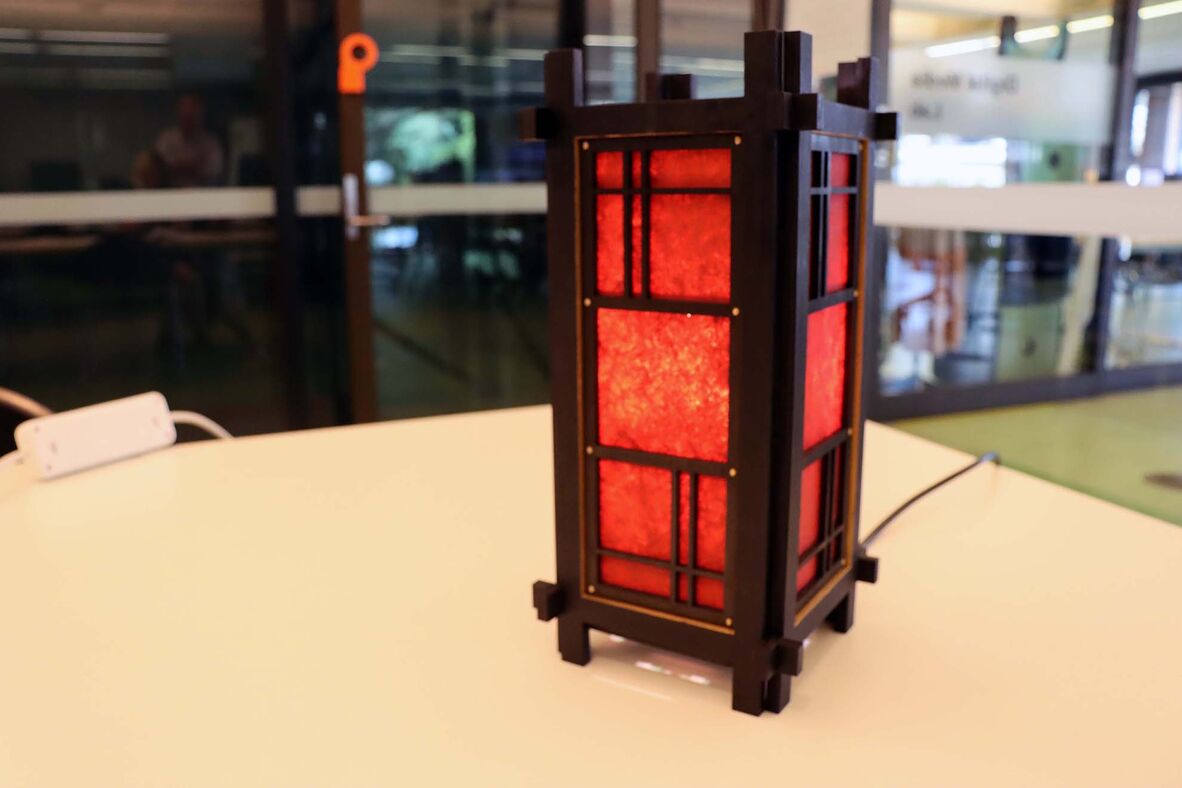
Since my introduction to The Edge and laser cutters with Mini Easels, I have gradually become a bit more familiar with a few of the basics of both Inkscape and the Trotec Laser Cutters available at The Edge.
It has been an enjoyable experience punctuated by episodes of embarrassment following naive and/or careless mistakes. Fortunately the staff are very supportive and I’ve developed my skills further in the past 16 months.
What were your highlights of 2025?
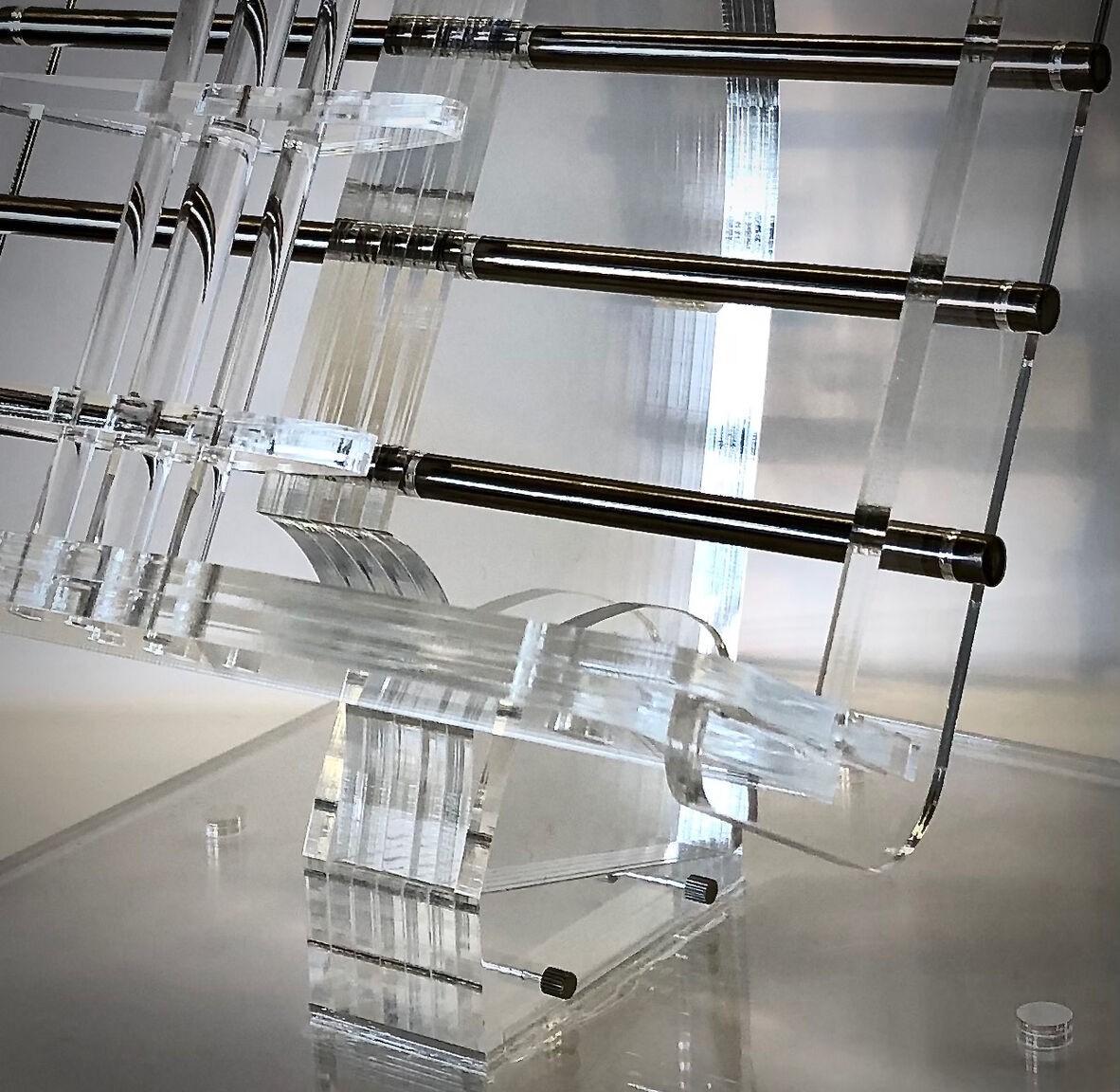
My first highlight of 2025 was designing and building my cook-book holder, because when I was searching for inspiration, I realised that every design I saw had limitations I wish to overcome.
Almost all the cook-book holders I found opened the book to 180 degrees. This stresses the spine of larger books and resulted in issues such as page edges curling inwards. Existing designs were also often opaque, obstructing the view of the open pages.
The two most common types of page edge holders to combat curling were either levers or variations of paperclips or rubber bands on the outer edges of the pages. Most designs also resulted in a bulge towards the central edges near the spine, which were less than ideal.
How did you tackle those design issues?
My final design opened books to 160 degrees rather than 180 and had a page holder that supported the 160 degree opening which placed gentle and adjustable pressure on the pages near the spine of the book to overcome the “page curl”. This device is adjustable for both the thickness of the book and the differential thickness of the two open “halves”. Furthermore it is translucent with a clear view of the portions of the page beneath it.
Were there any other considerations you took into account when completing your book holder design?
Another aspect of cook-book holders is their size, especially if they are designed to accomodate the larger size cookbooks that are currently fashionable. They can take up so much space and become a significant visual intrusion on your kitchen bench. While most of the books are attractive many of the holders aren’t.
This consideration led to my decision to craft my holder from clear acrylic plus some stainless steel for both strength and visual accents.
From the perspectives of book welfare, usability and aesthetics I consider it a significant design improvement.
So what was the second highlight of your creative journey at The Edge this year?
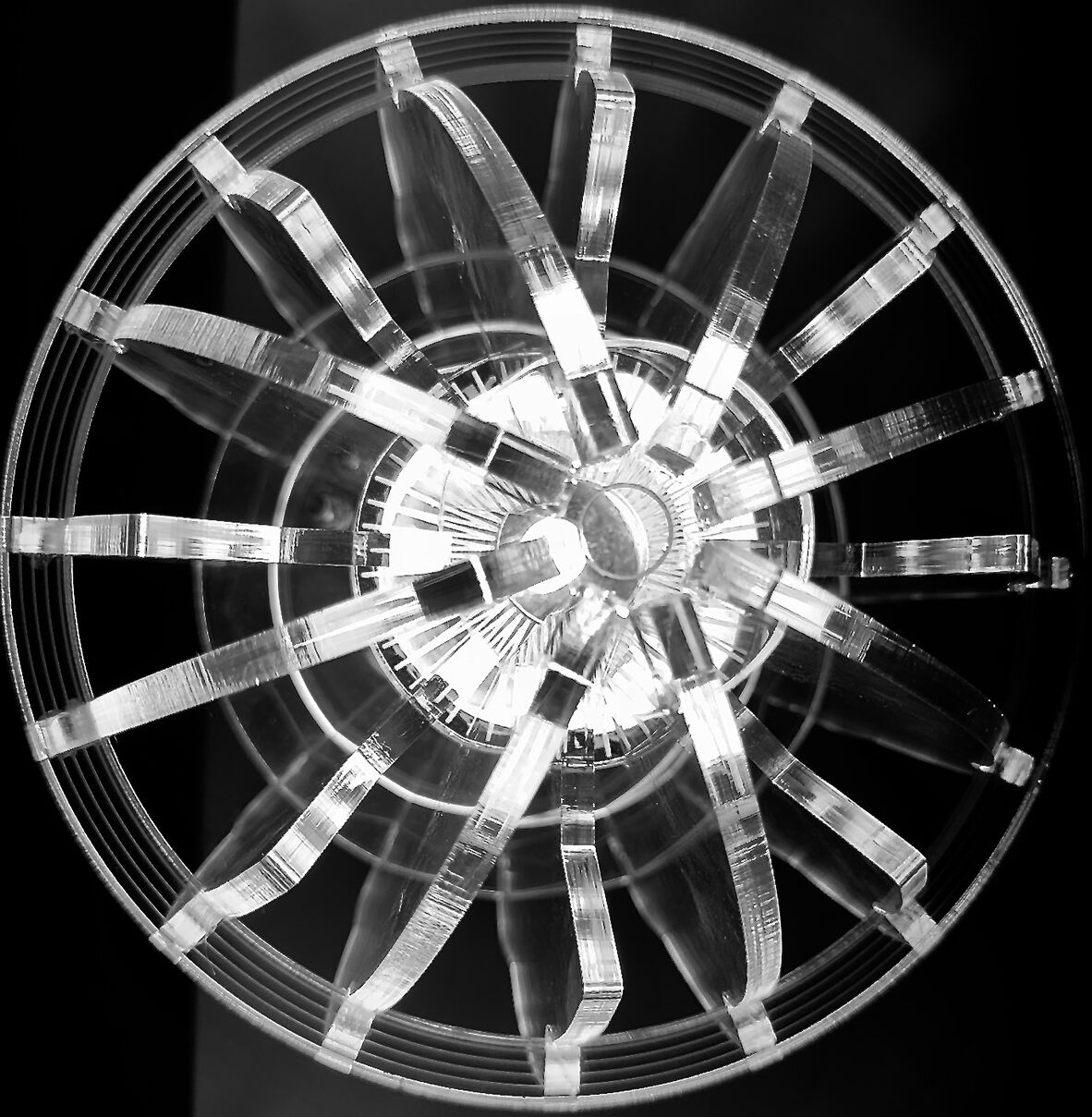
My second highlight of 2025 was the realisation of my long held ambition to build a futuristic and novel desk lamp. My design goals were to create a piece with a unique appearance, state of the art control system and a gentle light output. It was for ambient lighting moreso than focal illumination.
I chose to use clear acrylic for its light transmission properties and took advantage of how the different surfaces on the face and edge of the acrylic appear when illuminated. The overall design was influenced by Islamic geometry and flying buttresses.
You mentioned a state of the art control system - how did you implement this?
The lamp is controlled by one of 3 systems - either touch, voice (where it answers back) or 3G radar. The 3D radar is particularly interesting, as it can penetrate walls to turn the lamp on before you enter the room. This avoids walking into a dark room and having the lamp activate in a more abrupt way. The desired command system is selected by voice command and remembered between episodes of lamp use.
While the electronics and programming for the lamp could have been constructed at The Edge I chose to use my home workshop in this instance. I have aspirations to revisit this design and refine it further in 2026.
What else have you worked on this year?
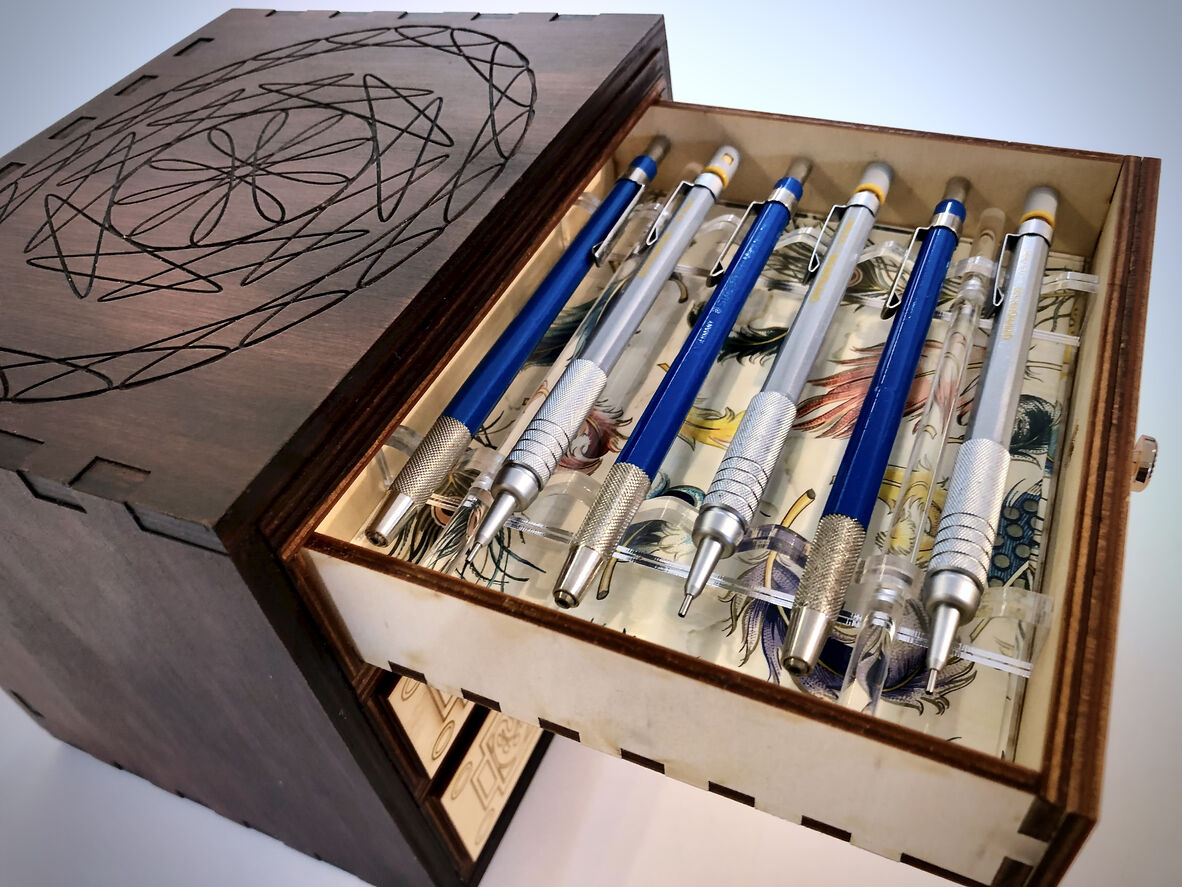
The mechanical pencil desk top box evolved from the frustration of having a number of pencils of varying thicknesses and hardness floating loose with myriad other things in one large drawer. The box I designed has 2 top drawers contain 12 pencils, and a bottom drawer containing leads and other accessories.
The pencils rest on acrylic spacers that make them easy to remove and stops them moving around. The bottom of the drawers is covered with Florentine paper.
The design for the individual drawers plus the outer shell is courtesy of Boxes.Py which interfaces beautifully with both the free and open source vector software, Inkscape, and the laser cutters at The Edge. These resources are a great place to start for anyone wanting to dive into designing for the laser cutter.
To add my own spin to the design, I created shadows around the edges by cutting the box joint fingers 0.5mm short and engraved the top, back and drawer fronts of the box. I also left the front of the drawers unstained, for some added visual interest.
Overall, I’m happy with this project and I’ve found it a joy to use.
Any challenges this year?
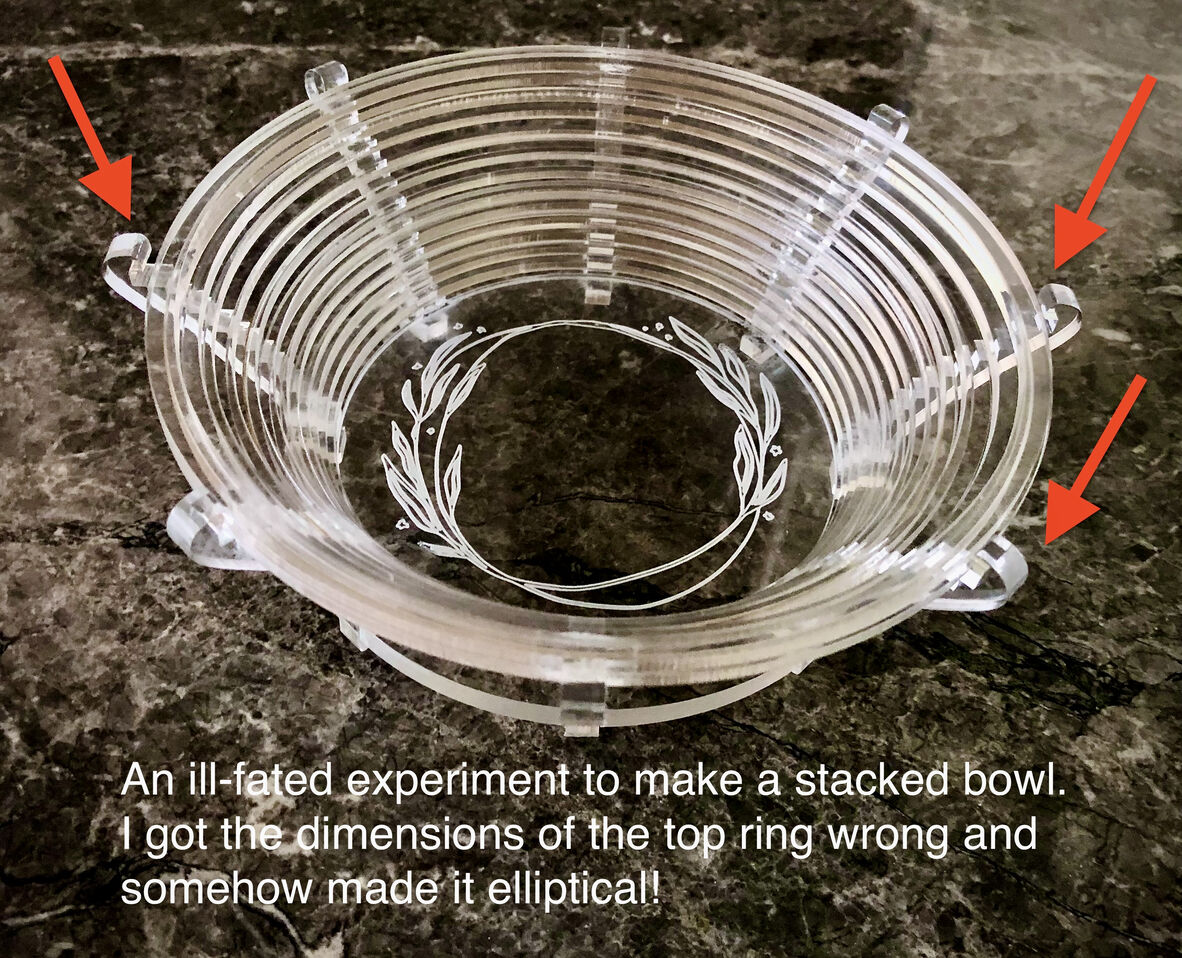
The major disappointment for the year was the stacked bowl I made. It’s a great example of 'compounding errors', where lots of little things add up to a significant total. It's a great reminder that shortcuts and impatience are not compatible with meticulous design!
Looking forward, what are you hoping to achieve at The Edge in 2026?
2026 will hopefully give me the opportunity to continue to improve my technical skills while looking at chair design (after all, you need to build miniatures). I also hope to explore marquetry and parquetry using laser cutters.
I remain grateful to the State Library of Queensland and to the very patient Staff at The Edge who are never too busy to share their expert knowledge with all who walk through the doors.
Thanks so much, Tom!
You can learn more about The Edge and the Facilities and Equipment available during Open Lab.
Subscribe to The Edge newsletter to be updated of future Workshops and Inductions and see What's On for all upcoming creative programs.
Comments
Your email address will not be published.
We welcome relevant, respectful comments.