For over 70 years, an aquatic invader regularly stalked Brisbane's waterways, bringing The River City to a literal standstill. This monster was not fearsome to look at, but it still threatened our way of life. This is the story of 'The Lilac Devil'.
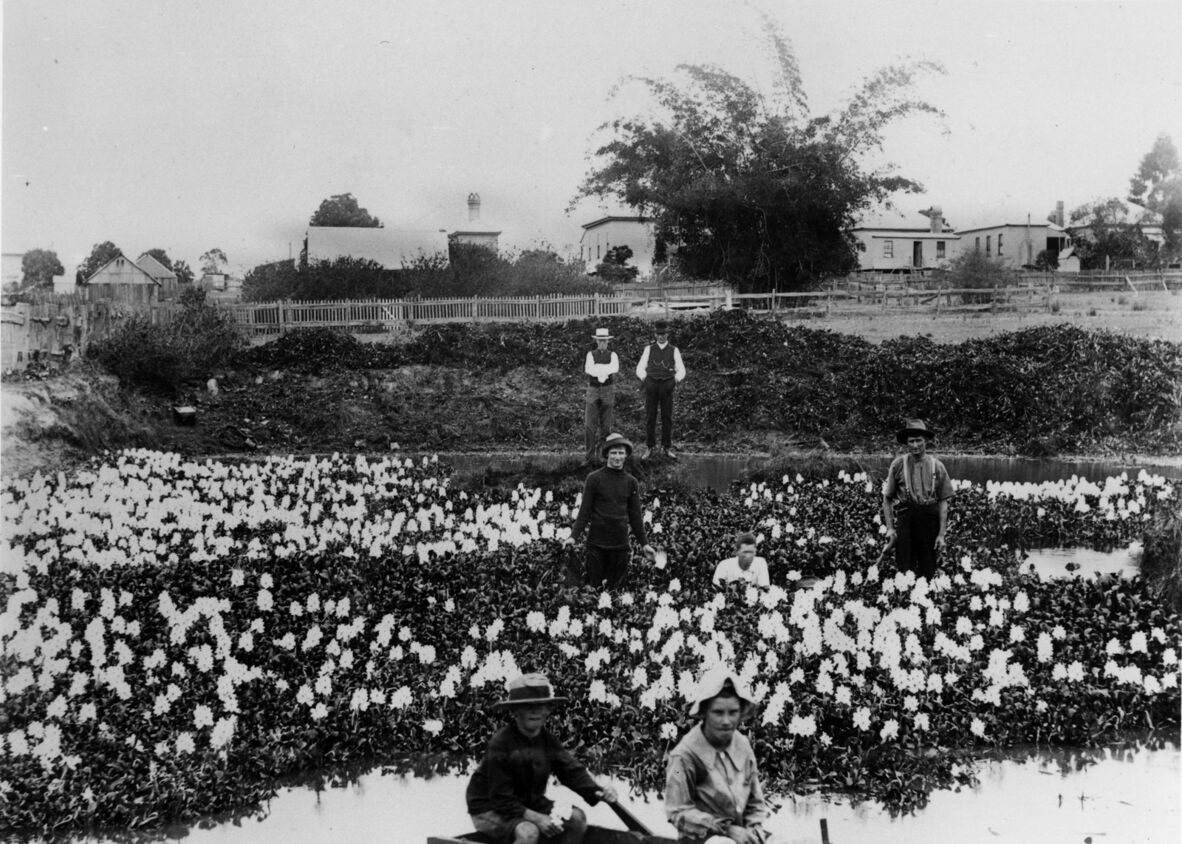
The Brisbane River has always been a vital transport corridor. It links neighbourhoods and businesses and carries people across the city in their daily lives. For over 70 years, that routine was disrupted when 'The Lilac Devil' came to visit.
Water hyacinth (Eichhornia crassipes), a South American water weed – whose nickname comes from its attractive purple-blue flowers – is one of the most invasive plants in the world.
Its dense root system and astonishing speed of propagation mean it can double in size week by week given the correct conditions. Once fully formed, it can destroy native animal and fish habitats by consuming huge amounts of oxygen and providing a breeding ground for mosquitoes.
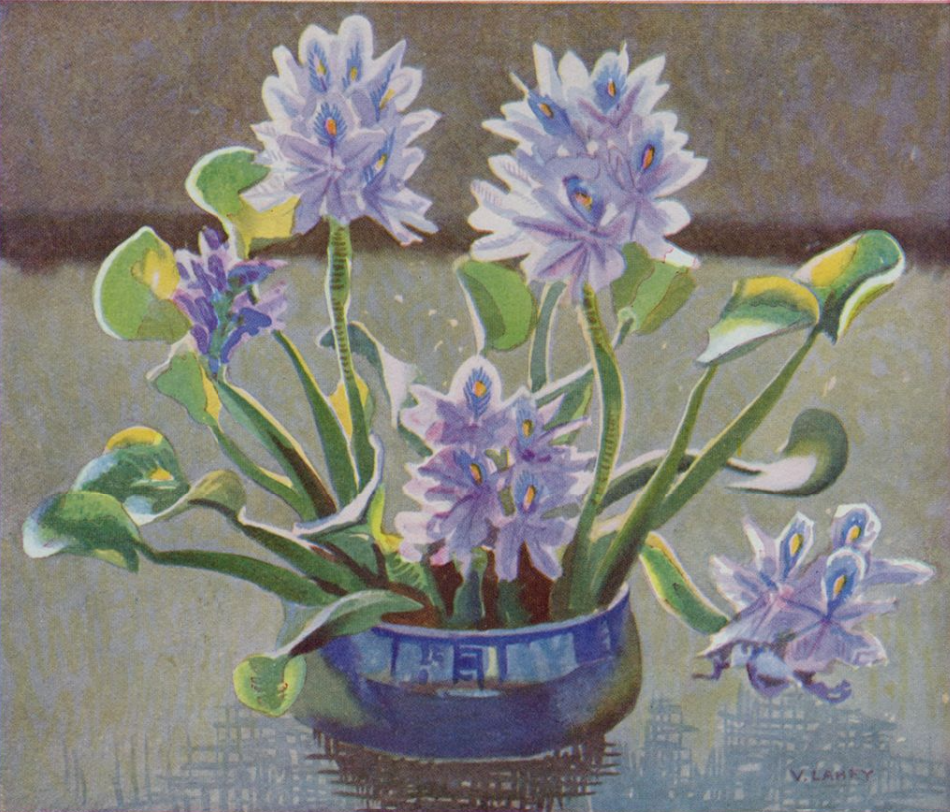
A watercolour of the 'beautiful but sinister water-weed' by Queensland artist Vida Lahey.
Originally bought to New South Wales as an ornamental plant in the 1890s, the water hyacinth quickly spread from Sydney’s Royal Botanic gardens up the east coast and by 1900 had brought Ipswich’s bustling Bremer River to a standstill.
An extraordinary image below from The Queenslander in 1908 shows Ipswich locals standing on a mat of water hyacinth some 'seventeen feet thick'!
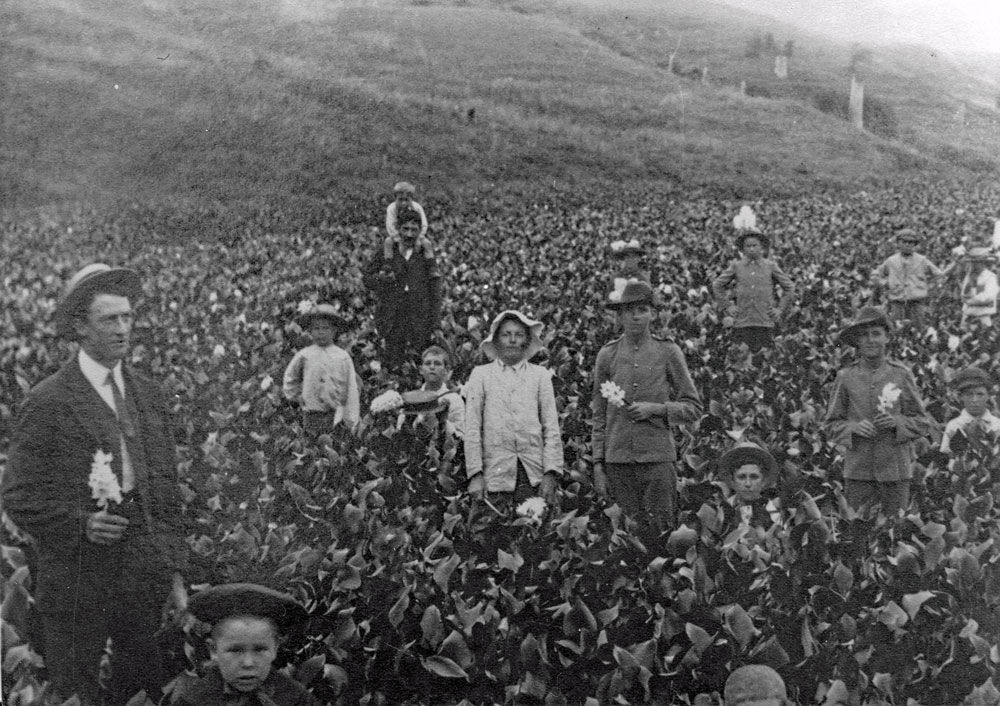
The “Lilac Devil” would inevitably make its way to Brisbane – especially after storms and cyclones – arriving in extraordinary quantities in the city reaches, transforming parts of the river surface into a thick, drifting barrier.
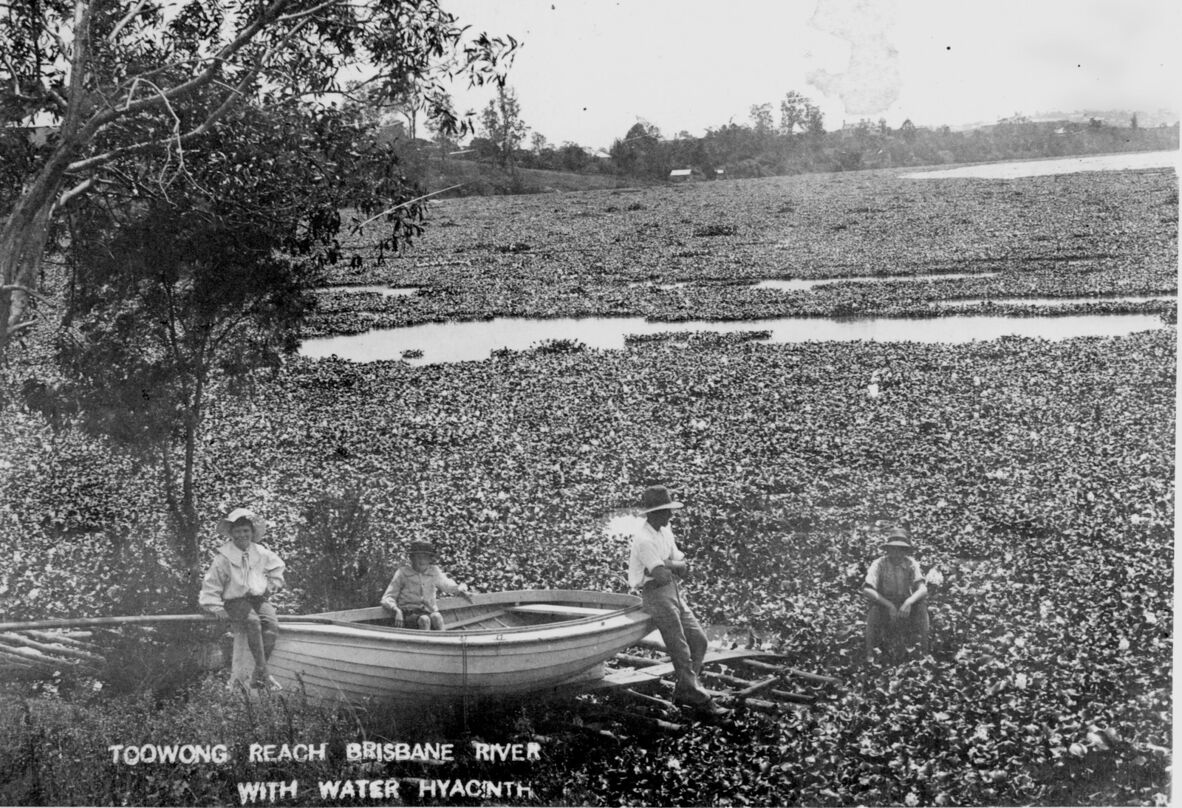
Items in State Library’s collections show the extent of the water hyacinth’s disruption. One memorable 1908 photograph from Toowong Reach shows a young boy sitting on the weed like a stool, his boat is unable to move through the water.
Over the decades that followed, councils and landholders tried almost everything to bring it under control as the weed reappeared in creeks, lagoons and rivers. Plants were dragged out by hand, raked from banks, and hauled away in dripping piles that stank as they rotted in the sun.
During floods, mats of hyacinth broke loose and travelled downstream, only to re-form in quieter reaches and start the cycle again. In some places the weed became so thick that small boats could not pass, and pumps clogged so often that farmers kept spare parts close by.
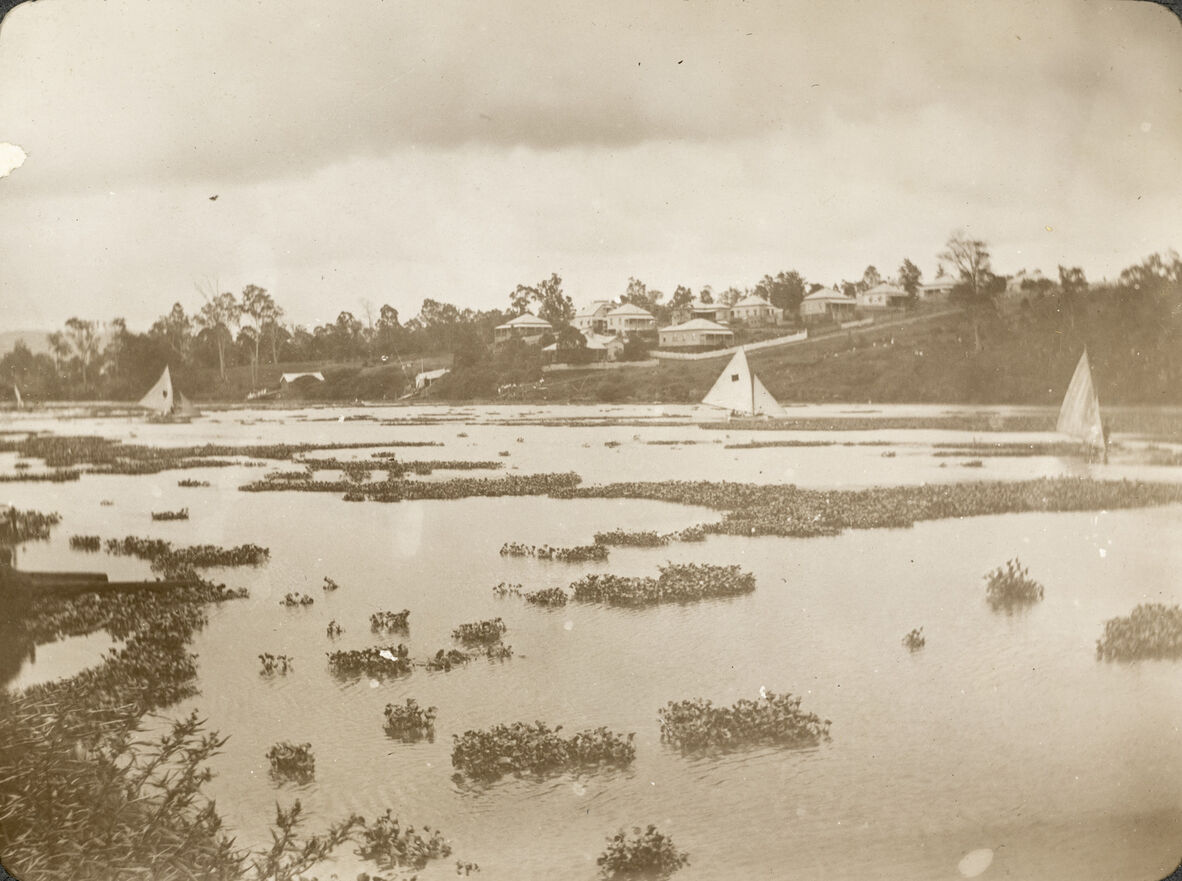
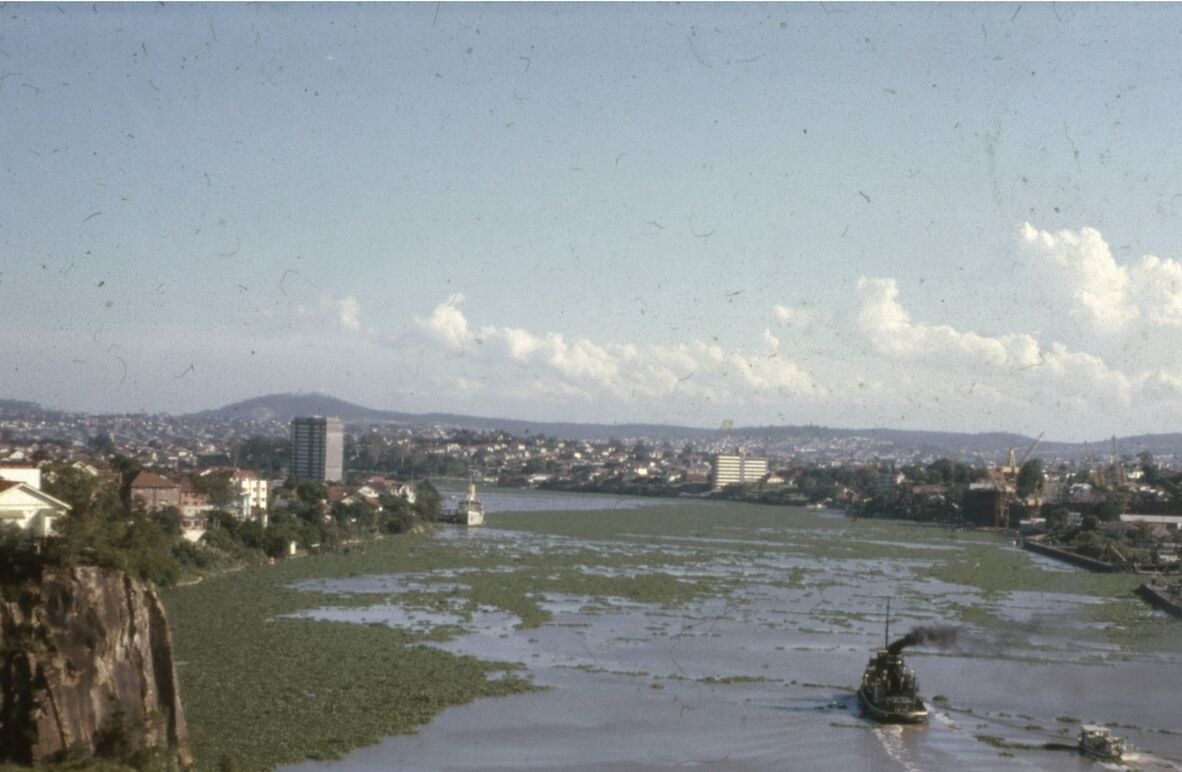
For many living in Brisbane in the 1960s and 70s, water hyacinth was a common feature of the river and remains a vivid memory. Often entire sections of the weed would bloom overnight, turning the river into a “carpet” of green and purple. Many more remember the smell after it was hauled out of the river.
A rare colour image of the infestation from the 1960s shows its enormous scale. Were it not for the havoc it caused across Brisbane, it would have been a rather wondrous sight.
An often repeated (but likely apocryphal) story concerns a pair of brothers walking all the way from Bulimba to the Breakfast Creek hotel across the weed carpet. What was true was the dangers of sticking your hand or foot in too deep, with many local creepy crawlies finding the matted weed a particularly fine home.
Various methods of mechanical removal were used on 'The Lilac Devil', but none were truly effective on a large scale. Since 1975, water hyacinth has been kept in check by various control methods including introduced insect species and selective herbicides.
Comments
Your email address will not be published.
We welcome relevant, respectful comments.