Black and white photograph of Wayne Coolwell sitting in a recording booth inside ABC Studio in New York City
  • Home
  • /

  • Through Mununjali Eyes: Photojournalist Wayne Coolwell

Through Mununjali Eyes: Photojournalist Wayne Coolwell

About the showcase

Wayne Coolwell was a trailblazer of his generation and a powerful voice for his people. A proud Mununjali man with a sharp eye for a story, he captured moments that bridged cultures and inspired connection. Known affectionately as the “Cool Cat of journalism”, Wayne moved effortlessly among the greats, between the media and community, treating every encounter as part of his day’s work behind the lens and microphone.  

Respected by his peers and cherished by audiences nationwide, Wayne was among the first Aboriginal voices to grace Australia’s airwaves. His talent, humility and fearless curiosity made him a true pioneer.  

This exhibition celebrates Wayne’s life and legacy through his own photography, revealing the people, places and moments that shaped his remarkable journey. It invites audiences to remember not only his professional achievements but the warmth, wit and cultural pride that made him unforgettable.  

Through Mununjali Eyes brings together 5 decades of Wayne’s photographs, honouring his legacy – where story, culture and connection continue to resonate across generations.

Cultural notice

This body of work originated as a partnership with State Library of Queensland and the late Wayne Coolwell, whose leadership, insight, and cultural authority shaped its development. Following his passing in May 2025, the project has been realised in close consultation with Jo-Anne Driessens and Wayne Coolwell’s family. This exhibition is presented in his honour, acknowledging his life, his stories, and the enduring legacy he entrusted to this work.

We acknowledge the Traditional Owners of this land, First Nations peoples, Elders, children and communities. We respectfully share that the showcase contains images and videos of people who have passed away. We honour those individuals and their contribution.

Free showcase
28 March – 18 October

kuril dhagun, level 1

Plan your visit

Watch: Wayne Coolwell in his own words

Skip to next item

Collection highlights

Group portrait of five young Aboriginal men outdoors, standing and crouching together with arms around each other.

Articles

Four First Nations Elders
Stories from Queensland First Nations Elders (Part 2)
Recorded in 2023 and 2024, as part of State Library's First Nations Elders oral history project, this collection of interviews recognises and celebrates the achievements of Queensland's First Nations Elders. Each interview features a short digital story as well as a much longer, indepth oral history.
Read article
Jo-Ann Driessens taking photographs in Woorabinda, Queensland.
Aboriginal and Torres Strait Islander lens perspectives.
This project involved two main components, the first component was to identify the diverse representation of photographs of Aboriginal and Torres Strait Islander people taken by various photographers within State Library's collection. Historically the photographs acquired, collected or gifted into the State Library's collection have been captured by a number of early white settler photographers who were capturing the daily life and sometimes portrait (studies) of Aboriginal and Torres Strait Islander people. In more recent times, a number of photographs have been acquired from non-Indigenous photographers and while they still add value to the collection as a whole, this project was aimed towards identifying Aboriginal and Torres Strait Islander photographers throughout regional, remote and urban communities to assist and identify appropriate images from their own body of work into State Library's collection.
Read more
Visitors looking at the Viewpoints exhibition
Refocused Lens: Viewpoints, Contemporary Aboriginal photography
An exciting exhibition at State Library celebrates new narratives, Indigenous representation, and identity in contemporary photography. The works of First Nations artists Michael Aird, Jo-Anne Driessens and Naomi Hobson are included in Viewpoints curated by Georgia Walsh. This is the first in a series of blogs taking a deeper look into the importance of this exhibition and the stories that are held within it. At the core of each photographer’s work is a desire to involve Aboriginal people in the creation and custodianship of contemporary stories for future generations. Viewpoints is a free exhibition on show until 13 Feb 2022 in the Philip Bacon Heritage Gallery, level 4. If you are unable to view in person you can explore the exhibition and collections online at www.slq.qld.gov.au/viewpoints
Read more
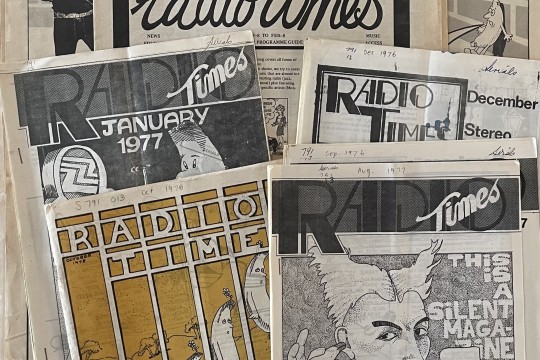
A collection of early Radio Times magazines held at the John Oxley Library.
Finding feminist voices in the early years of Queensland community radio
March 8 marks International Women’s Day (IWD) – a time for collective celebration and global activism in the ongoing fight for equality for all women, regardless of sexuality or birth-assigned gender. Inspire Inclusion is one of the official themes for IWD 2024, and – serendipitously - an overarching aim of my 2024 Rainbow Research Fellowship project, Radio rebels: highlighting the contributions of women, trans and non-binary people to the history of Queensland community radio. By learning from, and adding to, the John Oxley and State Library of Queensland collections, Radio Rebels seeks to discover and share the untold stories of the women, trans and non-binary people of the Queensland community radio sector.
Read more
This is Our Story - Join in the planning to commemorate 150 years of Australian South Sea Islander history in Beaudesert
Guest blogger: Bronwyn Davies – Coordinator Cultural Services, Scenic Rim Regional CouncilWe are getting closer to the Beaudesert Australian South Sea Islander 150 Commemoration event This is Our Story ( 24th August) and the launch of the Echoes-ASSI 150 exhibition,( 23rd August). Organisers are holding a Community Café in Beaudesert Saturday 27th July from 1pm to 4pm @ St Thomas Anglican Church Hall Albert St Beaudesert following on from meetings with the Mununjali Council of Elders and community info sharing events.The community café is another opportunity leading up to the commemoration and the exhibition launch to share stories of the Beaudesert district and the arrival of the first South Sea Island indentured labourers at the Townsvale cotton plantation in August 1863.Between 1863 and 1901 more than 60,000 South Sea Islanders worked in Queensland and contributed to its early development and economic growth. The Beaudesert district was the first place where South Sea Islanders were used on a systematic scale of indenture and their contribution forms a unique piece of its history. Community Cafes are an opportunity to participate in a public conversation, share your own stories, memories and connections to place.Everyone is welcome.This is Our Story is a collaborative project of The Beaudesert Historical Society, Scenic Rim Regional Council, Mununjali Elders, Vanuatu Australian South Sea Islander Community, descendants of original landowners and current landowners and the people of Beaudesert and the Scenic Rim
Read more
A side profile of a woman wearing pearls and a flower pinned to her jacket
Queensland women in the media: women journalists of the 20th century
Women journalists, often referred to as presswomen, were employed on Brisbane newspapers from the end of the nineteenth century. On International Women’s Day, it is important to reflect on how women found their voice and had their opinions published in Brisbane newspapers. The skills of women journalists were primarily confined to the women's interest pages throughout the century. Queensland regional newspapers followed the example of the metropolitan papers and included women’s pages in their publications throughout the twentieth century. However, the position of Social Editress and its importance gradually faded and news is now presented for both men and women. Mary Hannay Foott (1886) and Patience Thoms (1956-1976) were the Social Editresses at the beginning and end of this media trend in Brisbane newspapers.
Read more