Conservation
The State Library's conservation team includes skilled conservation technicians, qualified conservators and bookbinders. At the core of our work is the care and understanding of the collections. We use a combination of "preventive" and "interventive" activities.
Preventive conservation
The State Library pursues an active program of preventive conservation. Reduction, and where possible, elimination of the causes of deterioration is the most effective and least expensive strategy for collection care. Some vital components of the preventive conservation schedule are outlined below.
Environmental monitoring and control | Enclosure construction | Integrated pest management | Disaster preparedness | Interventive conservation | Collection surveys | Documentation | Paper conservation | Book conservation | Photograph conservation | Audiovisual conservation | Exhibitions conservation | Bookbinding and reference repairs | Visiting the Conservation Laboratory | Links
Environmental monitoring and control
One of the most effective ways of protecting collections from deterioration is to ensure they are stored in a carefully controlled environment.
A Building Management System is installed throughout the building to ensure that relative humidity, temperature, air quality and light levels are routinely monitored in critically controlled areas such as:
- repositories
- cold storage vaults
- dedicated exhibition spaces
- collection work areas.
Enclosure construction
Boards, plastics and papers used to house collections are carefully chosen to meet stringent conservation guidelines. Many are constructed inhouse.
Integrated pest management
Successful Integrated Pest Management programs depend upon a number of important factors including the organisation-wide staff cooperation and implementation of a range of proactive activities to minimise the risk of pest and mould activity.
- State Library boasts a dedicated Quarantine facility where Conservation staff inspect incoming loans and donations for signs of fungal or pest activity.
- Affected collections are treated using either low oxygen or freezing. NO chemicals are used.
- Blunder traps are placed throughout the buildings to help detect early signs of insect activity and are regularly checked.
Disaster preparedness
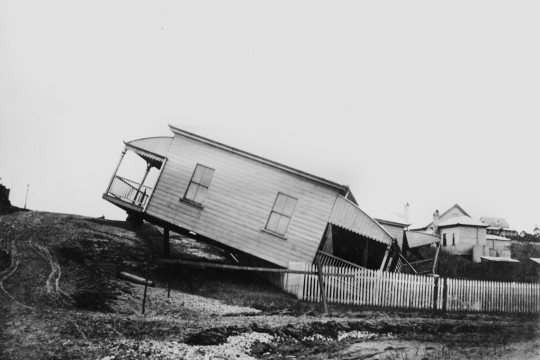
The State Library has a disaster preparedness and response plan in place. It not only identifies risks and potential hazards but endeavours to eliminate or reduce these risks where possible. We also maintain a disaster response capability to minimise damage in the event of a disaster. The success of the plan was evidenced during the 2011 floods where loss was minimal.
Interventive conservation
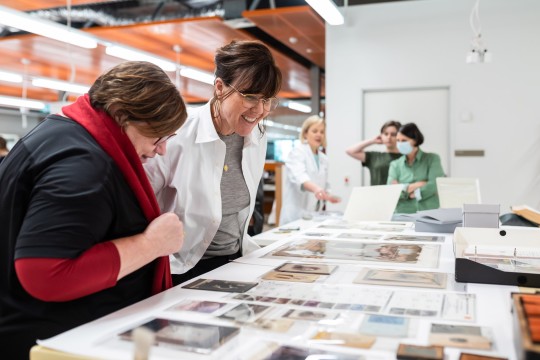
The physical or chemical treatment of individual objects is categorised as “interventive” conservation. The aim of this work is to stabilise fragile and damaged objects without compromising their historical, aesthetic or cultural integrity. This allows previously inaccessible collections to become available for exhibition and research purposes. When necessary, objects also undergo treatment to ensure their stability during digitisation.
The main areas of conservation treatment at the State Library are paper, book, photograph and audio visual conservation.
Collection surveys
To assist in the planning of the conservation program, condition assessment surveys are conducted on prioritised collections. The resulting preservation program is undertaken in accordance with the institution’s mandate and resources.
Documentation
Before embarking on any interventive treatment, the object is examined:
- to record its current condition
- evidence of use
- material and manufacturing details
- other factors that may affect the treatment process.
Detailed records known as "treatment reports" are then made of all steps carried out during the treatment process. The reports are retained for the lifetime of the object so that future conservators and collection managers have access to treatment and exhibition histories of collection material.
Paper conservation
The State Library has a diverse collection of printed and original paper based collections including maps, posters, art works on paper, and a significant manuscript holding. Much of the collections contain objects made with acidic wood pulp paper which is inherently unstable and requires a high level of treatment. Common treatments undertaken include:
- cleaning to reduce surface dirt
- repairing tears
- infilling areas of paper loss
- reinforcing brittle or pulpy paper by lining with Japanese paper
- and consolidation of unstable media such as thick applications of pigment.
Book conservation
The State Library holds one of the largest collections of rare books published in or about Queensland and Conservation staff treat a diverse range of binding styles.
Books that incorporate organic and inorganic material require collaboration between the different conservation specialisations.
Common book treatments include:
- re-backing damaged spines
- repair sewing
- page repairs and
- cover refurbishment.
To learn more about how to look after your own book collections, please see our Caring for Your collections Info Guide [PDF 320kb] on books and bound materials
Photograph conservation
John Oxley Library contains an extensive photographic collection. All significant negative and positive photographic processes from daguerreotypes to chromogenic prints are represented.
The extremes of Queensland’s climate creates some common problems for photographic material including:
- mould and insect activity as a result of sustained periods of high temperature and humidity
- embrittlement and flaking of emulsion when conditions are too dry.
To protect the photographic and motion picture collections from extremes in environmental conditions the State Library has two climate controlled repositories and three dedicated cold storage vaults for their long term storage.
Treatments include emulsion consolidation, surface cleaning, infilling and toning of areas of loss, and removal of acidic, deteriorated backing boards.
To learn more about how to look after your own photographs, please see our Caring for Your Collections Info Guide [PDF 610kb] on photographic collections.
Audiovisual conservation
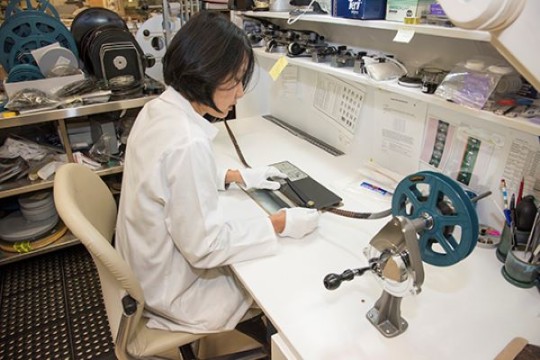
The Audiovisual Conservator assesses the physical and chemical condition of the motion picture film and audiovisual collections.
If necessary, the films undergo treatment such as:
- surface cleaning
- fixing perforation damage
- repair splicing.
Each year, a number of unique and significant films depicting Queensland Memory are selected for digitisation and placed on the State Library website for all to enjoy via web streaming.
The majority of films treated are cellulose acetate with a small amount of cellulose nitrate. Both these film supports are inherently unstable and require specific handling and storage requirements.
The motion picture films are housed in the State Library's cold storage vaults.
For further information on how to care for your own film collections, please see our Caring for Your Collections Info Guide [PDF 610kb] on motion picture film collections.
Exhibitions conservation
Exhibitions conservation employs a combination of preventive and interventive methods. Conservation staff work closely with staff from the State Library's Learning and Participation area.
Important activities that exhibitions conservation staff perform include:
- object assessment and condition reporting including incoming and outgoing loans. It is important to record detailed information on the physical and chemical condition of an object prior to display or a loan
- on an object’s return to Conservation it is condition checked again to help identify any damage that may have been sustained during display or transport
- framing, mounting, design and construction of display supports
- assessment of display conditions and materials
- preparation and protection of collections for transportation
- conservation components of installation and de-installation of objects on display.
Bookbinding and reference repairs
The Binding Coordinator oversees the repair or rebinding of damaged books and music scores from the collections.
The State Library is one of the few institutions in Queensland who have professional hand bookbinders on staff.
These fast disappearing skills are used to create fine bindings for presentations and facsimiles of originals.
Visit the Conservation Laboratory
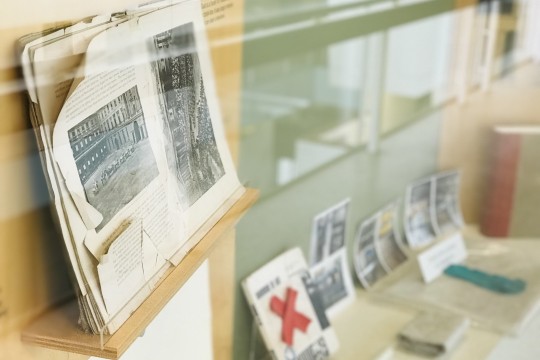
If you would like to see the Conservation Laboratory, visit the Preservation Wall display on the 5th floor of the State Library’s South Bank building. This wall provides visitors with an overview of Collection Preservation’s activities and the two observation windows allow you to watch what is happening in the laboratory.
Please contact us if you are interested in a back-of-house tour of the Conservation Laboratory.
Useful conservation links
For further information on conservation, you may wish to look at one of the links listed below.
- Australian Institute for the Conservation of Cultural Materials (AICCM): AICCM is the professional organisation for conservators in Australia.
- Conservation OnLine (CoOL): CoOL is operated by the Foundatiion of the American Institute for Conservation (FAIC). It provides a library of conservation information, covering a wide spectrum of topics.
- International Council of Museums – Committee for Conservation (ICOM-CC) : ICOM-CC is the largest of the International Committees of ICOM (International Council of Museums) with members worldwide from every branch of the museum and conservation profession.
- National Library of Australia: Useful preservation information and the Community Heritage Grant details.
- National Film and Sound Archives: Australia’s national audiovisual archive. The website provides good information on preservation of audiovisual collections.
More information
If you have an enquiry, you can contact us in any of the following ways:
- Telephone +61 7 3840 7779
- Fax + 61 7 3842 9060
- Mail Conservation Unit Collection Preservation PO Box 3488 South Brisbane Queensland 4101
- Email conservation@slq.qld.gov.au